
Stress Isn't Just in Your Head
What your mind doesn’t see, your body and behaviour already know: stress is here. We often think of stress as a feeling, something that lives in our minds. A mental weight we carry. And it is that. But it's also much more.
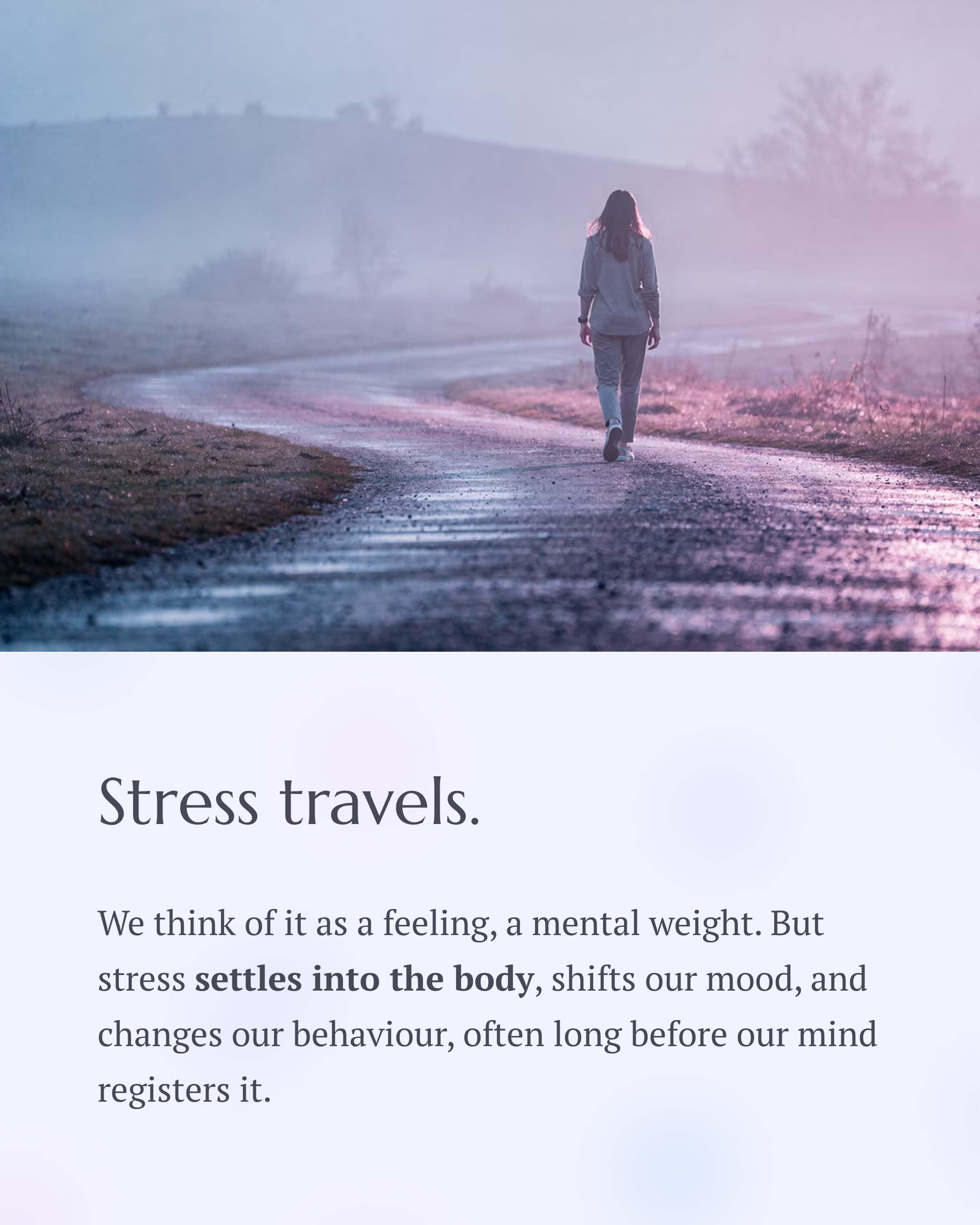
Stress doesn't stay neatly contained in your thoughts. It travels. It settles. It speaks through your body, your mood, your behavior, sometimes long before your mind fully registers that something is wrong.
Here is a way of seeing how stress shows up in hiding places before it becomes burnout
Not to alarm you, but to help you see: You're not imagining things. And you're not alone in what you're experiencing.
Your Body Knows Before Your Mind Does
Stress is remarkably creative. It finds different pathways to express itself. Here are the most common ones for how it shows up:
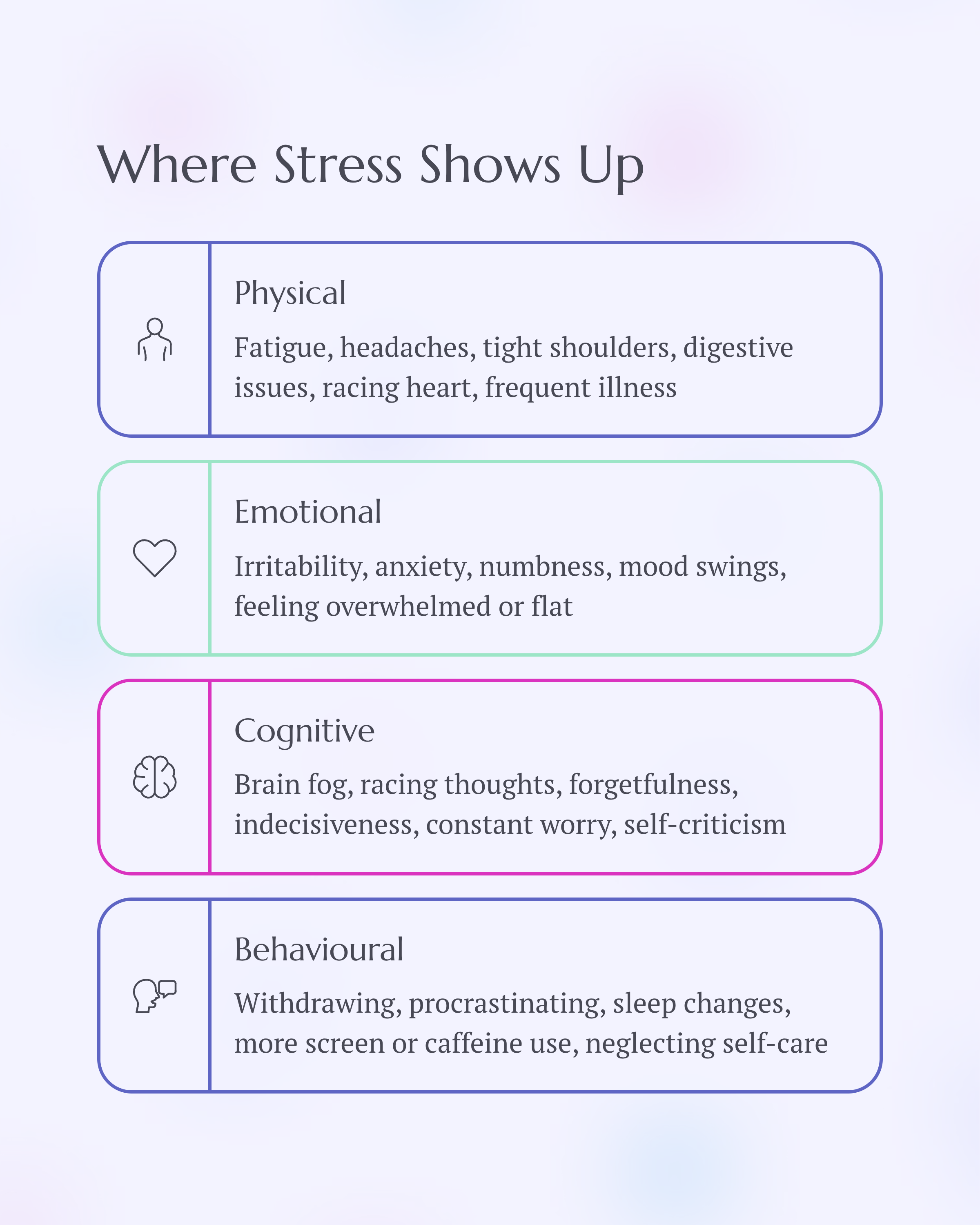
1.Physical Signs
Your body often sounds the alarm before your mind catches up.
Fatigue that doesn't go away, even after sleep
Headaches, jaw clenching, teeth grinding
Tight shoulders, neck pain, unexplained aches
Digestive issues, stomach discomfort
Changes in appetite (eating more or less than usual)
Frequent illnesses, slow recovery
Racing heart, shallow breathing
2. Emotional Signs
Stress colors how you feel, often in ways that seem unrelated to the original source.
Irritability, lashing out at small things
Feeling overwhelmed by normal demands
Anxiety, heaviness, a feeling that something isn’t right
Numbness, feeling disconnected from yourself
Mood swings, tearfulness
Reduced empathy, less patience than usual
Feeling “flat” about things you used to enjoy
3. Cognitive Signs
Your thinking patterns shift under stress, often without you noticing.
Racing thoughts, inability to quiet your mind
Brain fog, difficulty concentrating
Forgetfulness, losing things, missing appointments
Indecisiveness, even about small choices
Constant worry, catastrophizing
Self-critical thoughts, negative self-talk
Difficulty learning or taking in new information
4. Behavioral Signs
Stress changes what you do, and what you stop doing.
Withdrawing from others, canceling plans
Procrastinating, avoiding tasks
Changes in sleep (trouble falling or staying asleep)
Increased use of nicotine, caffeine, or screens
Restlessness, inability to relax
Neglecting self-care, skipping meals, moving less
Pushing through, overworking, unable to stop
Recognizing these stress symptoms early, physical, emotional, cognitive, and behavioral, can help prevent burnout and support mental wellbeing.
Why This Matters
Here's what all of this means:
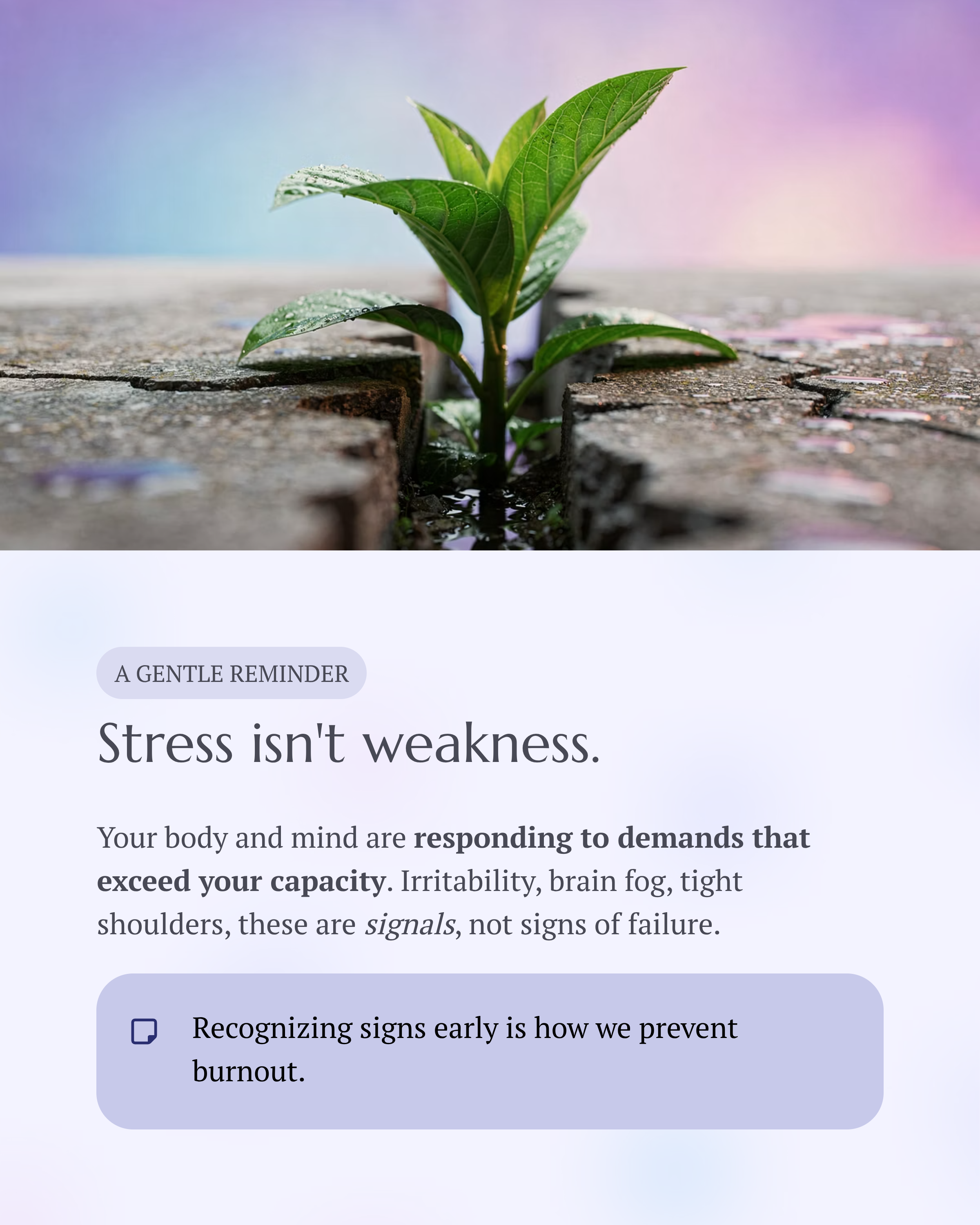
Stress isn't a character weakness. It's your body's way of responding.
Your body and mind are responding, in real time, to demands that exceed your current capacity to cope. The irritability, the brain fog, the tight shoulders, the overwhelm, they're not signs you're failing. They're signs your system is working exactly as it should, trying to keep you going despite the load.
The problem isn't that you're experiencing these symptoms. It's that we're rarely taught to recognize them as signals. So we push through, dismiss them, or turn them into shame.
A Gentle Note
This guide is for awareness, not diagnosis. Physical symptoms always deserve medical attention. Mental health symptoms deserve professional support. This post is a companion to that care, not a replacement.
The Path Stress Can Take
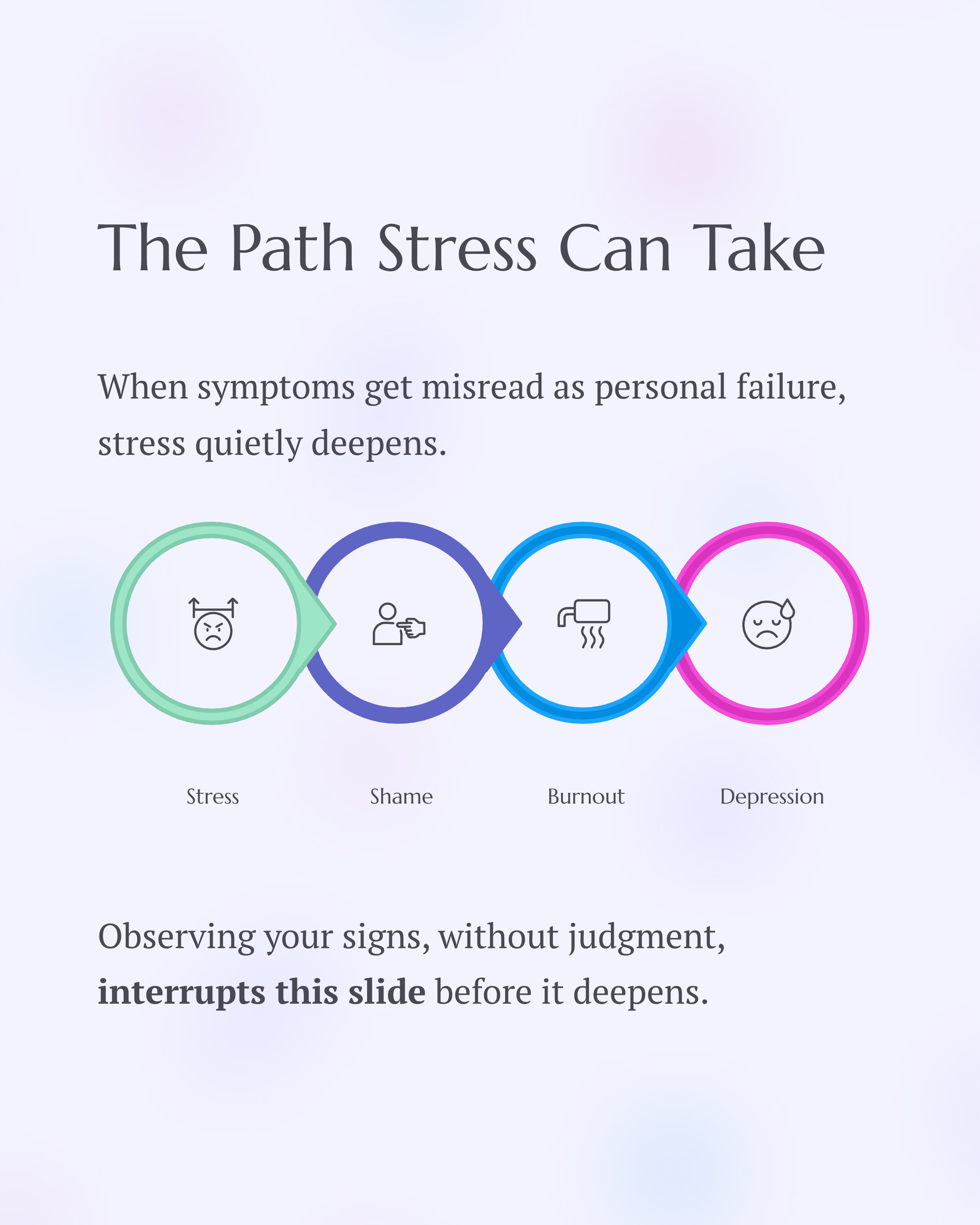
When stress is chronic and unaddressed, it doesn't stay in these categories forever. It deepens.
Stress → Shame → Burnout → Depression
This progression isn't inevitable. But it is common, especially when we misinterpret stress symptoms as personal failure.
Stress becomes shame when we tell ourselves: “Why can't I handle this? Everyone else seems fine.”
Shame fuels burnout as we push harder to prove our worth.
Burnout, left unaddressed, can lead to deep exhaustion and depression.
Learn more about these stages in Your Burnout Didn't Start When You Think It Did.
Catching stress early, in any of its four forms, is how we interrupt this slide before it deepens. By observing these signs, you start building awareness skills that help you respond thoughtfully instead of reacting automatically.
Your Invitation to Notice
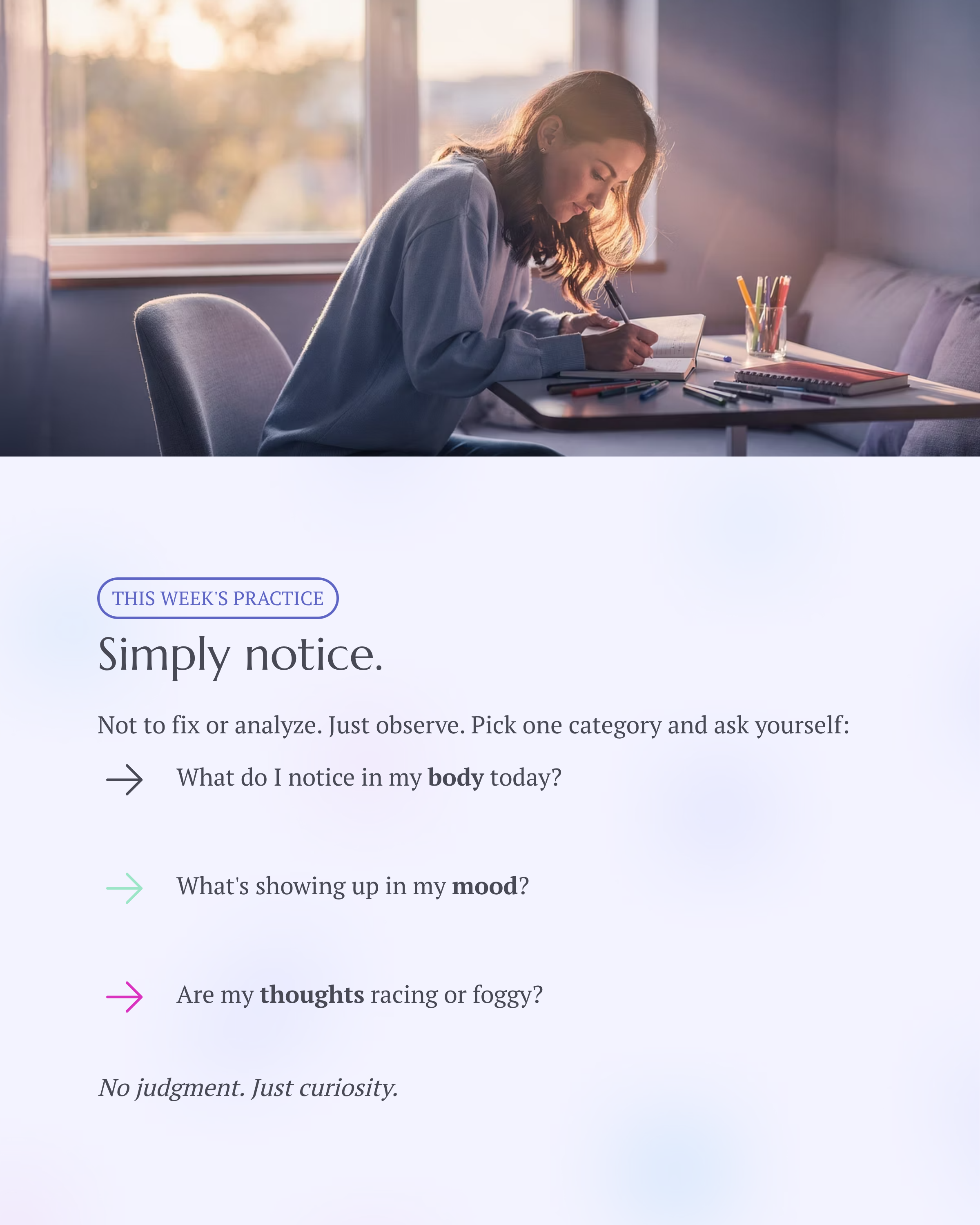
This week, I invite you to simply observe. Not to fix anything. Not to analyze. Just to notice.
Pick one category, physical, emotional, cognitive, or behavioral, and pay gentle attention.
What do I notice in my body today?
What's been showing up in my mood?
Are my thoughts running faster than usual?
Have I changed what I'm doing (or not doing)?
No judgment. Just data. Just curiosity.
Your Way Forward: Recognizing Early Signals
Over time, this practice of noticing becomes a kind of inner fluency. You begin to recognize your own stress signatures, the unique ways your body signals “this is too much”.
You might learn that tension in your shoulders is your first warning. Or that irritability with loved ones means you're nearing a limit. Or that brain fog is your cue to slow down, not push through.
This isn't about becoming stress-free. It's about becoming stress-aware. And awareness, even more than effort, is what opens the door to real change.
If This Resonates…
If you recognized yourself in any of these signs, if you've been carrying these symptoms without knowing they had a name, please know: you're not failing. You're not weak. You're human, responding to load.
And if you're trying to understand whether what you're experiencing could be burnout, you can explore the Burnout Guide.
And if you'd like support in learning to read your own signals earlier, to respond with care instead of criticism, to move from surviving to something gentler, I'm here. No pressure, just presence.
