
Why Saying No Feels So Hard
You decide to say no.
Maybe to a request, an invitation, or one more thing someone asks you to take on.
The words leave your mouth, and almost immediately something else arrives: guilt.
“Was that selfish?”
“Did I disappoint them?”
“Should I have just said yes?”
We're often sold a beautiful fantasy about boundaries.
Set a boundary and feel empowered.
Say no and watch your peace return.
Protect your energy and instantly feel lighter.
And when we finally try it, something unexpected happens.
Instead of instant empowerment, we feel guilt. Anxiety. Fear of rejection. A quiet voice wondering if we just did something wrong.
If this sounds familiar, please hear this. You didn't do it wrong. The discomfort you're feeling isn't failure. It's part of the process.
What you'll read here is about what boundaries actually cost before they protect you. And why that cost is not a sign to stop, but a sign you're on the right track.
In this reflection, we'll gently explore:
Why boundaries often feel worse before they feel better
The hidden cost of breaking old patterns
What guilt after a boundary actually means
How self-trust slowly grows through practice
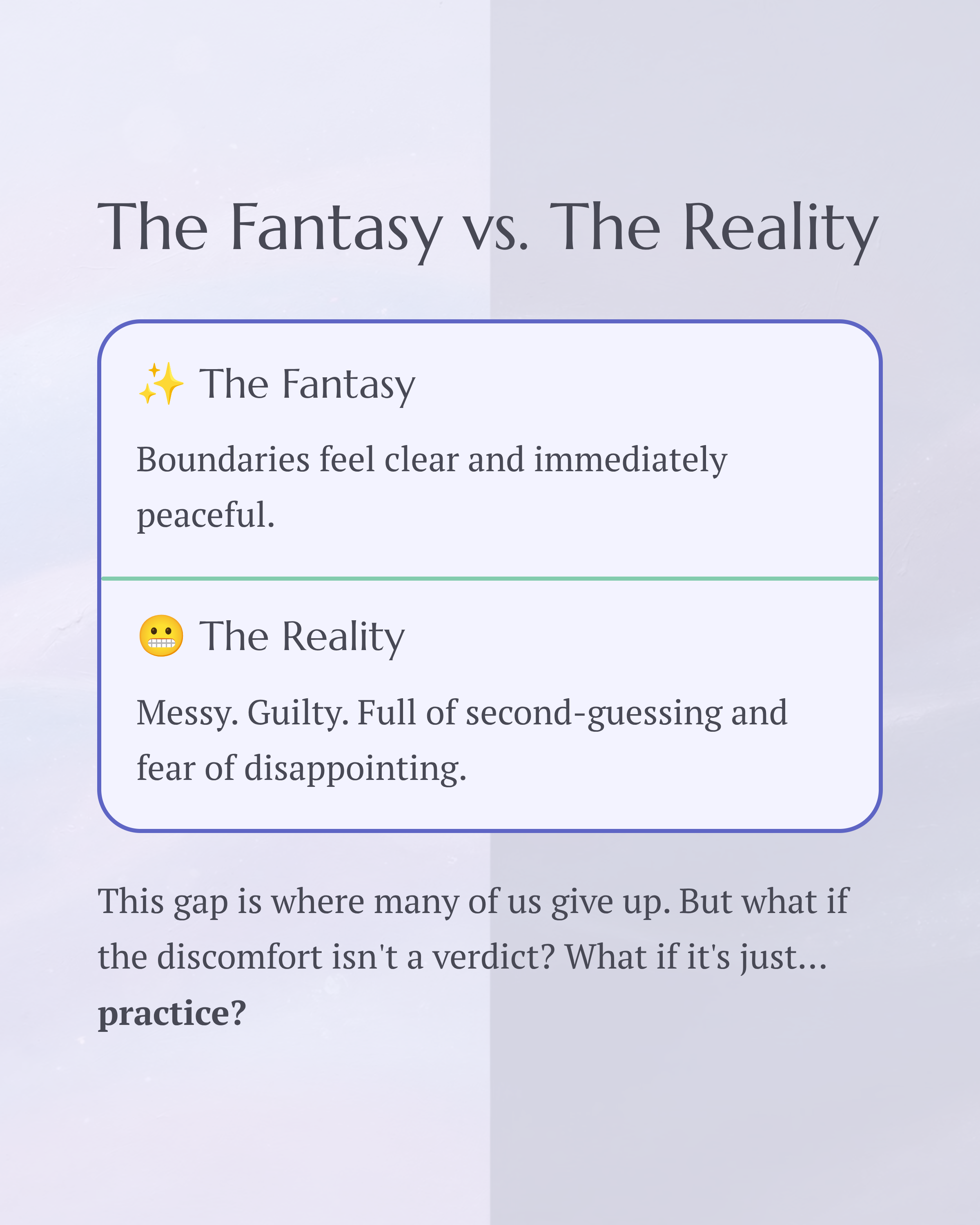
The Fantasy vs. The Reality
The Fantasy: Boundaries feel clear, clean, and immediately peaceful. You set one, and the world gently adjusts around your new limit.
The Reality: Boundaries often feel messy. They come with guilt, second-guessing, and the uncomfortable awareness that someone else might be disappointed, confused, or even hurt.
This gap between fantasy and reality is where so many of us give up. We assume the discomfort means we did something wrong. So we retreat back to people-pleasing, over-giving, and quietly resenting.
But what if the discomfort isn't a verdict? What if it's just... practice?
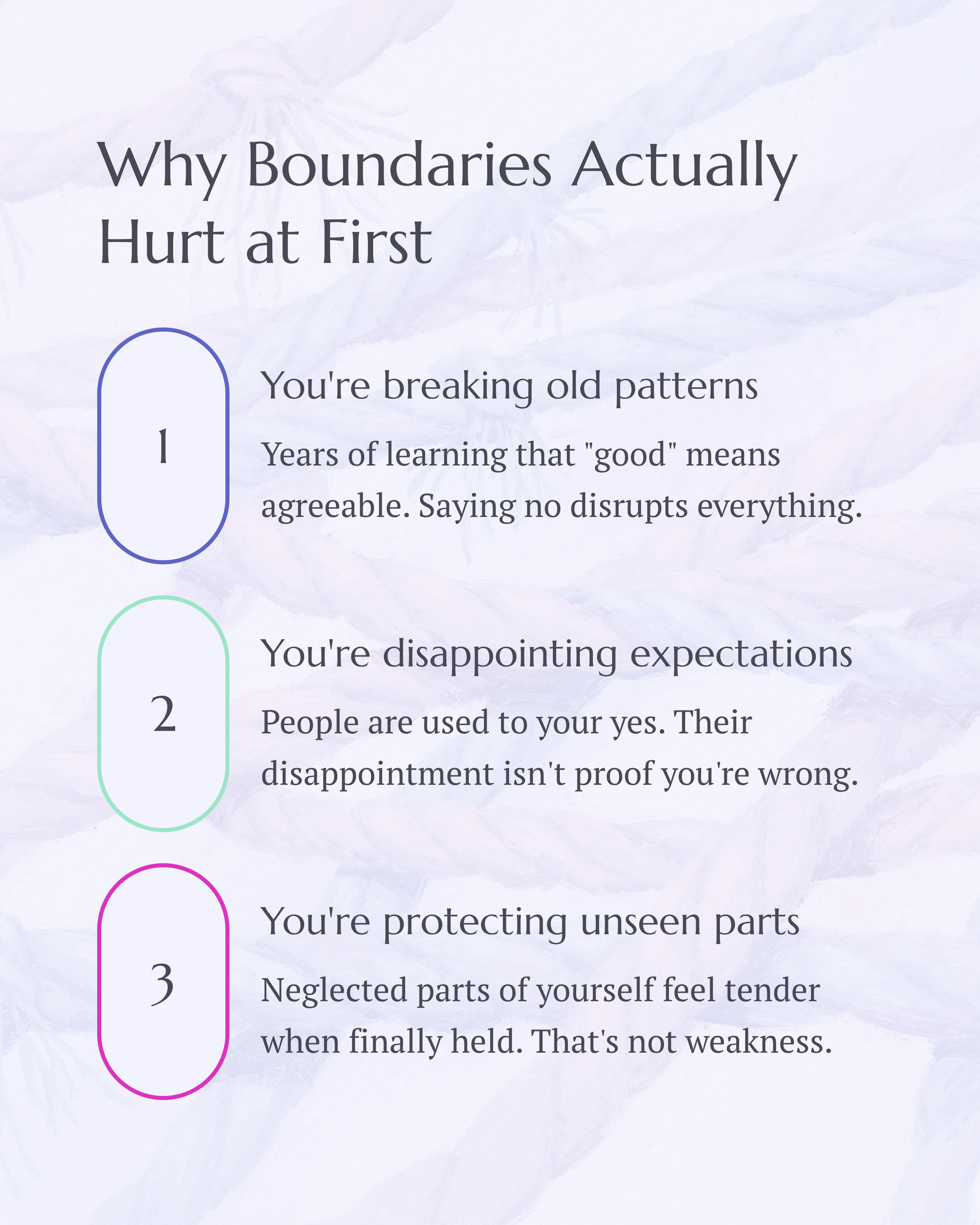
Why Boundaries Actually Hurt at First
You're Breaking Old Patterns
Your brain has spent years, maybe decades, learning that keeping the peace means saying yes. That being “good” means being agreeable. That your worth is tied to how much you give.
When you set a boundary, you're not just saying no to one request. You're saying no to a whole lifetime of programming. That's not easy. And it shouldn't feel easy.
You're Disappointing Someone's Expectations
Most boundaries don't exist in a vacuum. They affect other people, people who are used to you saying yes. When you change the rules, their disappointment is not proof you're wrong. It's proof the system is adjusting.
You can hold someone's disappointment and still hold your boundary. Both can be true.
You're Protecting Parts of Yourself That Aren't Used to Being Seen
When you set a boundary, you're saying: This part of me matters. My energy matters. My time matters. My needs matter.
If those parts of you have been neglected for a long time, they may feel vulnerable, exposed, even frightened when you finally stand up for them. That tenderness isn't weakness. It's the feeling of something precious finally being held.
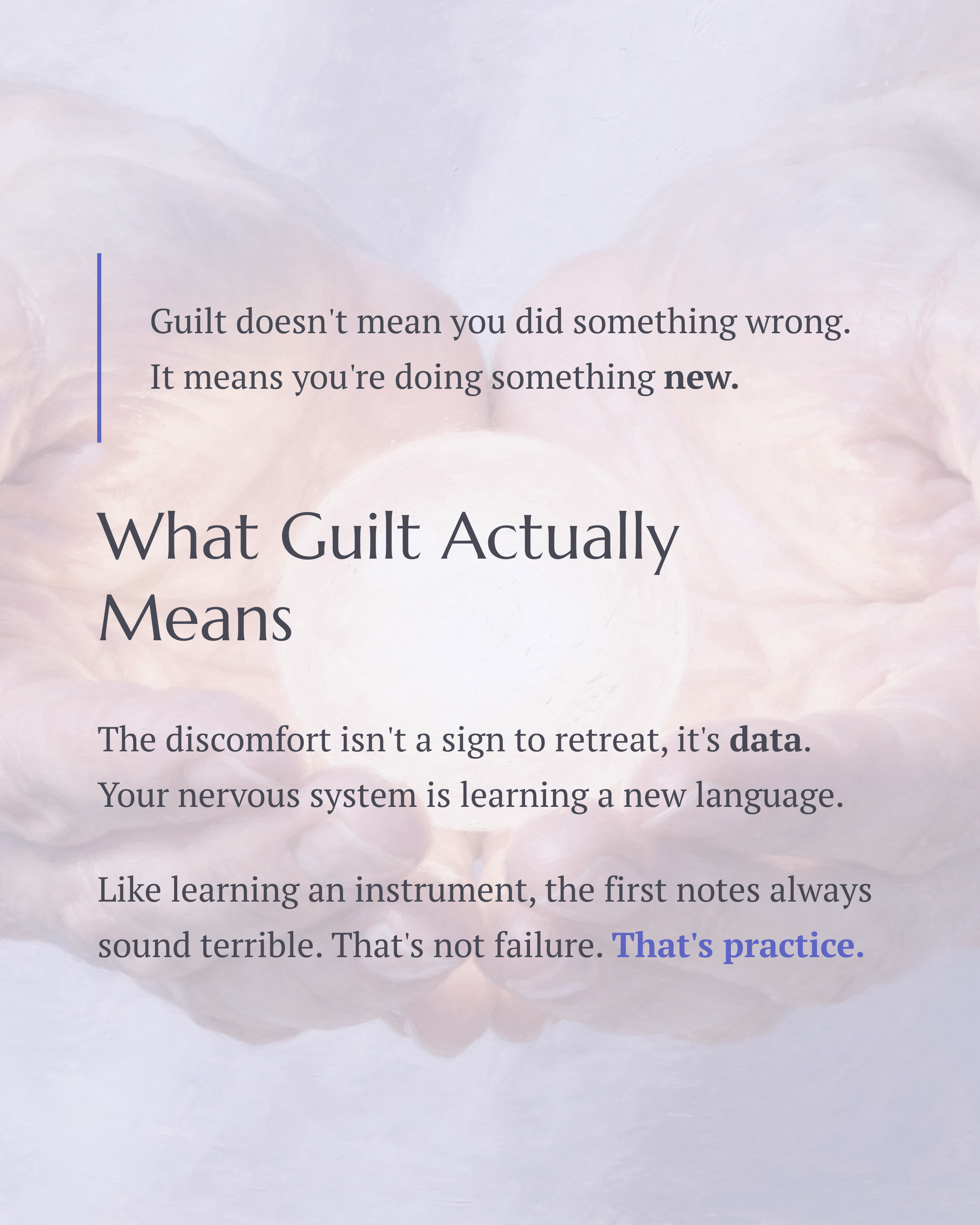
What Guilt Actually Means
Here's what I want you to sit with:
Guilt doesn't mean you did something wrong. It means you're doing something new.
The discomfort you feel after a boundary isn't a sign to retreat. It's data. It's your nervous system learning a new language.
Think of it like learning an instrument. The first time you play, it sounds terrible. Your fingers hesitate. The notes are wrong. But you don't assume you're “bad at guitar” and give up. You know that awkwardness is part of learning.
Boundaries are the same. The guilt, the second-guessing, the fear. That's the sound of you practicing something that hasn't become natural yet.
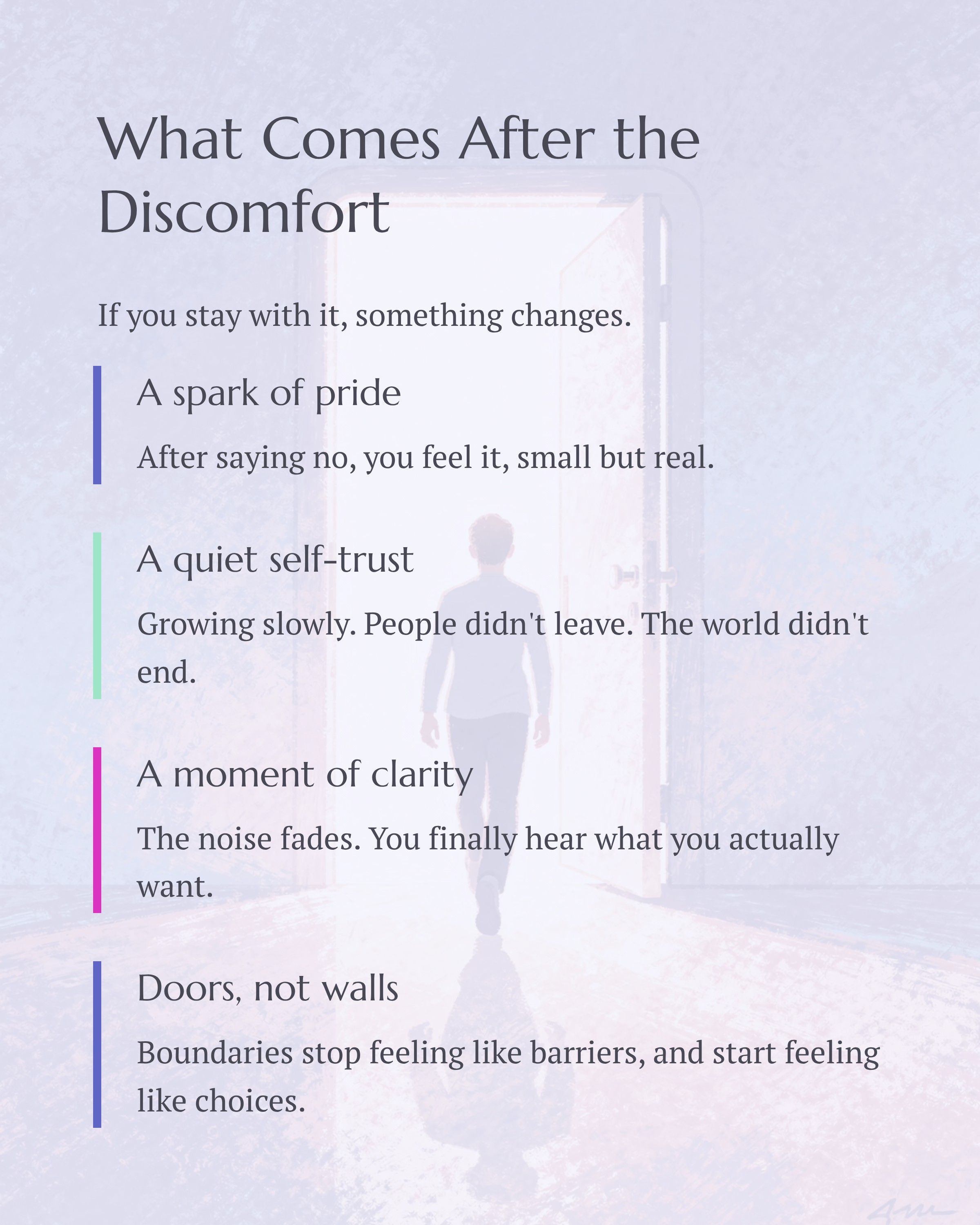
What Comes After the Discomfort
If you stay with it, if you keep practicing, something changes.
The guilt softens. The second-guessing quiets. And in its place, new things begin to appear:
A spark of pride after saying no.
A moment of clarity about what you actually want.
A quiet sense of self-trust, growing slowly.
The realization that people didn't leave. The world didn't end. You're still here, just a little more whole.
Over time, boundaries stop feeling like walls you have to build and start feeling like doors you get to choose when to open. Not rejection. Just clarity.
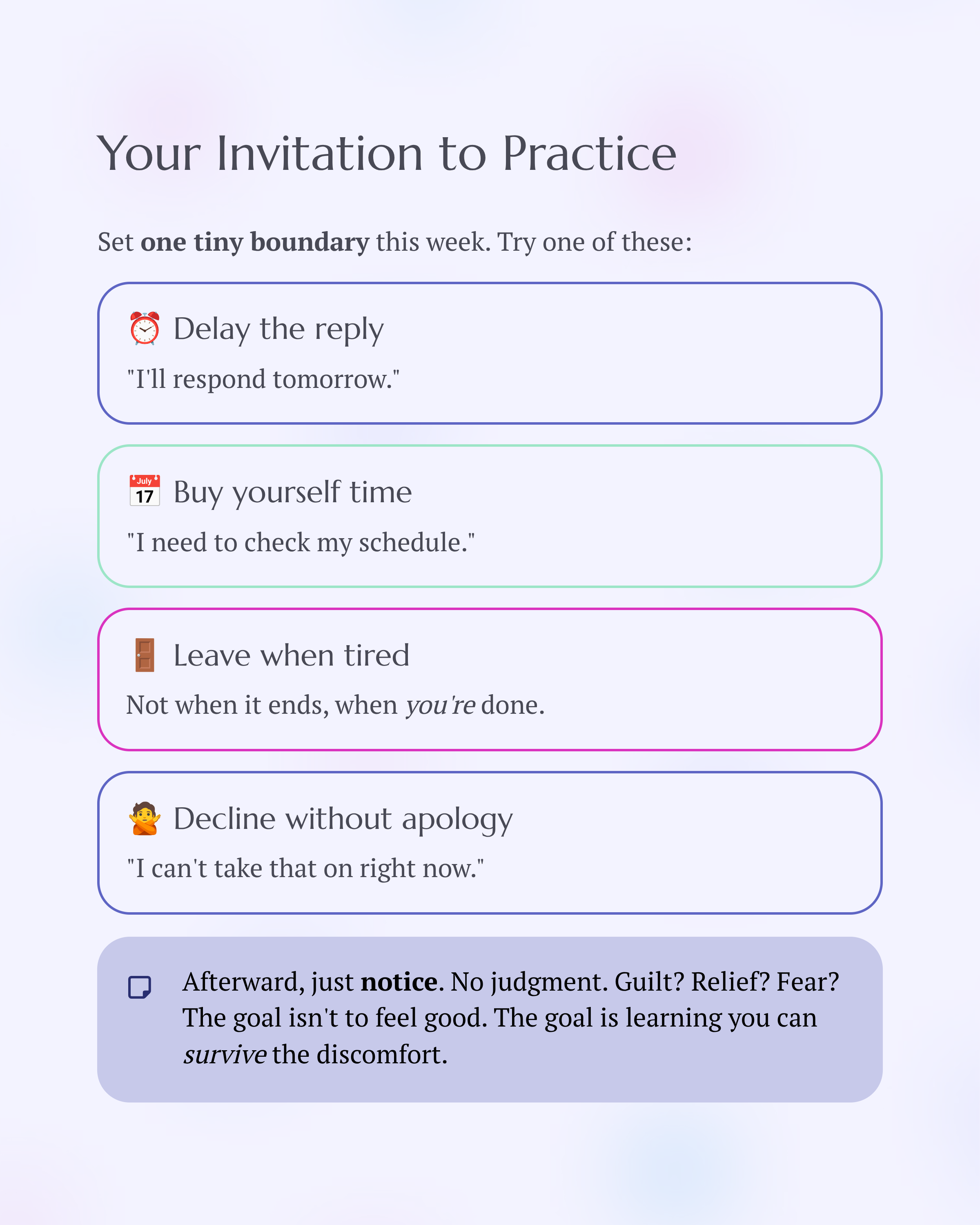
Your Invitation to Practice
You don't need to change everything. Just one small experiment:
Set one tiny boundary this week.
It could be:
Not responding to a non-urgent message until tomorrow.
Saying “I need to check my schedule” instead of an automatic yes.
Leaving a gathering when you're tired, not when it ends.
Telling someone, “I can't take that on right now,” without a long apology.
Then, afterward, simply notice. Don't judge. Don't analyze. Just observe:
What came up for me? Guilt? Relief? Fear? A mix of everything?
Write it down if it helps. The goal isn't to feel good. The goal is to learn the language of your discomfort and see that you can survive it.
This week, notice the discomfort without retreating from it. Let it be there. Let it teach you.
And if you catch yourself spiraling into guilt or self-doubt, try saying this gently to yourself:
“I'm not doing something wrong. I'm doing something new. And new things take practice.”
Your Way Forward: Growing Self-Trust
Over time, you may notice the guilt softening. Not because you stop caring about others, but because you've started caring about yourself too.
You may still feel the discomfort sometimes. That's okay. It's not failure. It's practice.
And practice, as you know by now, always feels awkward before it feels natural.
If This Resonates…
If you recognized yourself in these words, the guilt, the second-guessing, the fear of disappointing, please know: there's nothing wrong with you. You're not selfish. You're simply unlearning old patterns and learning new ones. That takes time.
And if you'd like support as you navigate this, learning to hold boundaries with care, to meet the discomfort without retreating, to rebuild self-trust from the inside out, I'm here. No pressure, just presence.
