
Your Burnout Didn't Start When You Think It Did
There's a critical difference between feeling stressed and being stressed. One is a manageable signal. The other is the first step in a dangerous slide we often miss entirely.
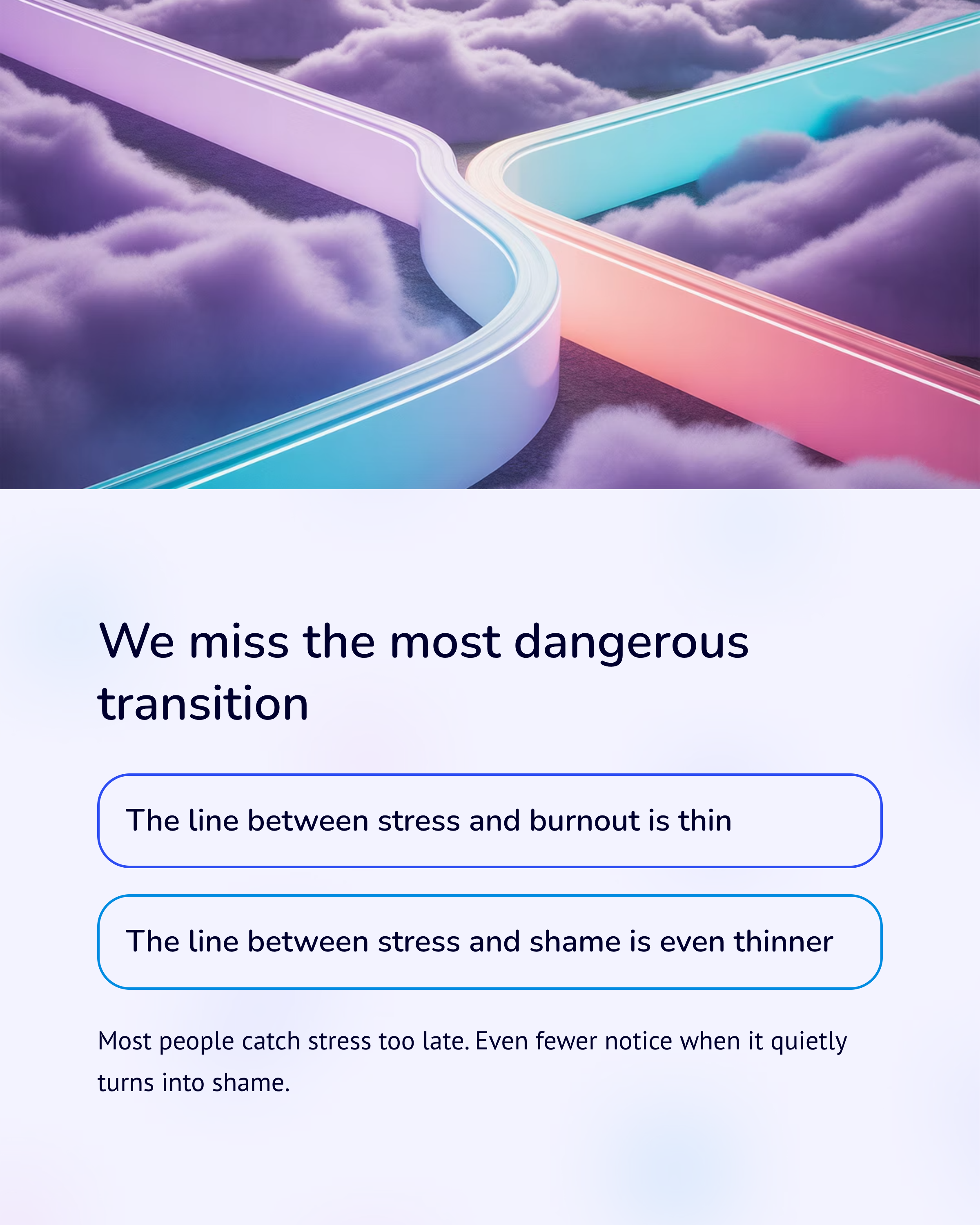
We often treat stress, shame, burnout, and depression as separate experiences. We might say we're “stressed,” then later confess we're “burned out.” But they aren't separate. They are often stages of a single, dangerous progression. When we miss the connections between them, we miss the chance to break the cycle and change the course. The line between stress and burnout is thin. The line between stress and shame is even thinner.
This is how the silent slide often happens:
Stress: It starts here, with the constant pressure, the endless changes, and the hard expectations we put on ourselves. This is the "stretching" feeling. We were taught to manage our stress. We were taught to manage our stress. What we were not taught is that managing it the wrong way is what accidentally turns it into something much worse.
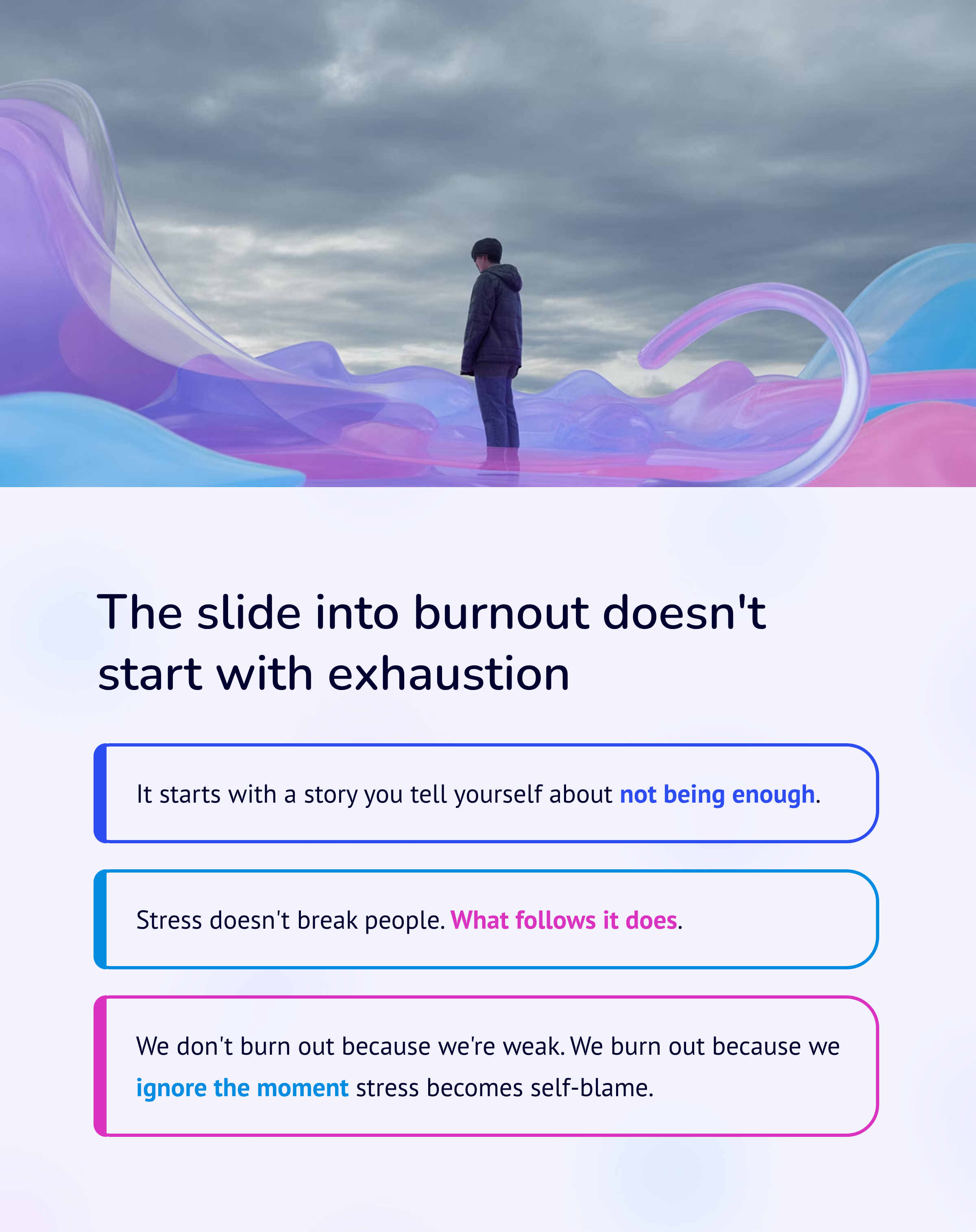
Shame: When we can't meet those expectations, stress mutates. The critical inner voice takes over, twisting it into a story of a personal flaw: “I am a failure. Why can't I handle this? Everyone else seems fine.” This shame becomes a toxic fuel. The slide into burnout never starts with exhaustion. It starts with a story you tell yourself about not being enough.
Burnout: The shame leads to pushing even harder, until your system says, “No more.” This is the wall of exhaustion, cynicism, and ineffectiveness that defines burnout. It's not just being tired, it's the body and mind forcing a shutdown.
Depression: When burnout is ignored or misunderstood, the exhaustion can sink deeper. It moves from a feeling of “I can't work” to a feeling of “I can't... be.” Hope diminishes, and the emotional pain becomes a constant state.
The critical transition, the one we have the most power to stop, is the shift from Stress to Shame. Most people catch stress too late. Even fewer notice when it quietly turns into shame.
Your Invitation to Interrupt the Cycle
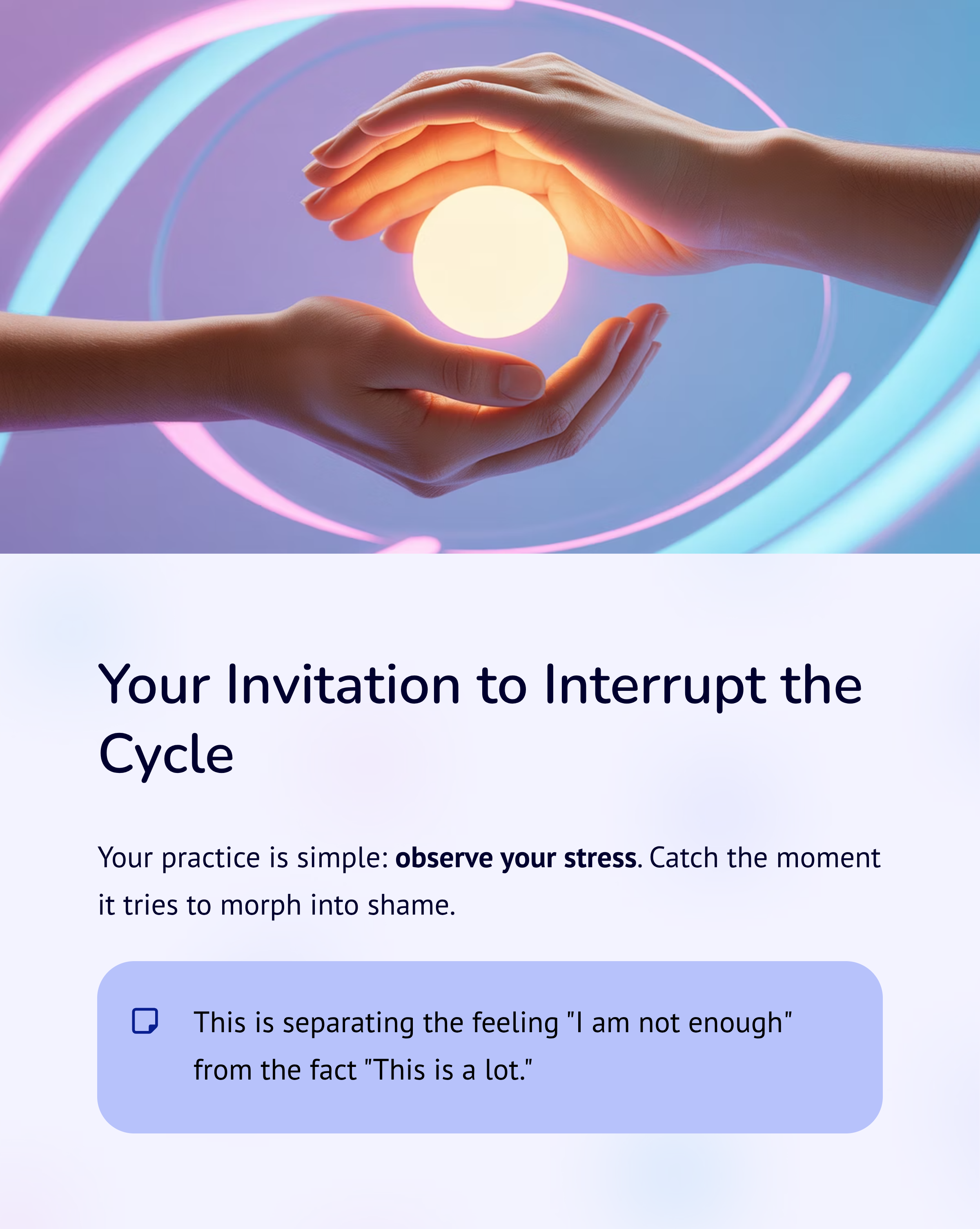
This week, your practice is simple: observe your stress. See if you can catch the moment it tries to morph into shame. Remember, naming it robs it of its power.
Did it quickly turn into a story about your own inadequacy? Did you feel not just busy, but bad about being busy or not achieving “enough”?
This is the practice of separating the feeling “I am not enough” from the fact “This is a lot.” Just noticing this shift is the first and most powerful step in stopping the progression.
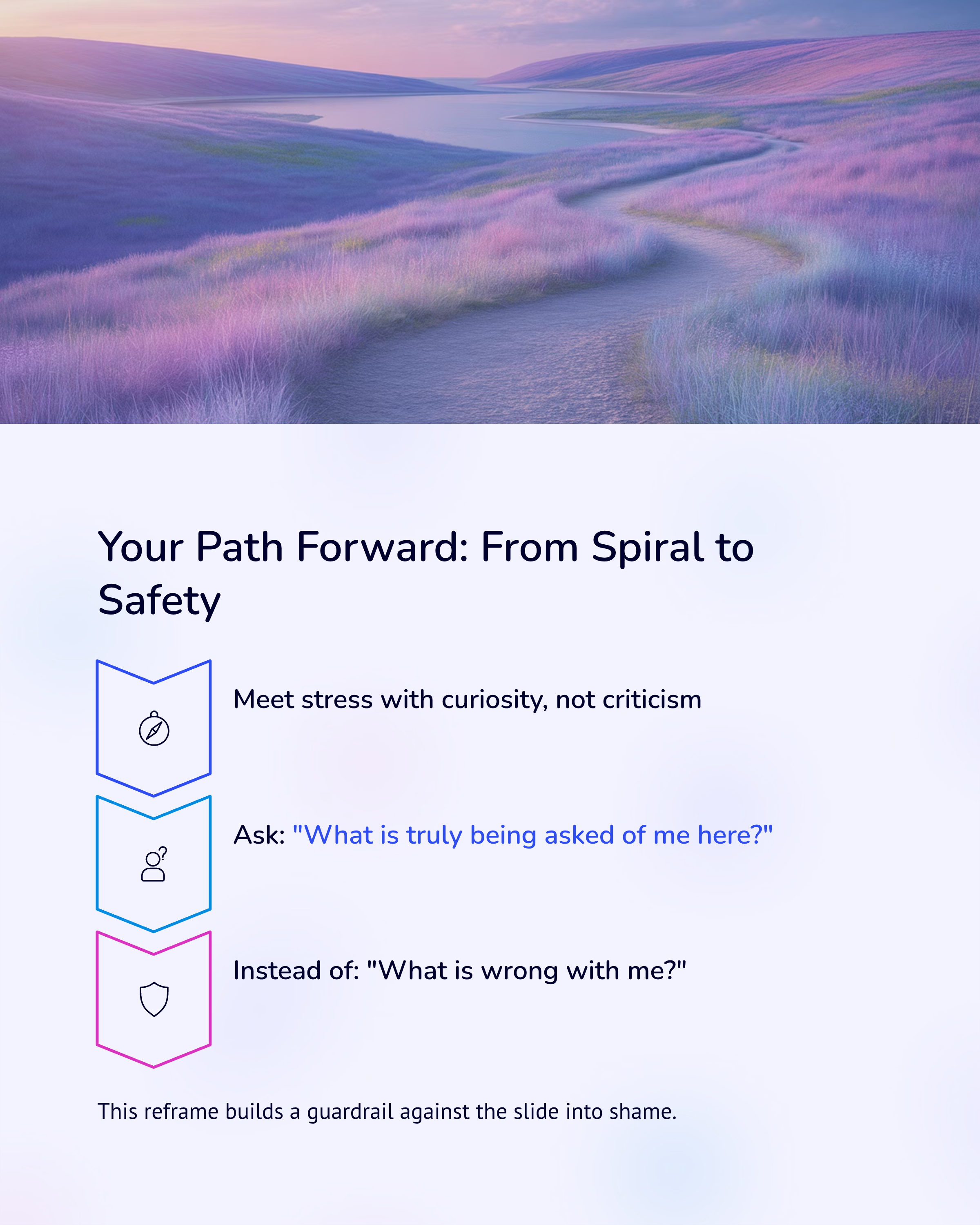
Your Path Forward: From Spiral to Safety
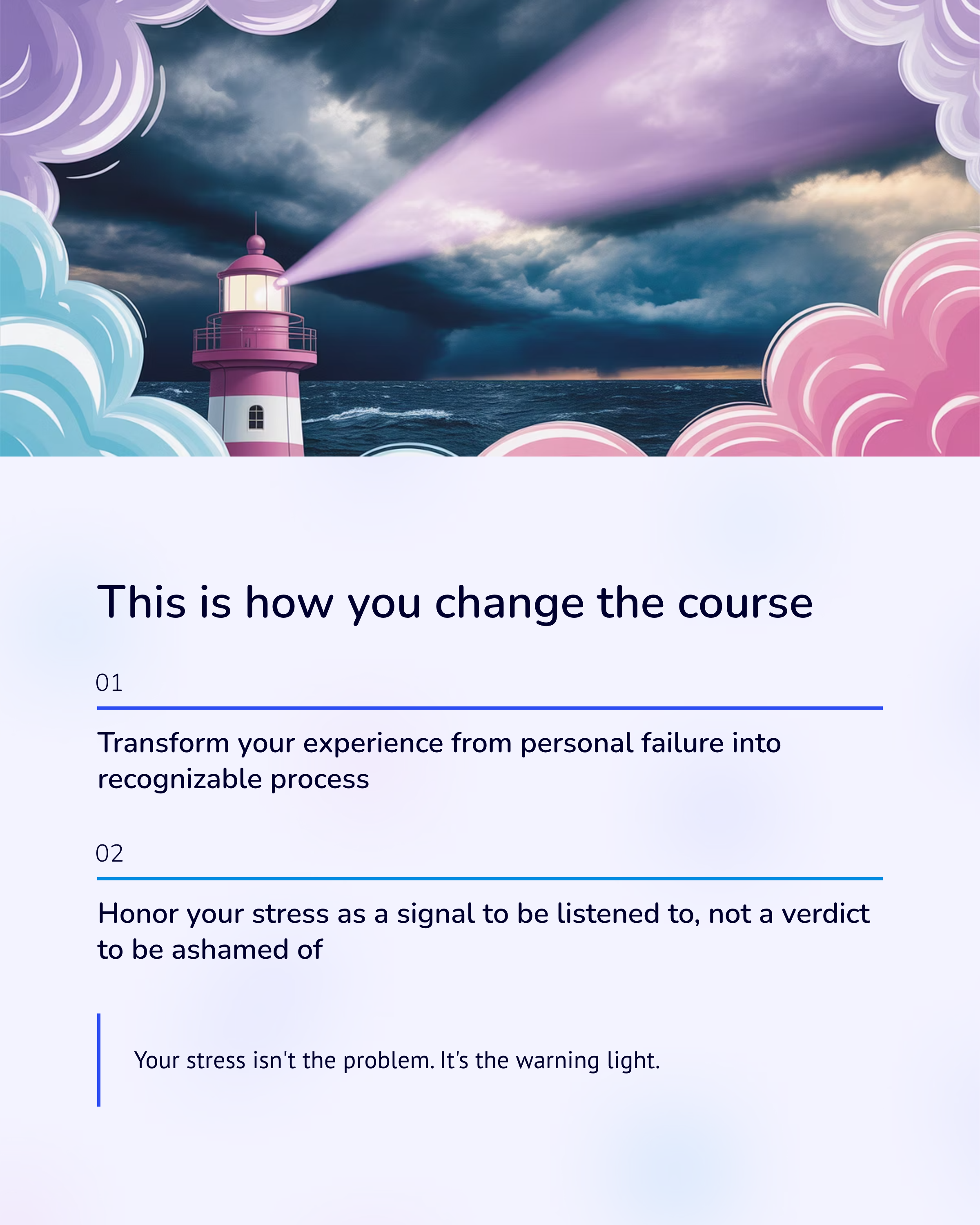
Recognizing this path is not meant to scare you, but to empower you. Remember: your stress isn't the problem, it's the warning light. It's ignoring that light, or shaming yourself for it, that leads to a breakdown.
Stress doesn’t break people. What follows it does. We don’t burn out because we’re weak. We burn out because we ignore the moment stress becomes self-blame.
When you feel stress, see if you can meet it with curiosity instead of criticism. Ask, “What is truly being asked of me here?” instead of “What is wrong with me?”
This simple reframe builds a guardrail against the slide into shame. It transforms your experience from a personal failure into a recognizable process. This is how you begin to honour your stress as a signal to be listened to, not a verdict to be ashamed of.
If this resonates…
If you see yourself in this progression and feel ready to break the cycle with compassionate, practical support, this is the work we do together. You don't have to navigate this alone. Send me a message, I'm here to help.
And if you're trying to understand whether what you're experiencing could be burnout, you can explore the Burnout Guide.
Please note: This model describes a common and observed emotional progression, not a strict medical diagnosis. It's a map of how these feelings often build upon one another.
Disclaimer: This content is for informational purposes only. It is shared to promote awareness and understanding, not to replace professional medical or psychological advice. If you are experiencing symptoms of depression, please consult a healthcare provider.
