
Signs You’re Quietly Coming Back to Yourself After Burnout
What if recovering from burnout doesn’t look like recovery at all? What if it looks like boredom instead of panic? A pause before a “should”? A spark of pride after a small boundary? The signs you're recovering are often so subtle, you might not recognize them as progress.
We often expect recovery from burnout to announce itself. A grand breakthrough. A permanent change. A moment where everything suddenly feels lighter and clearer. But in my experience, both personally and with clients, recovering rarely arrives that way. It shows up quietly. In moments you almost miss. In quiet, almost unnoticed moments, you can see how far you’ve come when you reflect back. This article is about those moments. The ones that don't make headlines but count more than it seems. These are often the first quiet signs of Rebalancing. Not dramatic change, but a gradual return to yourself.
If you've been wondering whether you're making progress, these signs are here to remind you: you're further along than you think.
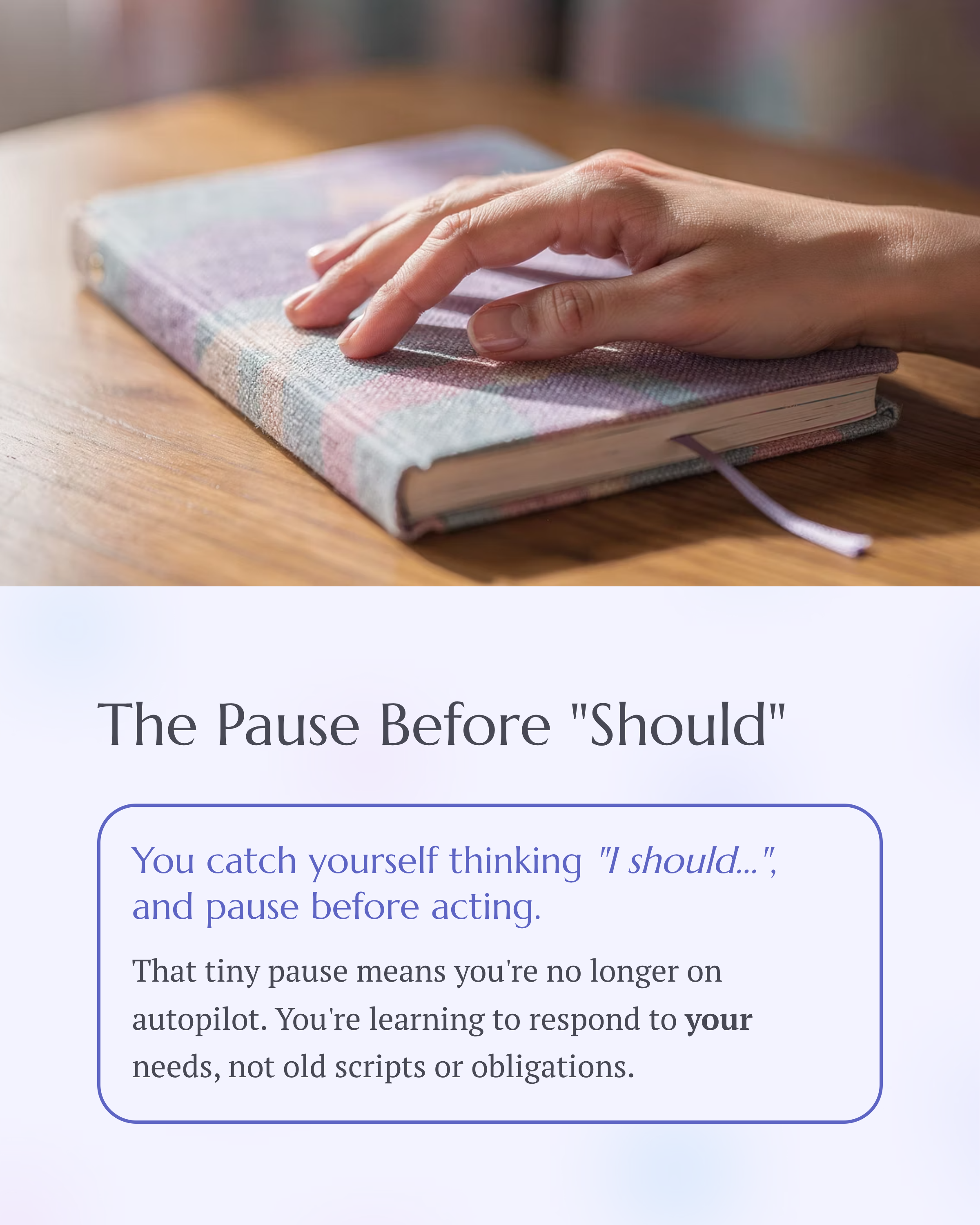
Sign 1: You catch yourself thinking “I should…” and pause before acting on it.
That small word “should” carries so much weight. It's the language of obligation, comparison, and old scripts. Recovery shows up in the half-second between the thought and the action, where you stop and ask yourself: “Wait, do I actually want to? Is this mine to carry?” That pause is proof that you're no longer running on autopilot.
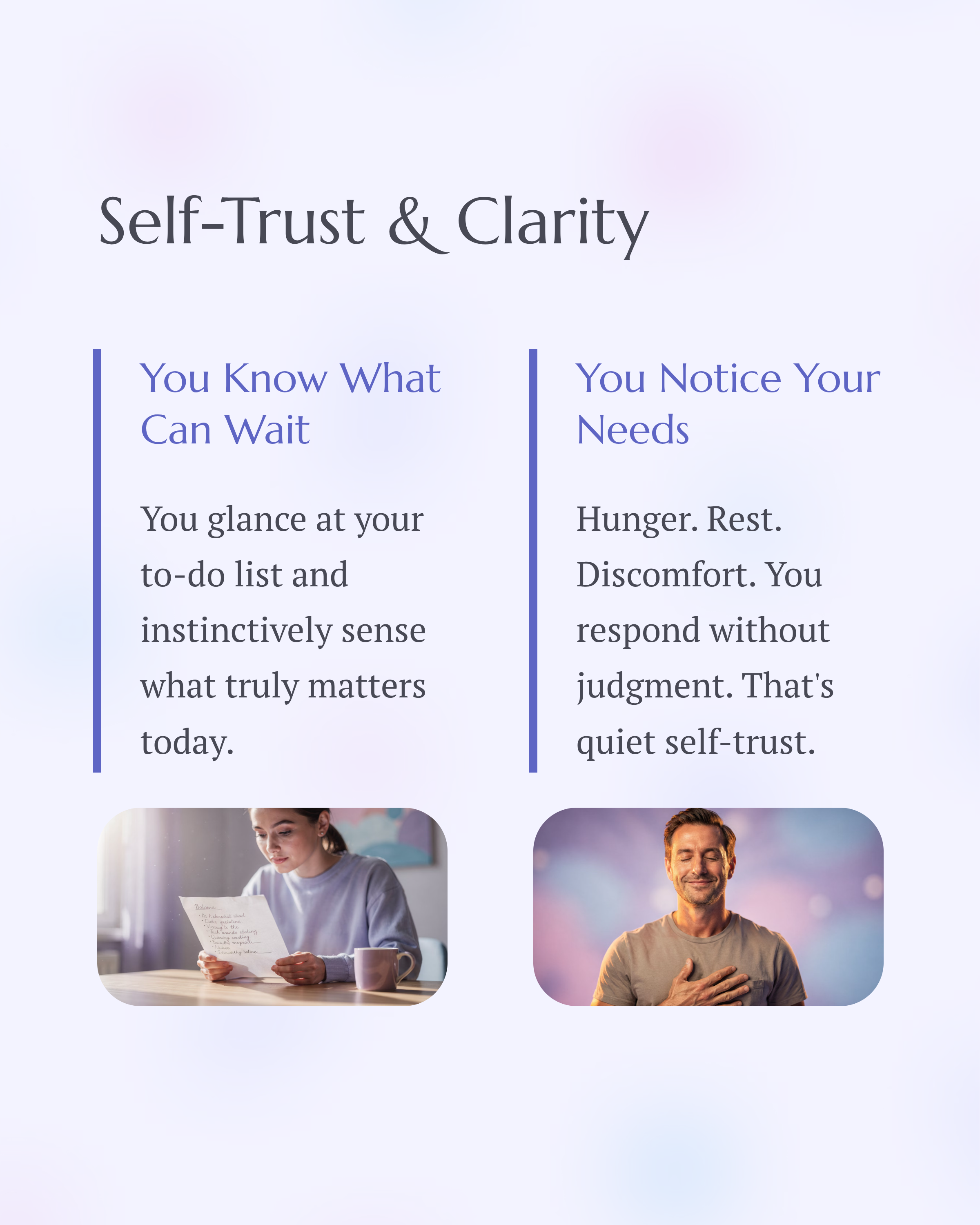
Sign 2: You look at your to-do list and instinctively know what can wait.
This isn't about productivity. It's about clarity in choice. Your nervous system, once in constant overdrive, now has enough quiet to sense what's truly urgent and what's just noise. You trust yourself to prioritize your energy, not just your tasks.
Sign 3: You notice a need: hunger, rest, discomfort, and respond to it without judgment.
This is one of the most underrated signs of recovering. Noticing that you're tired and actually lying down. Feeling hungry and eating without an internal critique about it. Discomfort arises, and you respond with care instead of criticizing yourself for having needs. This is self-trust in its quietest, most essential form.
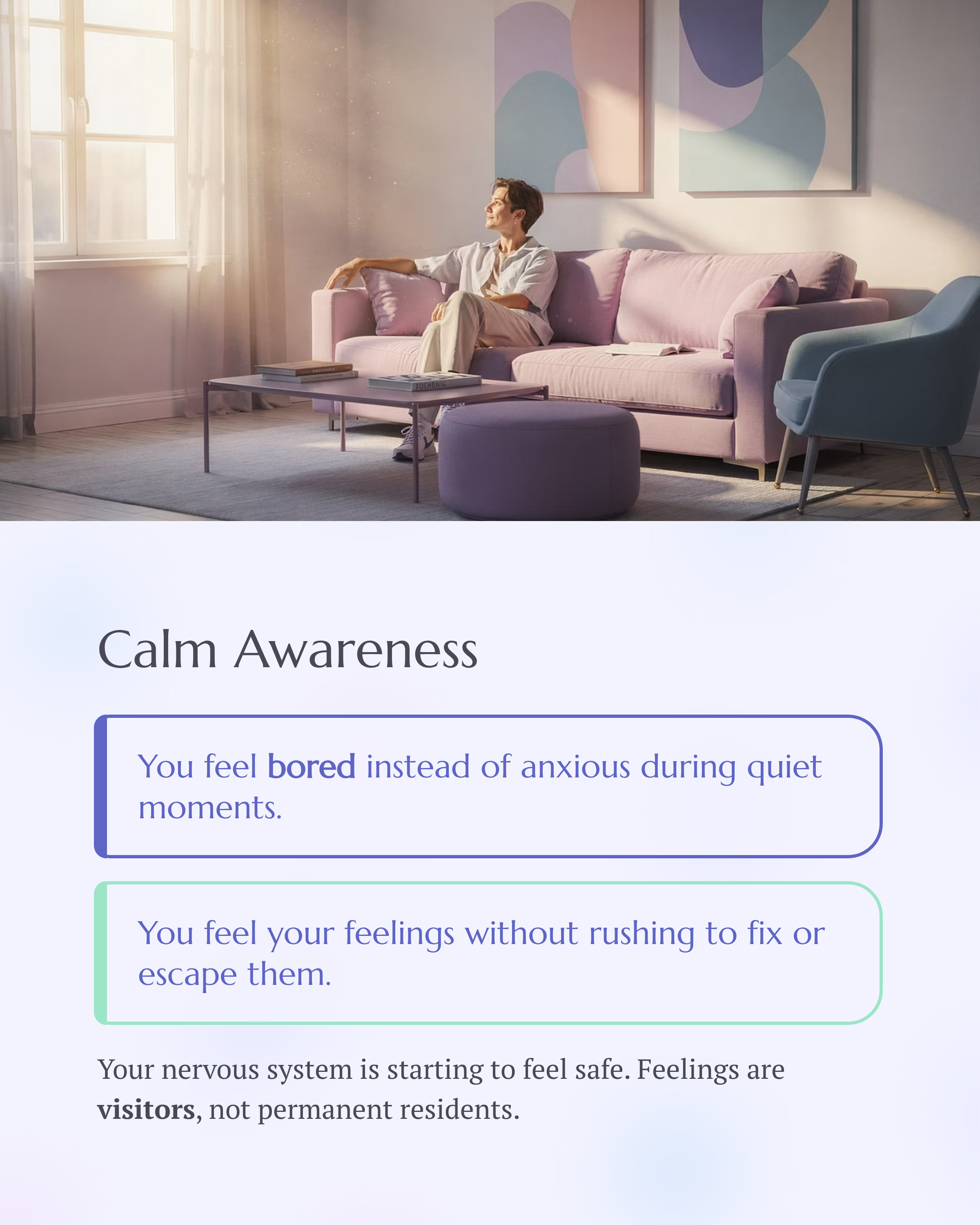
Sign 4: You feel bored instead of anxious during a moment of quiet.
For so long, silence may have felt dangerous. A space where uncomfortable feelings could surface. Boredom, on the other hand, is different. It means your nervous system is calm enough to feel under-stimulated rather than threatened. Boredom can be a sign that your nervous system is beginning to feel safer and more regulated.
Sign 5: You feel your feelings without immediately trying to fix or escape them.
Recovery doesn't mean the hard feelings disappear. It means your relationship with them changes. You can feel sadness, anger, or fear and simply let them be present, without rushing to problem-solve or numb. You're learning that feelings are visitors, not permanent residents.
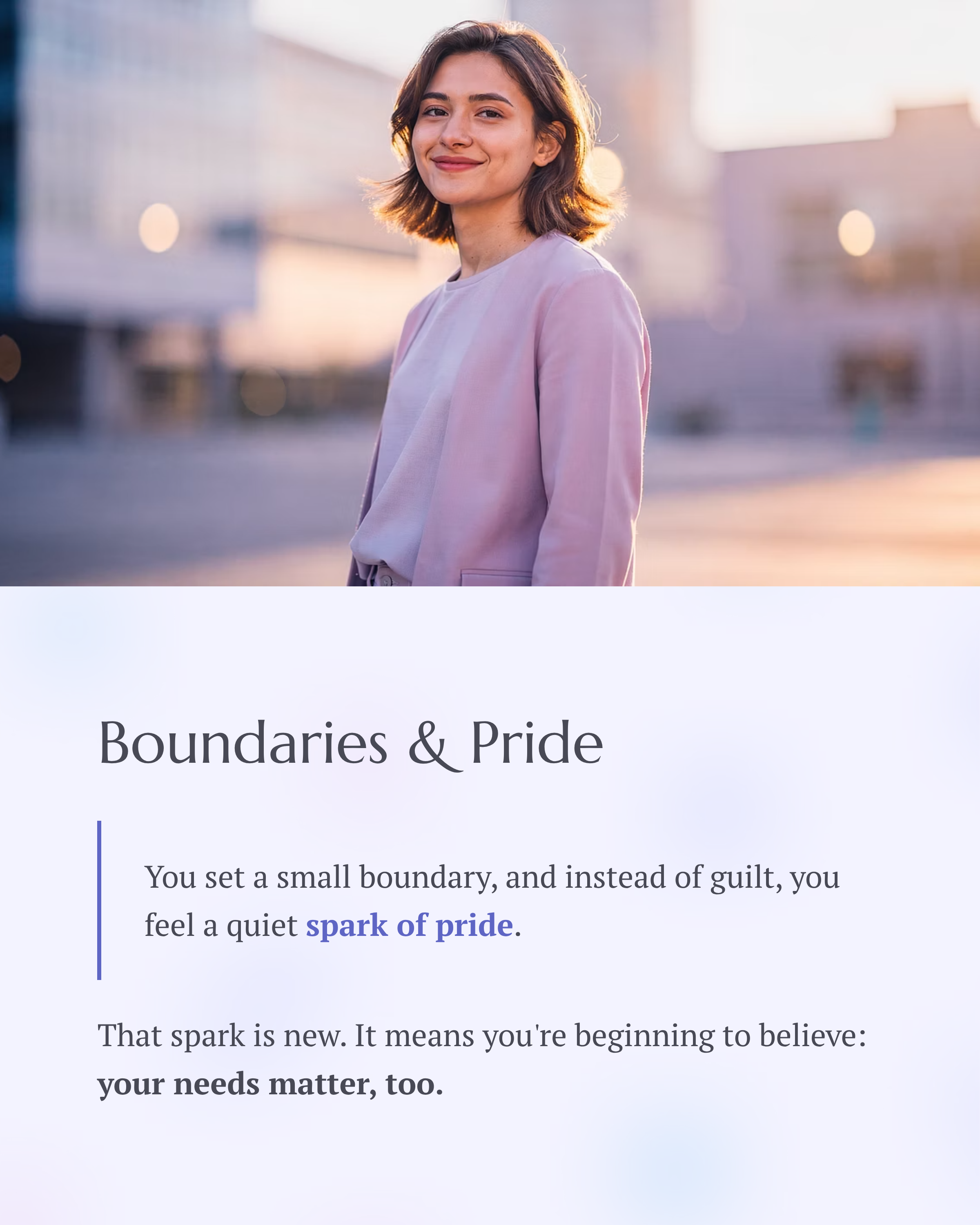
Sign 6: You set a small boundary and feel a spark of pride instead of guilt.
Guilt often follows boundaries when we're not used to protecting our energy. So when that familiar wave of guilt is replaced by even a spark of “I did that for me,” something has changed.
You're beginning to believe and accept that your needs matter, too.
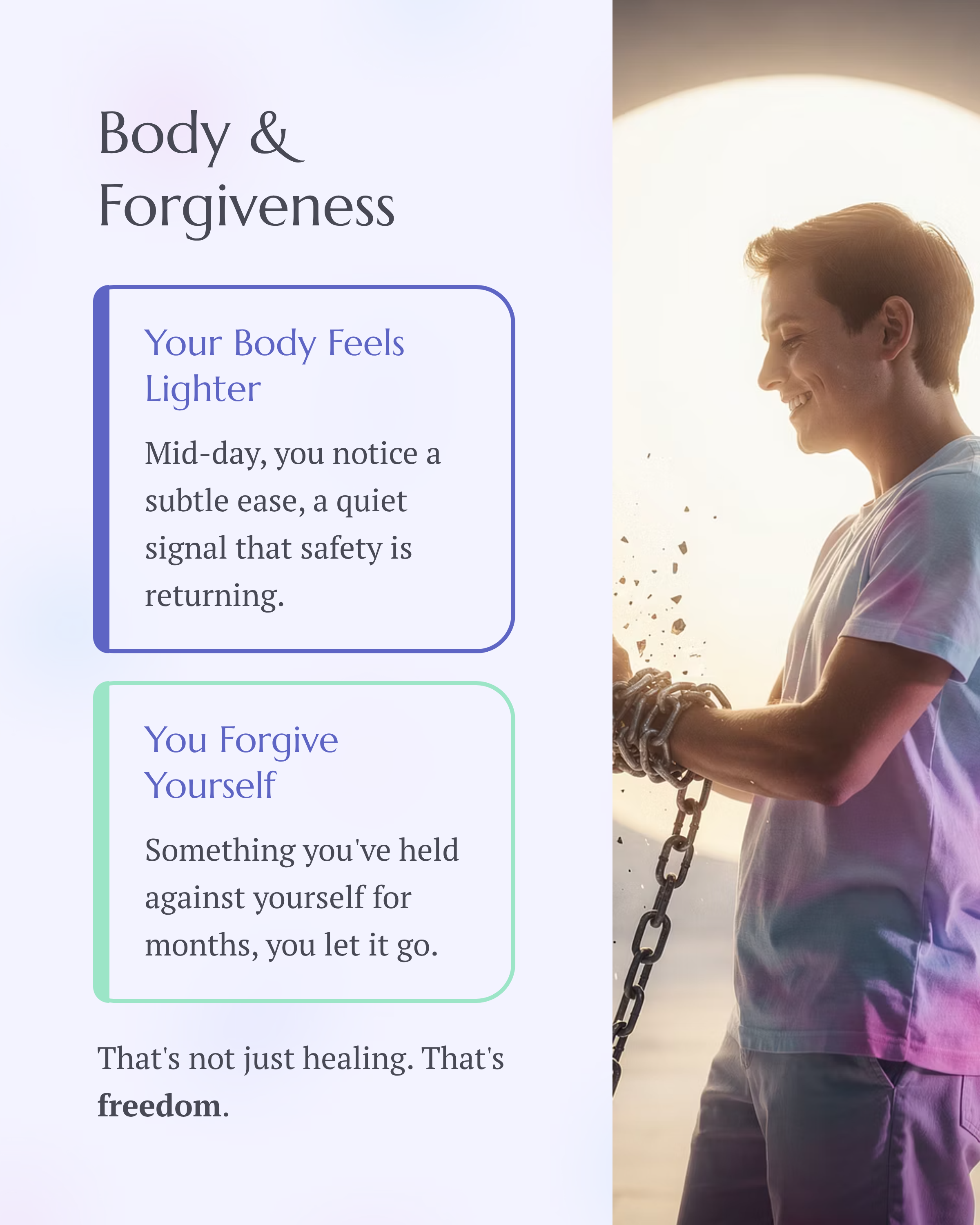
Sign 7: You realize, mid-day, that your body feels lighter than it did last week.
You don't know exactly when it happened. But somewhere between last week and today, the weight in your chest eased. Your shoulders dropped. You caught yourself breathing more deeply. This is the quietest, most profound sign of all: your body is beginning to experience moments of safety again.
Sign 8: You forgive yourself for something you've been holding against yourself for months.
It might not be a dramatic moment. It could be a quiet thought that crosses your mind: “I did the best I could with what I knew then.” And for the first time, you believe it. That's not just healing, that's freedom.
Closing Reflection
Recovery isn't a finish line. It's a slow, gentle return to yourself. These quiet changes are often the first signs of Rebalancing, not becoming someone new, but returning to who you were before survival required you to disconnect.
You don't have to look for dramatic proof. Just notice the quiet changes:
The pause before the “should.”
The boredom instead of the panic.
The boundary that felt more like pride than guilt.
These moments are the proof. And they're accumulating, even if you don't feel them all at once. If one of these signs feels familiar, take it as a quiet nod from yourself: “You're doing it. You're finding your way back.” And if none of them feel true yet, that's okay too. Recovery has its own timeline. The fact that you're here, reading, hoping, looking for signs, that in itself is a beginning.
Your Invitation to Look Closer
Read through the eight signs slowly, maybe even one per day. Don't analyze. Just notice which ones land softly, which ones feel familiar, and which ones awaken something: recognition, longing, or even disbelief.
These reactions aren’t random. They often point to parts of you that are already beginning to Rebalance.
Your Path Forward: A Gentle Practice
This week, choose one sign that felt most resonant, or most needed. Without forcing anything, simply hold it in your awareness. Notice if it appears in small ways.
Recovery doesn’t require force. It responds to attention.
If this resonates…
If you recognized yourself in these quiet changes, take it as a small affirmation. You're not broken. You’re not behind. You’re in the slow, gentle process of returning to yourself.
And if you’d like support as you continue this process, I’m here. Not to fix you, but to walk alongside you, with care, clarity, and presence.
