
Why Expat Stress Feels Different and How to Notice It Early
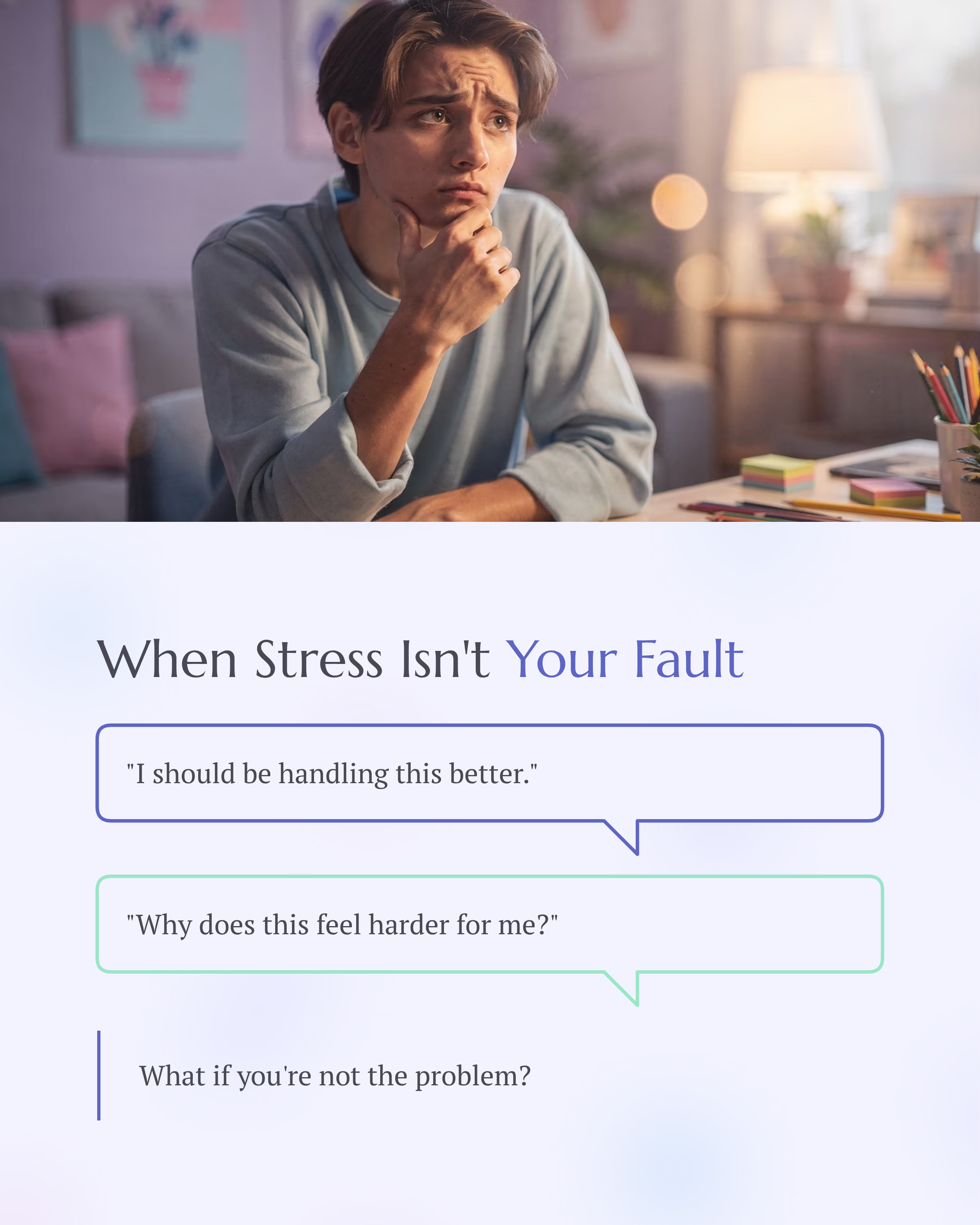
If you're an expat and you've ever thought, “I should be handling this better,” or “Why is this so hard when others seem fine?” this is for you.
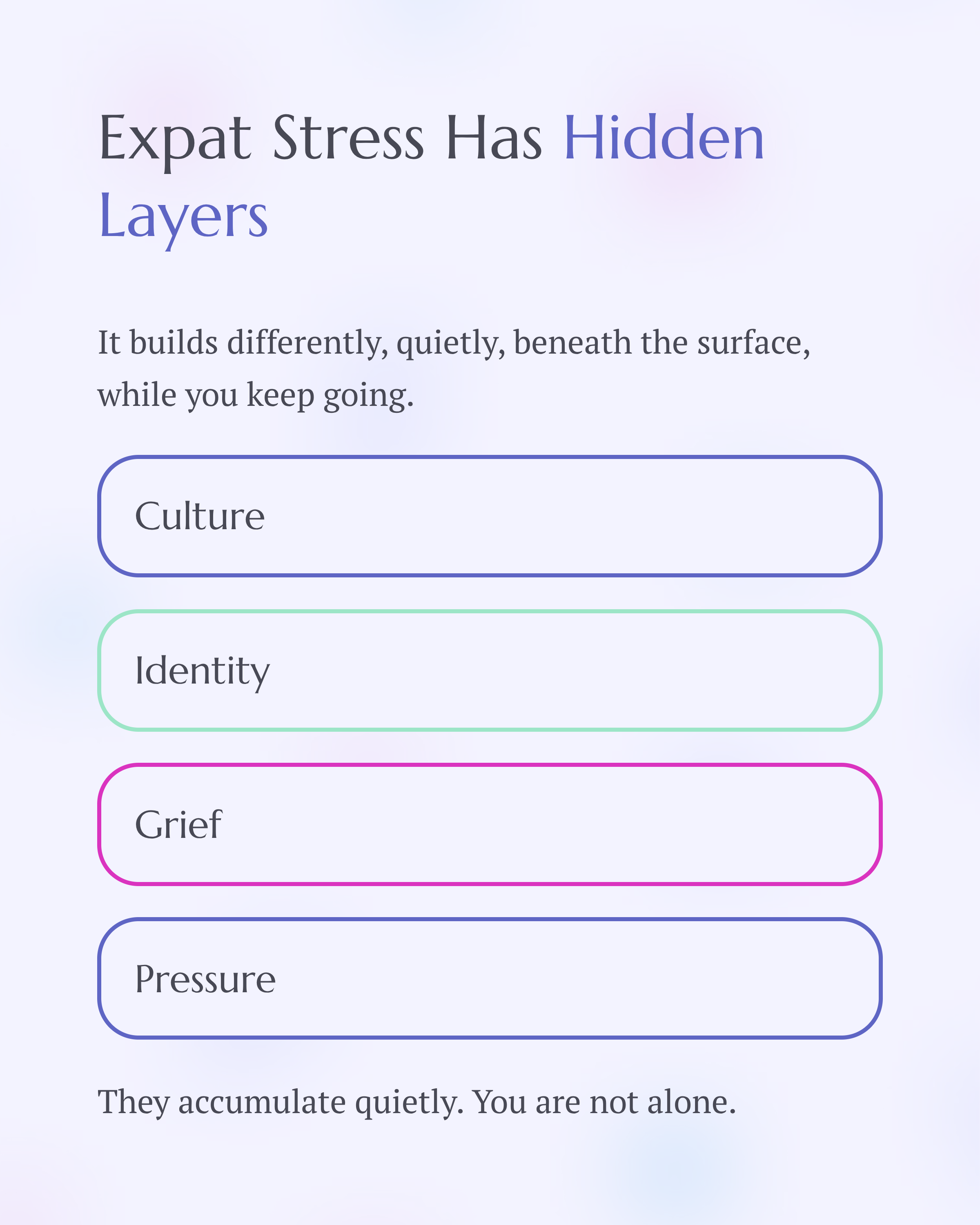
Expat stress doesn’t build in the same way as regular stress. It has hidden layers, cultural, identity, grief, and pressure, that accumulate quietly while you’re busy navigating daily life. If you've been blaming yourself for struggling, you've been looking at the wrong map. Here's what's actually happening, and how to catch it early.
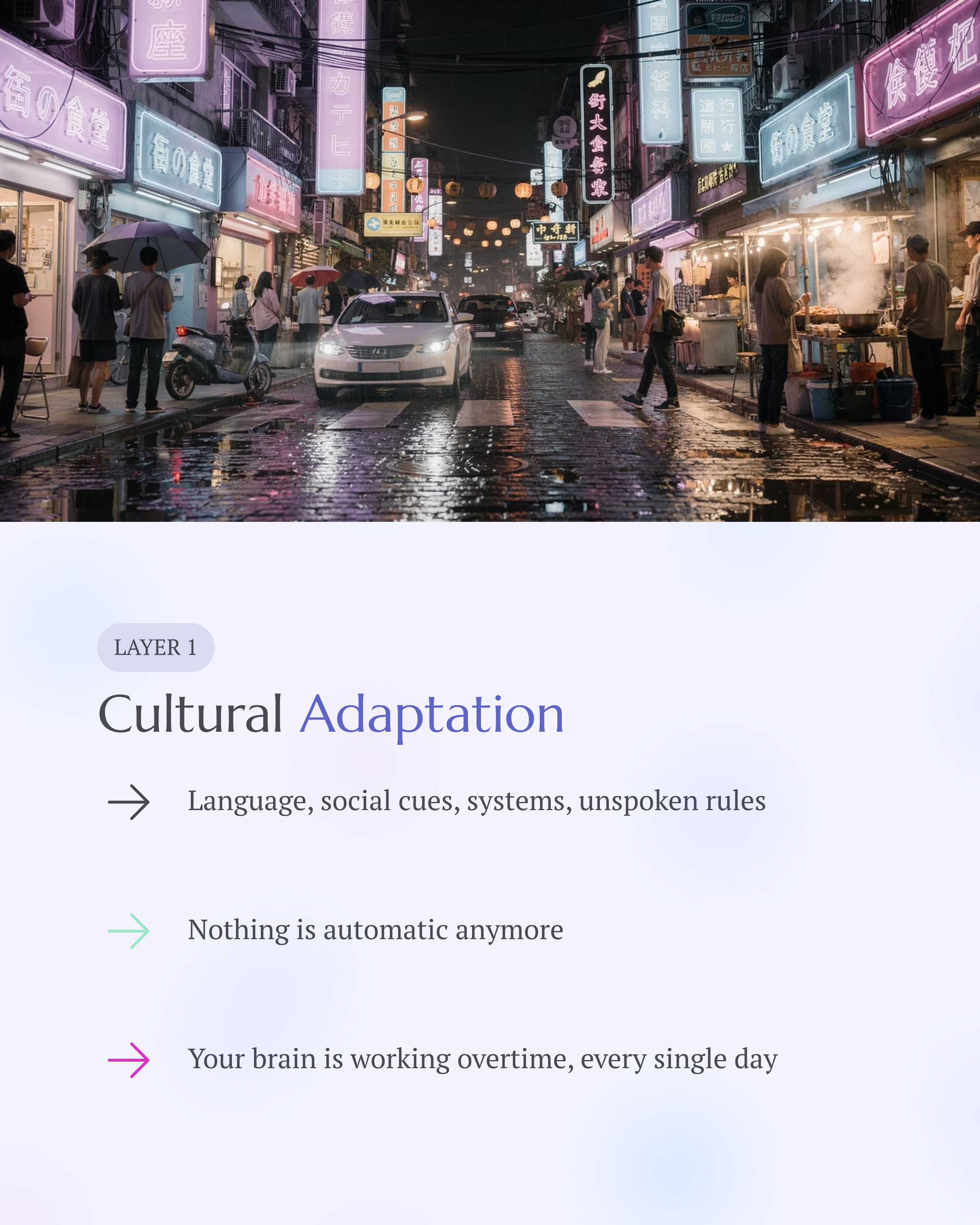
Layer 1: The Cultural Adaptation Tax
Moving to a new country means your brain is working overtime. Everything is new: language, social cues, systems, unspoken rules. What was once automatic now requires conscious effort. This isn't just “getting used to things.” It's a cognitive and emotional tax that runs in the background 24/7. You're not weaker than others, you're carrying a load that wasn't there before.
Layer 2: Identity Drift & Loss of Anchors
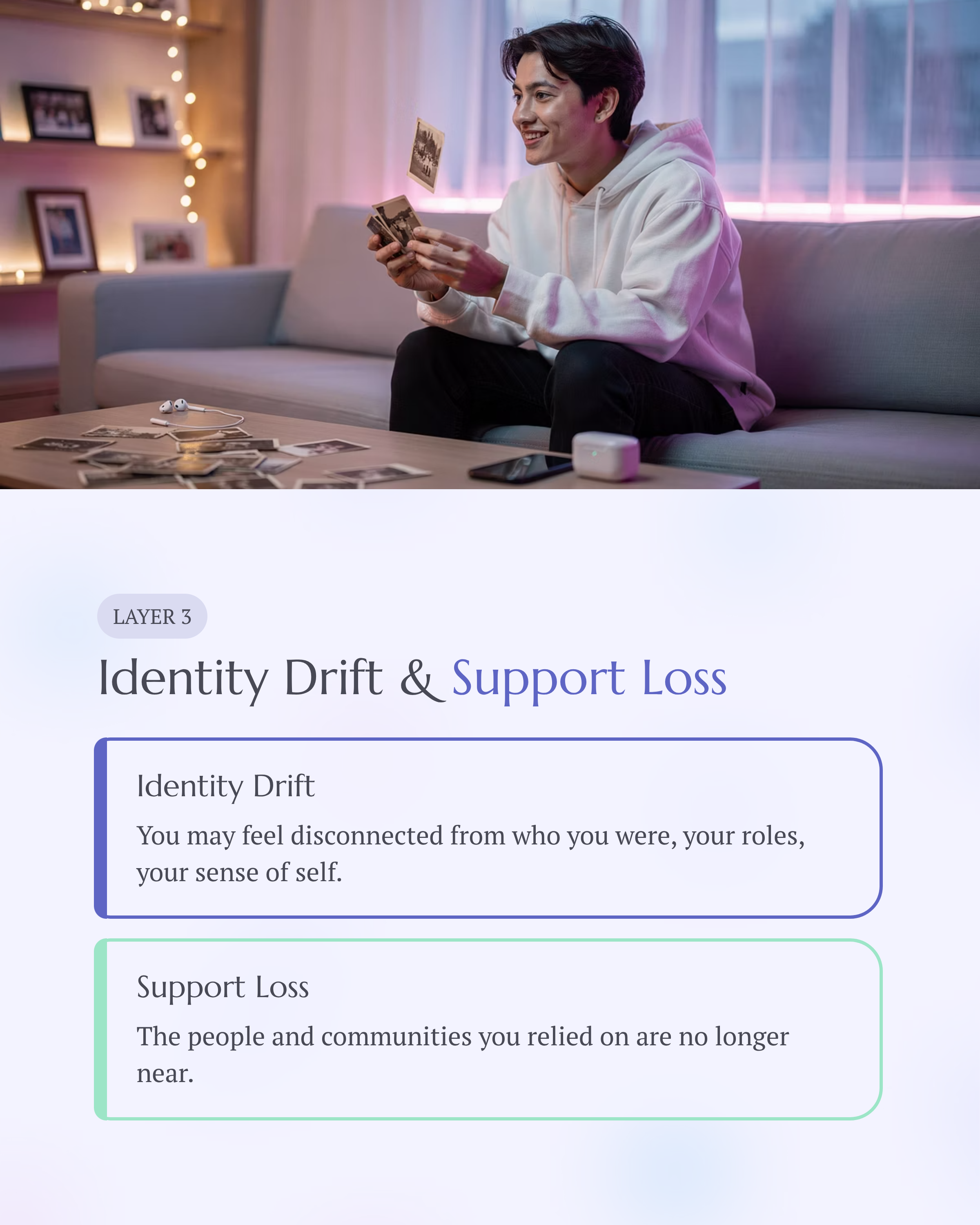
At home, you knew who you were. Your role, your history, your place in the world felt clear. Abroad, those anchors loosen. Your professional identity may not translate the same way. Your sense of humor, your way of connecting, your “you-ness”, it doesn't always land. Over time, you can start to feel disconnected, wondering, “Who am I here?”
Layer 3: Absence of Familiar Support Systems
Back home, support was woven into daily life: a friend to call, family nearby, a community that understood you without explanation. In a new country, those systems are no longer there. Building new ones takes time and energy you may not have. And in the meantime, you're carrying everything alone, or at least it can feel that way.
Layer 4: Constant Code-Switching Fatigue
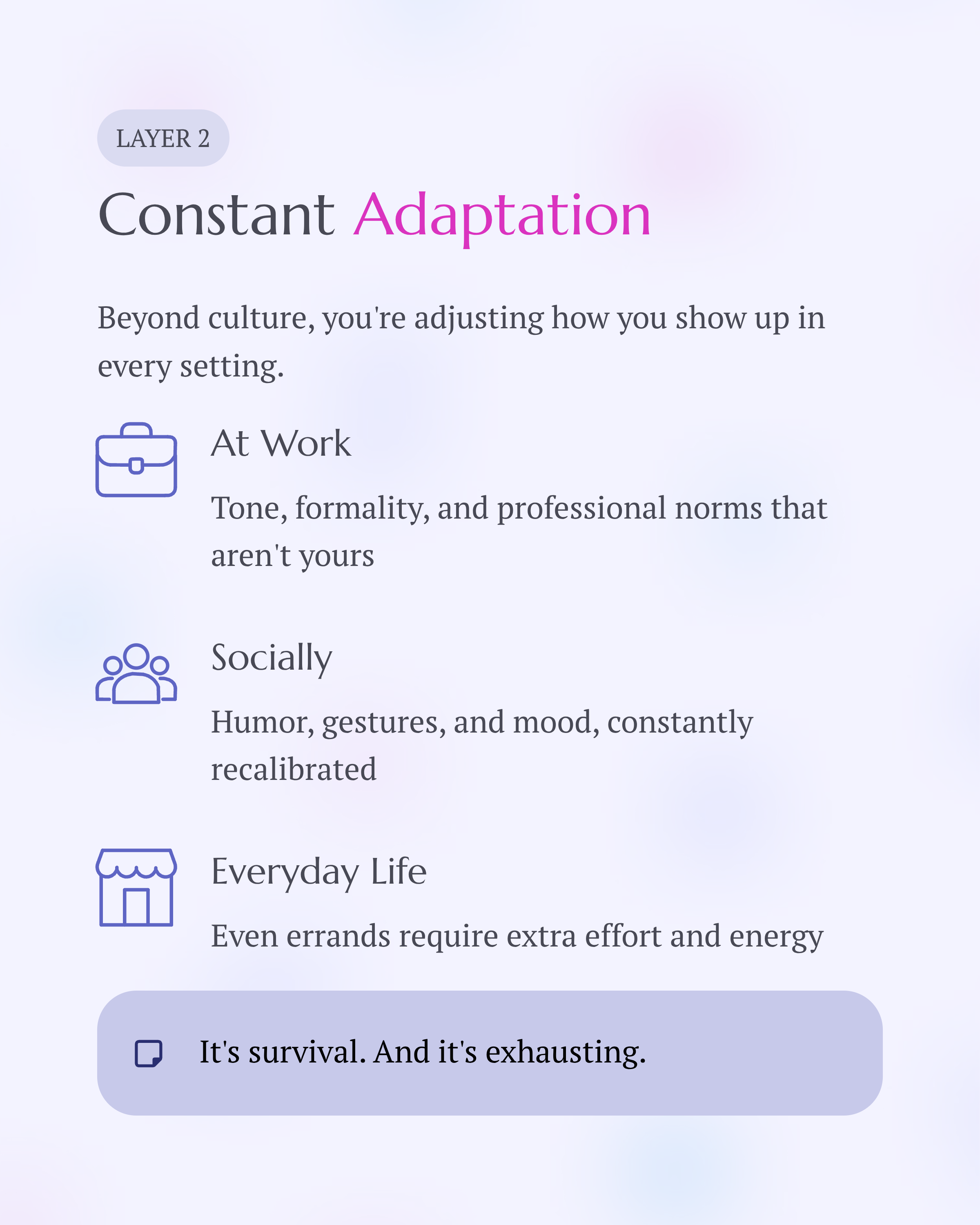
Code-switching isn't just about language. It’s the constant adjustment of how you speak, act, and present yourself to fit in. At work. At social gatherings. At the grocery store. You're performing “adaptability” constantly, and that performance is exhausting. It's not fake, it's survival, but it drains your energy in ways that are easy to miss.
Layer 5: Invisible Grief for What's Left Behind
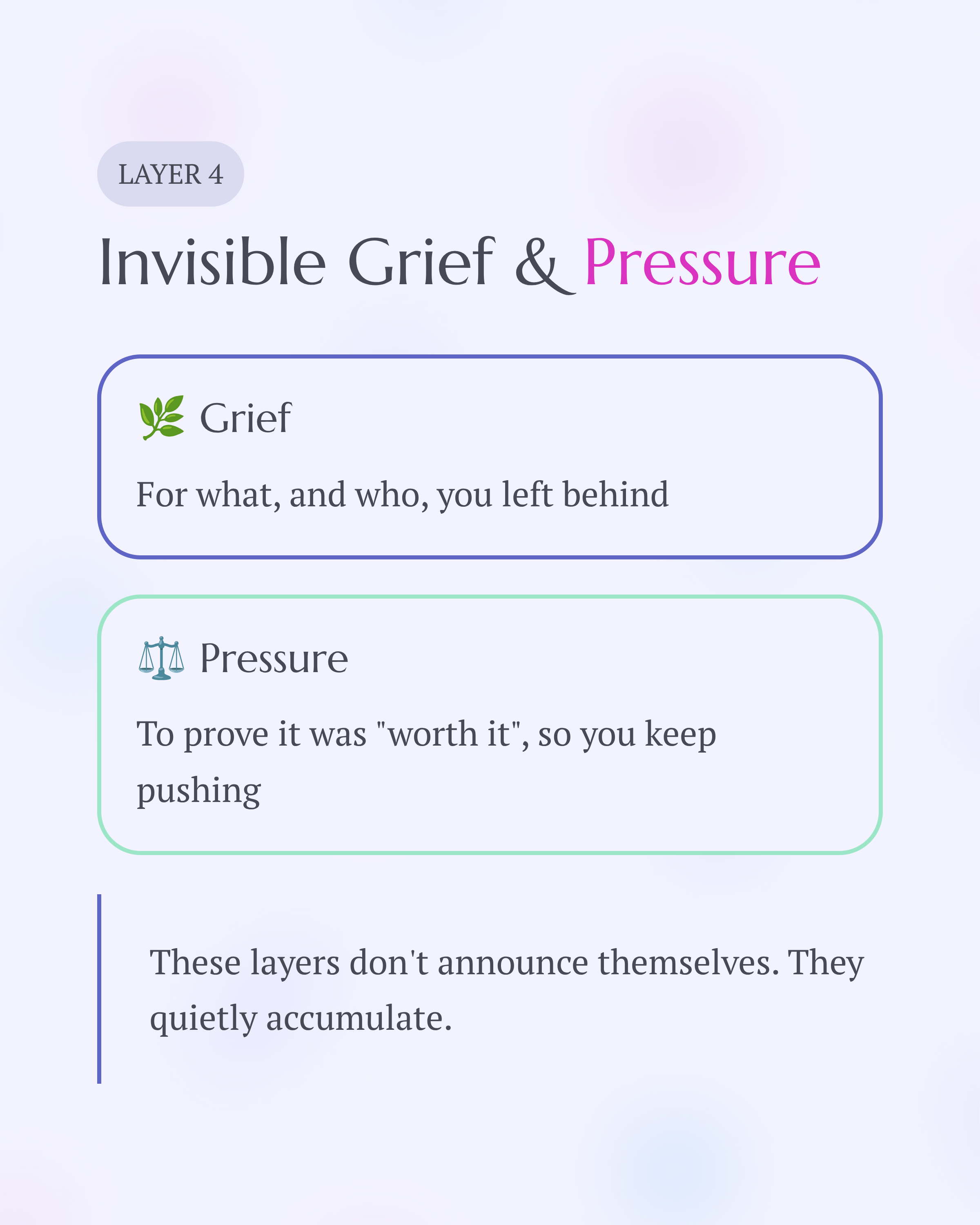
Grief isn't only for people who've died. It's also for the life you left, the future you pictured, the ease of belonging, the person you were before constant adaptation became a survival skill. This grief is real, but it's rarely spoken about. So it sits beneath the surface, unprocessed, adding weight to everything else.
Layer 6: The “This Move Must Be Worth It” Pressure
You made a big choice. And with that choice often comes an unspoken demand: This has to be worth it. So when things get hard, there's an extra layer of pressure, to perform gratitude, to minimize struggle, to prove you made the right decision. This pressure makes it harder to admit when you're struggling, even to yourself.
Early Warning Signs: A Gentle Checklist
These layers don’t announce themselves. They build quietly over time.
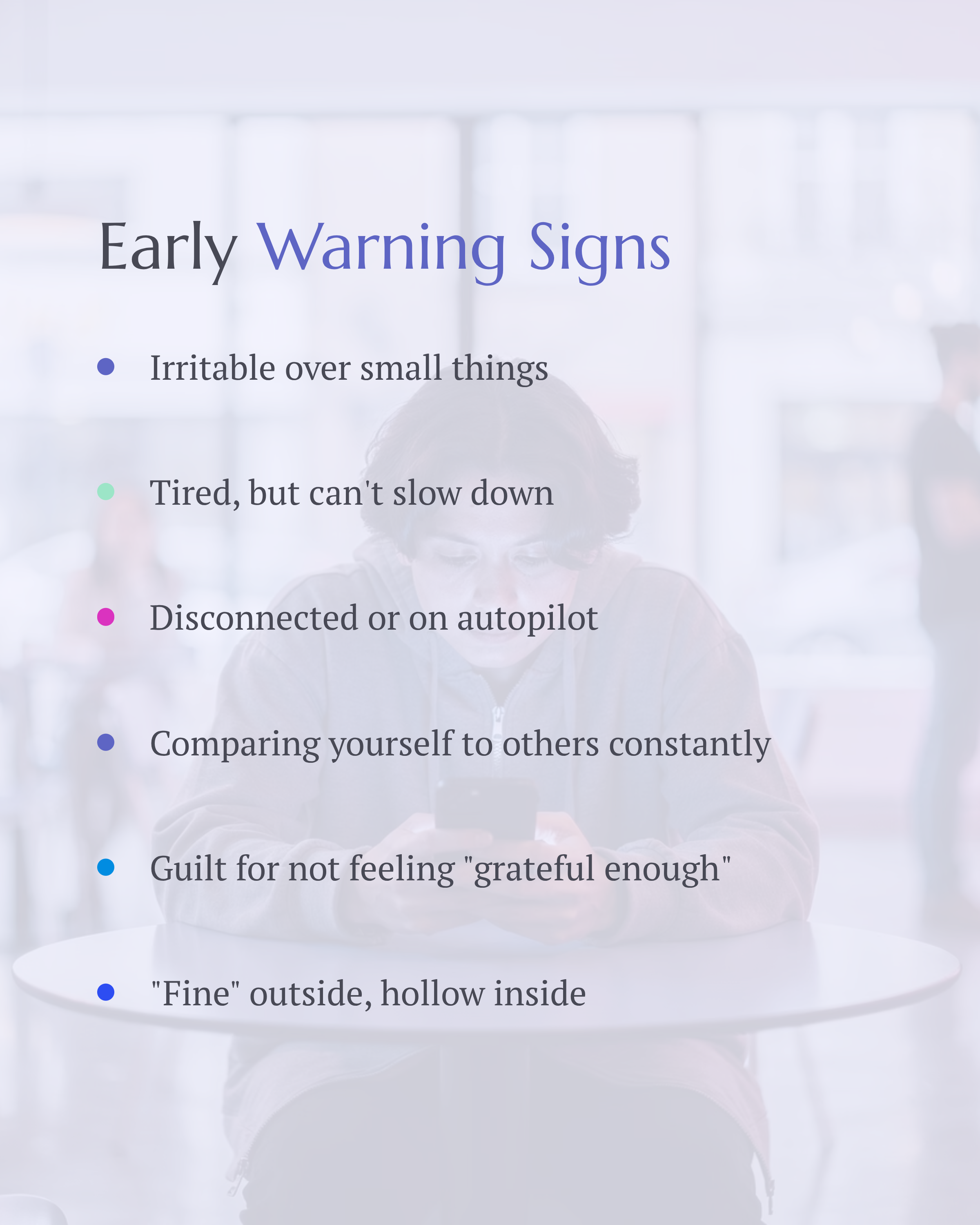
You may start to notice them in small, everyday ways:
You feel more irritable than usual, over small things.
You’re tired, but your mind won’t slow down.
You feel disconnected, like you're moving through your days on autopilot.
You're comparing your insides to others' outsides: “Everyone else seems fine.”
You feel guilty for not feeling more grateful or positive about your life abroad.
You’re “fine” on the outside, but feel hollow underneath.
If any of these feel familiar, please know: This isn't a personal failure. It's a signal that you're carrying more than you should.
How to Catch It Early: Gentle Strategies
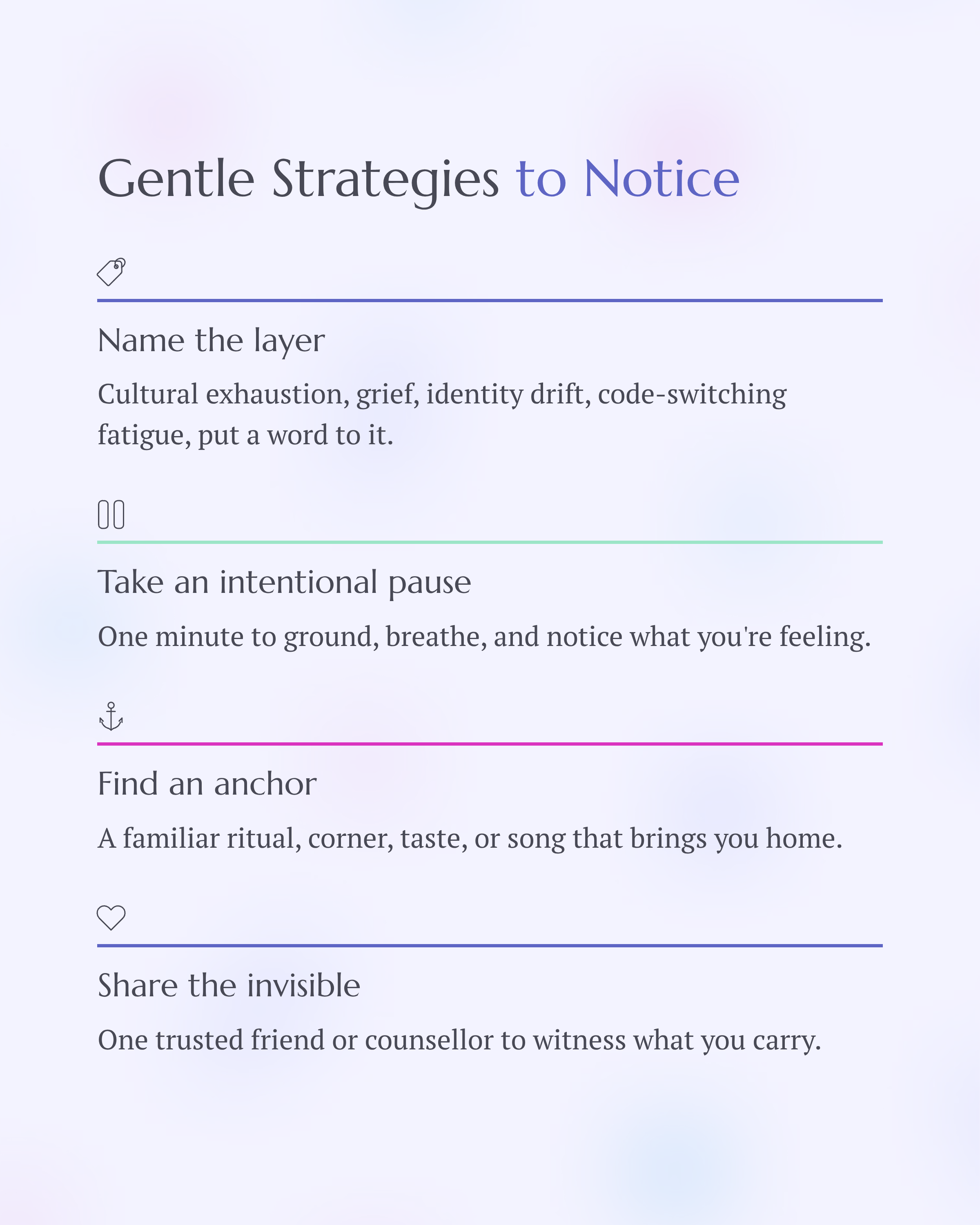
Name the Layer
When you feel off, pause and ask: “Which layer is most active right now?” Is it cultural exhaustion? Grief? Identity drift? Code-switching fatigue? Naming it reduces its power and points you toward what you actually need.
Practice the “Intentional Pause”
You don't need an hour-long break. Just one intentional minute. Close your eyes. Feel your feet on the ground. Breathe. Say to yourself: “This is a lot, and I'm allowed to notice that.” This small pause signals safety to your nervous system and gently interrupts the cycle before it builds up.
Find One Anchor
When everything feels disconnected, find one small anchor: a ritual, a corner of your home, a familiar taste, a song that feels like you. Anchors remind you that you exist, even when everything around you is unfamiliar.
Share the Invisible
If you can, find one person, a trusted friend, a fellow expat, a counsellor, and share one invisible layer. Not to fix it. Just to have it witnessed. Grief loses some of its weight when it's named aloud.
What Can Actually Help?
If you're living abroad and recognise some of these signs, the answer isn't necessarily to become better at coping.
Sometimes the first step is to stop treating your exhaustion as something you simply need to manage better.
A few things can make a tangible difference:
Notice the signs earlier
Pay attention to changes in your sleep, energy, mood, concentration, patience, or desire to connect with others. You don't need to wait until you're completely exhausted before taking those signals seriously.
Make room for real recovery
Rest isn't only about sleeping or taking time off work. Recovery can also mean creating small moments where you are not performing, adapting, solving, or taking care of someone else.
Even a few minutes of doing something that genuinely restores you can matter when your nervous system has been running on constant adaptation.
Look beyond the practical problem
Expat stress isn't always about what needs to be fixed. Sometimes there's loneliness, grief, uncertainty, identity changes, or the feeling of belonging nowhere completely.
Giving those experiences some space can help you understand why you're feeling the way you do, rather than simply trying to push through them.
Notice what is costing you energy
Look at your work, relationships, responsibilities, and daily routines. Where are you giving more than you realistically have to give?
You may not be able to change everything. But noticing where your energy is going can help you find one place where something could become lighter.
Don't wait until you are burned out to ask for support
You don't have to reach a breaking point before talking to someone.
Coaching or counselling can offer a space to slow down, understand what is happening beneath the surface, and explore what needs to change. It can be especially helpful when you already know you need to slow down or set boundaries, but find yourself unable to do it on your own.
For expats, that support can also include the particular experience of building a life away from home: navigating different cultural expectations, relationships, belonging, identity, career pressures, and the feeling of being caught between two worlds.
Closing Reflection
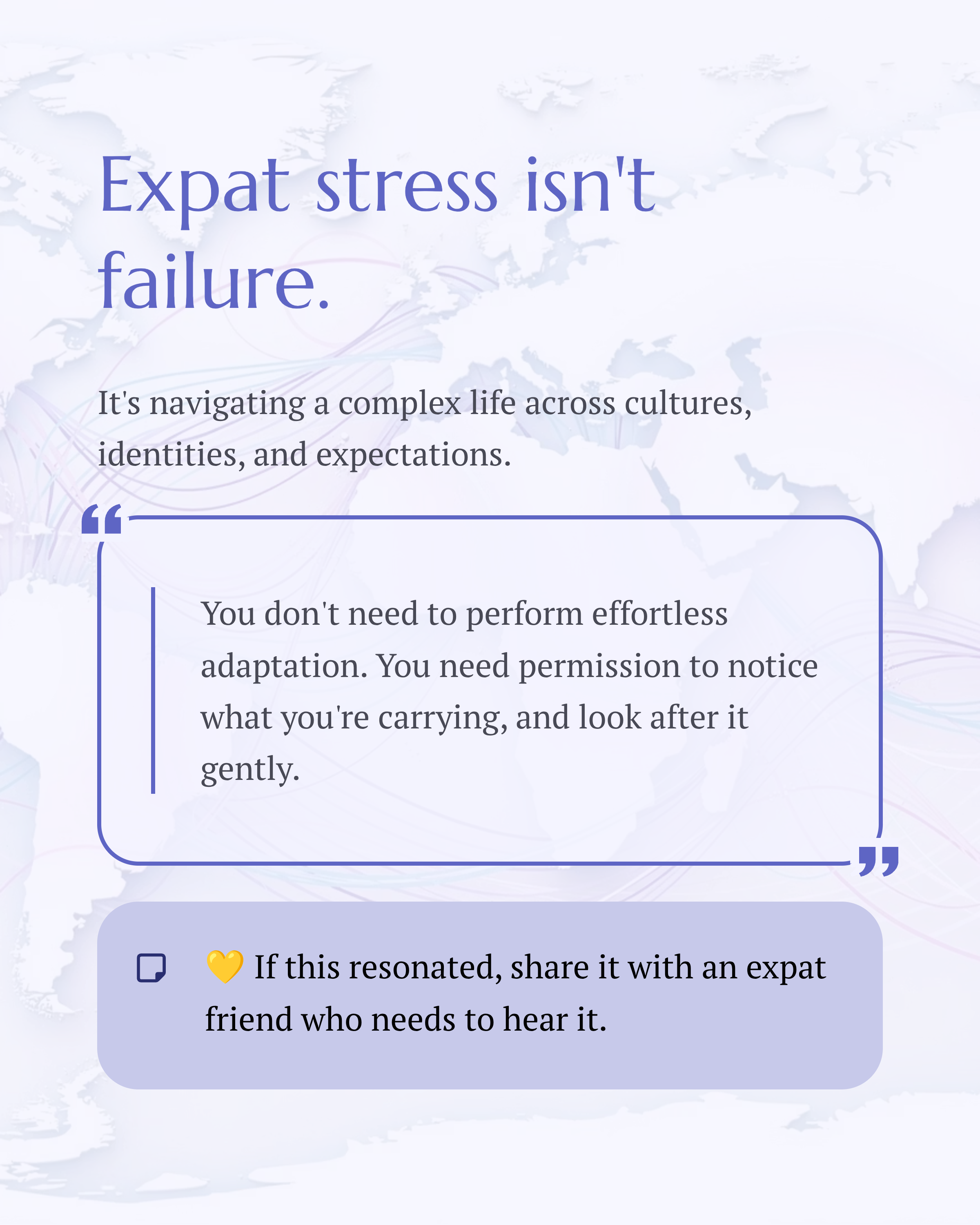
Expat stress isn’t a sign you’re failing. It’s a sign you’re navigating something genuinely complex, a life built across cultures, identities, and expectations.
You don’t need to perform effortless adaptation. You need permission to notice what you’re carrying, and gentle ways to tend to it.
If this resonated, you’re not alone. You’re simply in the slow, brave process of building a life abroad, one layer at a time.
Your Invitation to Look Beneath the Surface
This week, read through the six layers slowly, maybe one each day, or in a quiet moment when you feel the weight of expat life settling in. Don't analyze or judge. Just notice which layers feel familiar, which ones bring something up, and which ones you've been carrying silently without realizing they had a name.
These layers aren't flaws. They're part of the hidden architecture of your experience. Naming them is the first step toward tending to them with care.
Your Way Forward: A Gentle Practice
As you continue navigating expat life, consider returning to these layers whenever you feel off-balance or overwhelmed. They offer a map, not to fix yourself, but to understand what you're actually carrying.
Over time, you may notice certain layers needing more attention than others. Some may lighten as you build anchors and community. Others may need ongoing care. That's not failure. That's the reality of building a life across cultures.
The goal isn’t to eliminate these layers. It’s to recognize them early, respond with compassion, and remember: you’re navigating something genuinely complex.
If this resonates…
If you recognised yourself in these layers, take it as a quiet affirmation: your struggle makes sense.
And if you're trying to understand whether what you're experiencing could be burnout, you can explore the Burnout Guide.
If you'd like support making sense of what's happening, you can explore working with me.
And if you're still figuring out what you need, that's okay too. I'm here, with no pressure, just presence.
