
When Small Things Trigger Big Reactions: What’s Really Happening?
Have you ever reacted strongly to something small and later wondered, “Why did that affect me so much?”
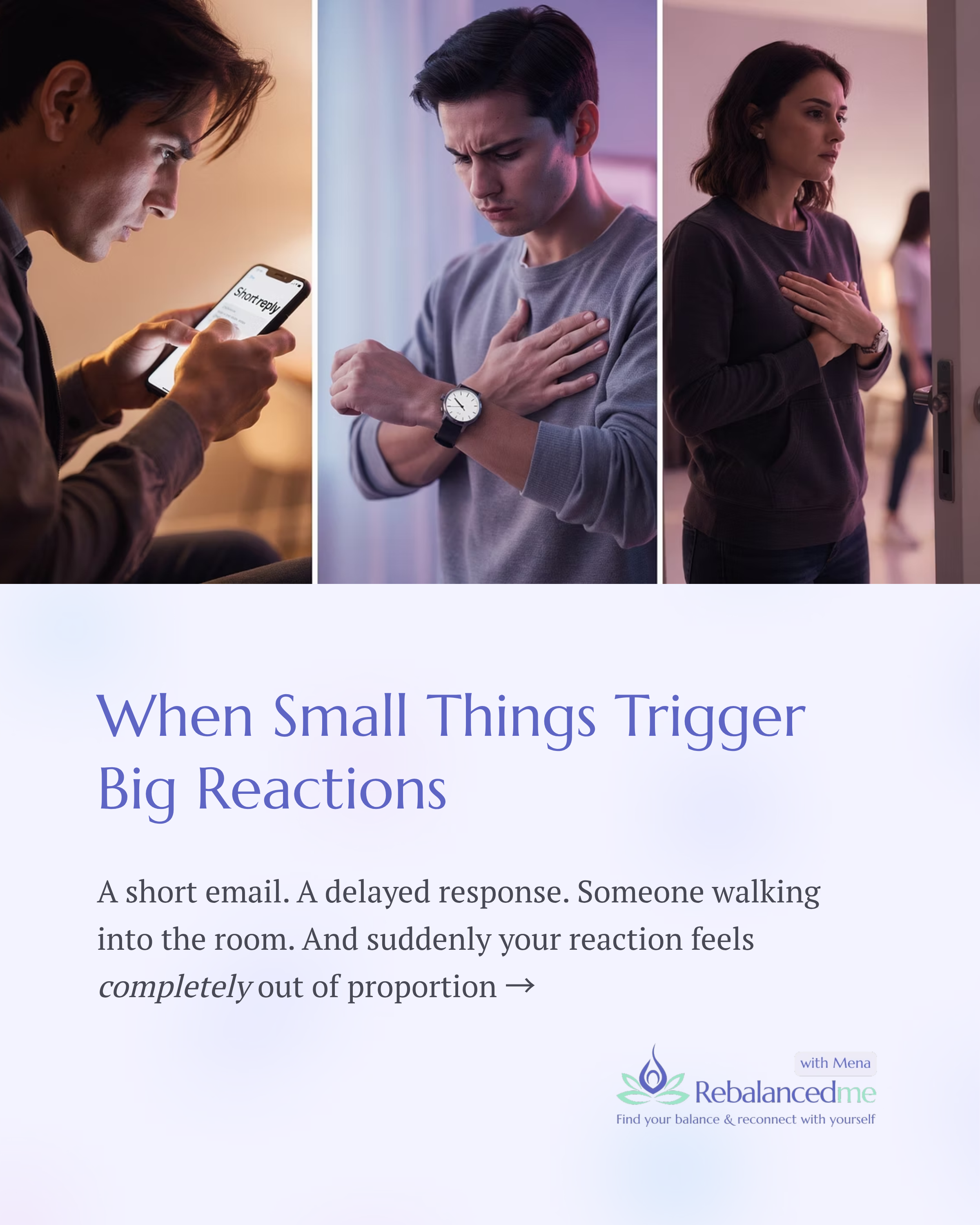
You know that moment. A short email. A delayed response. Someone walking into the room. And suddenly your reaction feels completely out of proportion.
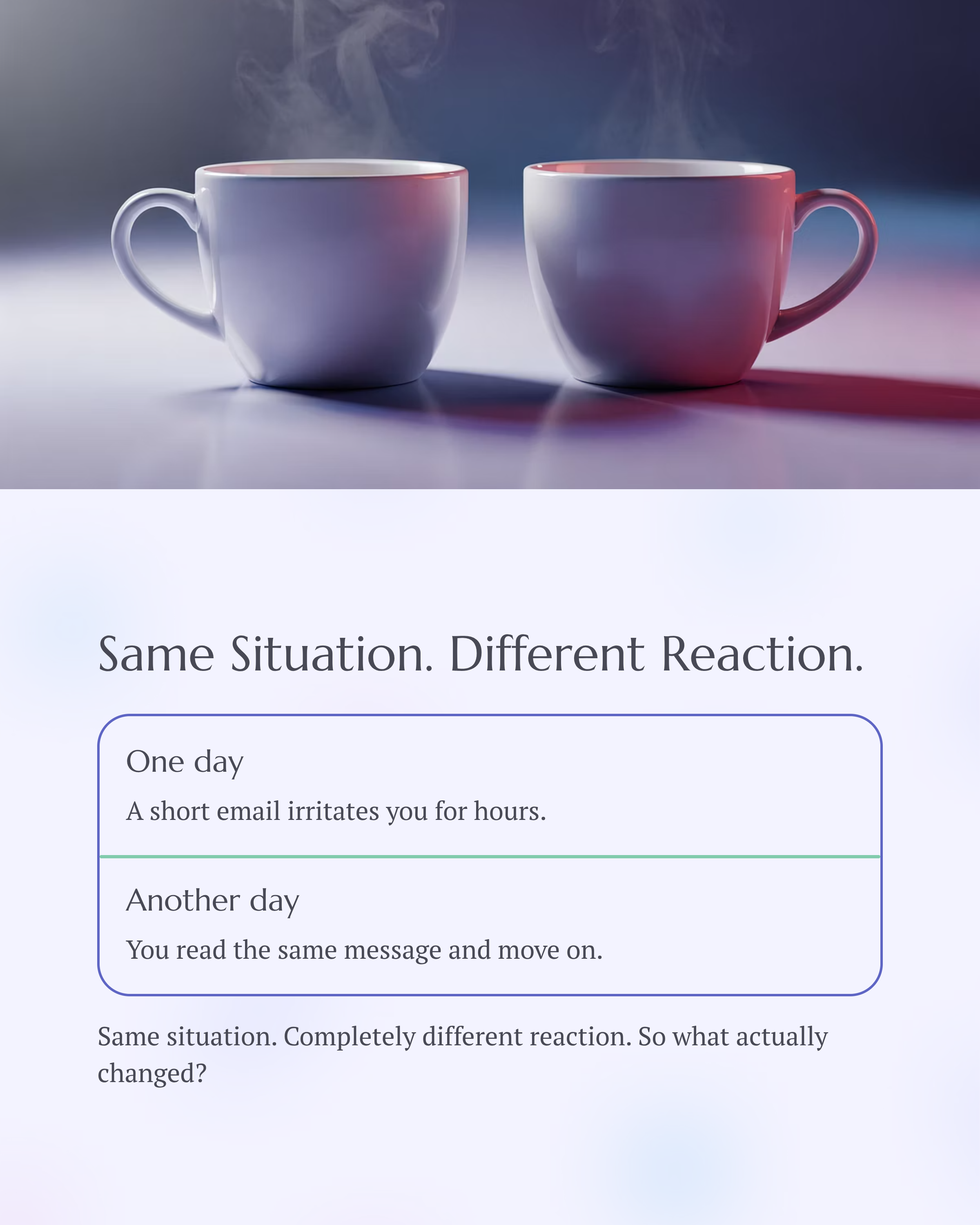
Maybe it's a colleague sending a short, one-line email, just facts, no warmth. And something in you tightens. It suddenly feels cold, maybe even passive-aggressive. You spend the next hour drafting and deleting responses in your head.
Then, the next week, another colleague sends an almost identical email. Short. Direct. No warmth. And this time? You barely notice. You reply briefly and move on with your day.
Same situation. Same type of message. Completely different reaction.
So what actually changed? If you've ever wondered, “Why did that hit me so hard today when last week I handled it fine?”, you're not alone. In many cases, it's not the situation itself.
The situation didn’t change. Your internal state did.
The Invisible Filter
What changed between those two emails? Not the words on the screen. What changed was you, specifically, what you were carrying with you that day.
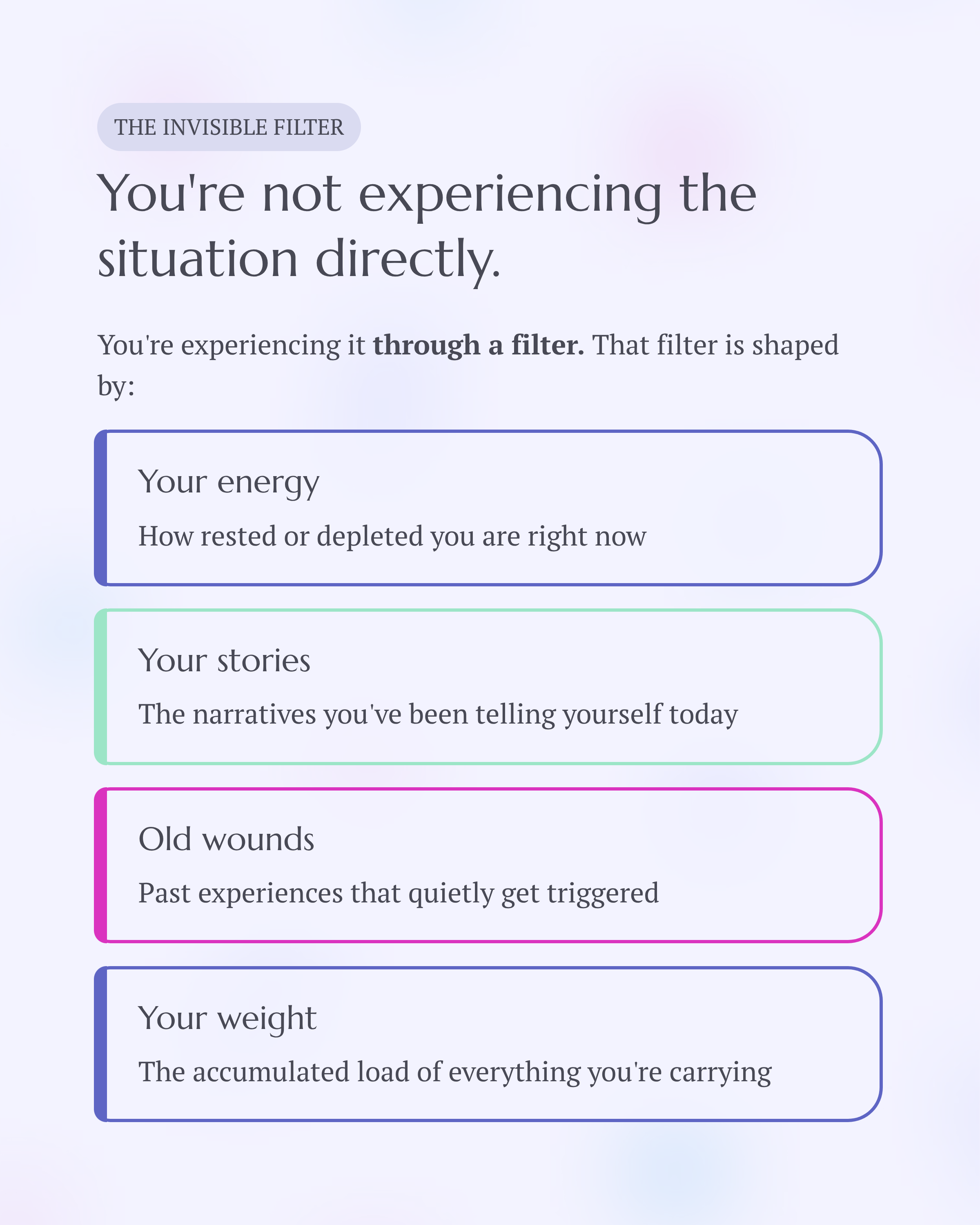
Think of it like this: You're not experiencing the situation directly. You're experiencing it through a filter. And that filter is made up of:
How rested or depleted you are
What stories you were telling yourself that day
Old wounds that get triggered
The accumulated weight of everything you're carrying
The exact same event can land completely differently depending on what that filter looks like on any given day.
You know this feeling too, don't you? Some mornings you wake up and you can already tell it's going to be a heavy day. Other mornings you feel light. And you don't always know why.
That's the thing about being human. We're not static. And neither are our reactions.
Why This Matters
In our daily lives, whether in the office, at home, with family, or simply moving through the world, we're often taught that our reactions should be consistent. Steady. Controlled.
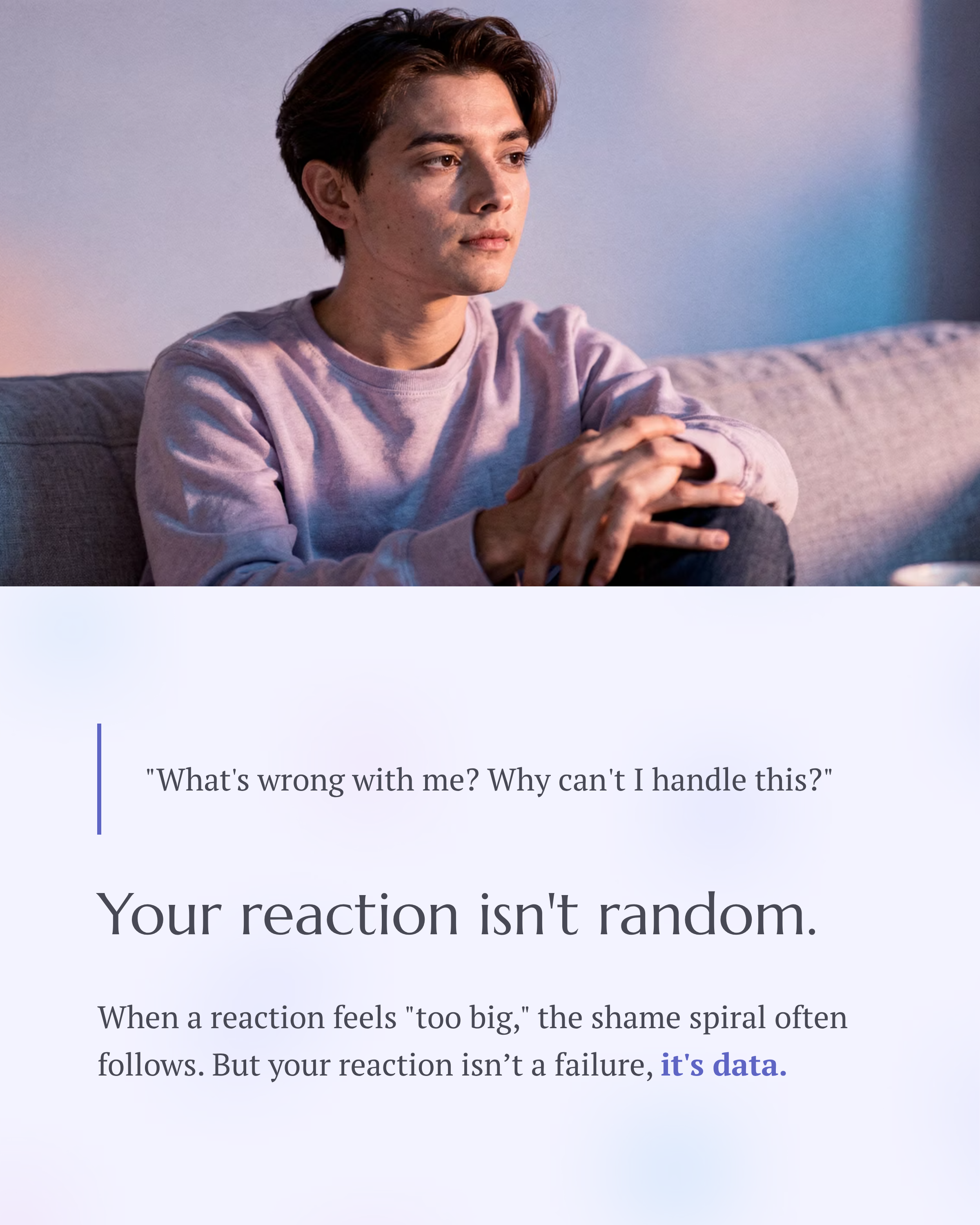
So when we are triggered by something small, something that “shouldn't” bother us, the shame loop kicks in: What's wrong with me? Why can't I handle this?
But here's what I've come to see: Your reaction isn't a failure. It's data.
That disproportionate response? It's not random. It's information about what's happening beneath the surface. About what you might need. About what might be already carrying too much.
Your Invitation to Check Your Filter
This week, I invite you to become a gentle observer of your own reactions. You don't need to change anything yet. Just notice.
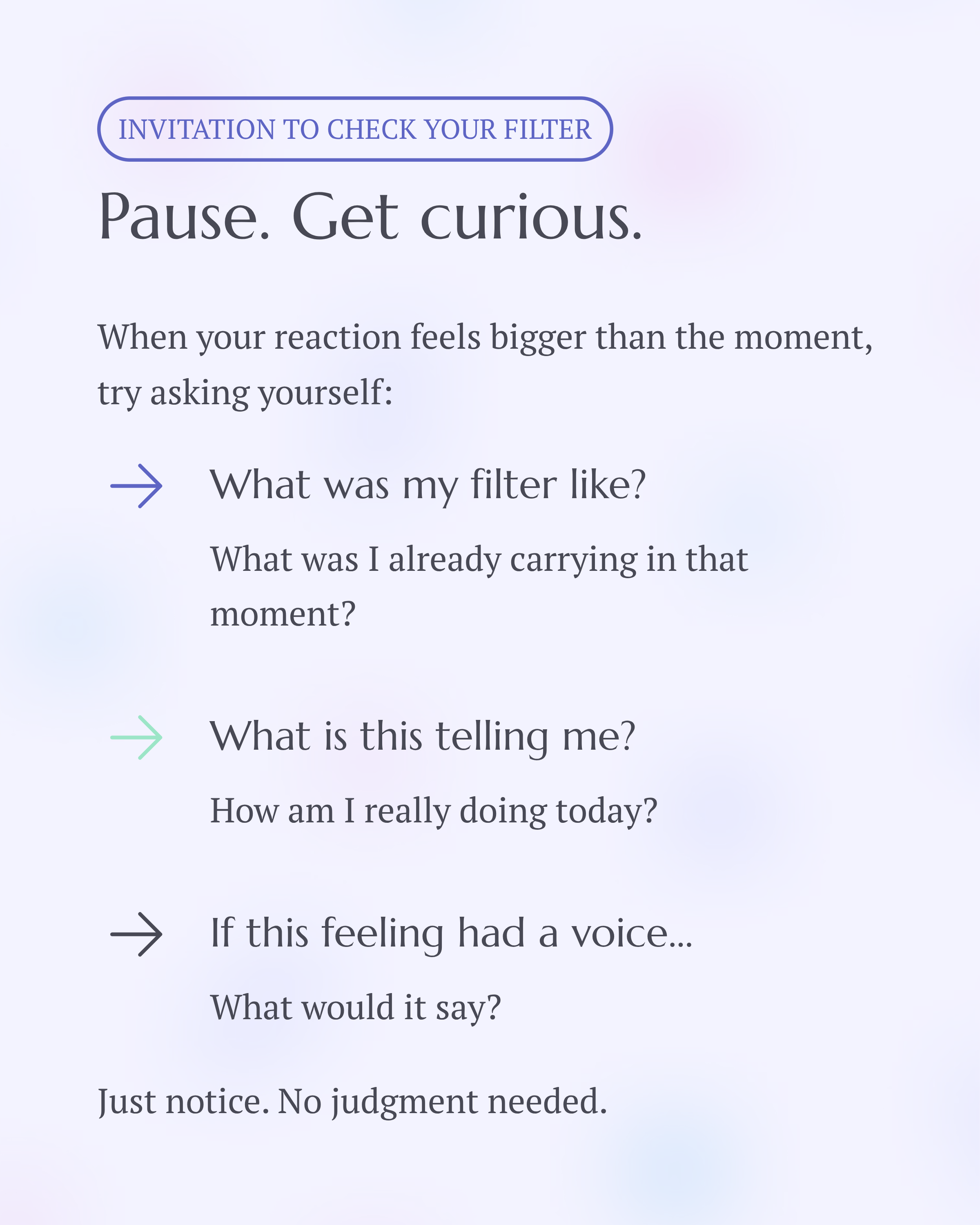
When you feel a reaction that seems “too big” for what triggered it, pause for a moment, even five seconds, and get curious instead of critical. Ask yourself:
What was my filter like at that moment?
What might this reaction be telling me about how I'm doing today?
If this feeling had a voice, what would it say?
That's it. Just notice. You don't need to solve anything, simply observe the filter, rather than assuming the situation is the whole story. You might be surprised by what you learn from simply paying attention.
Your Way Forward: From Reacting to Responding
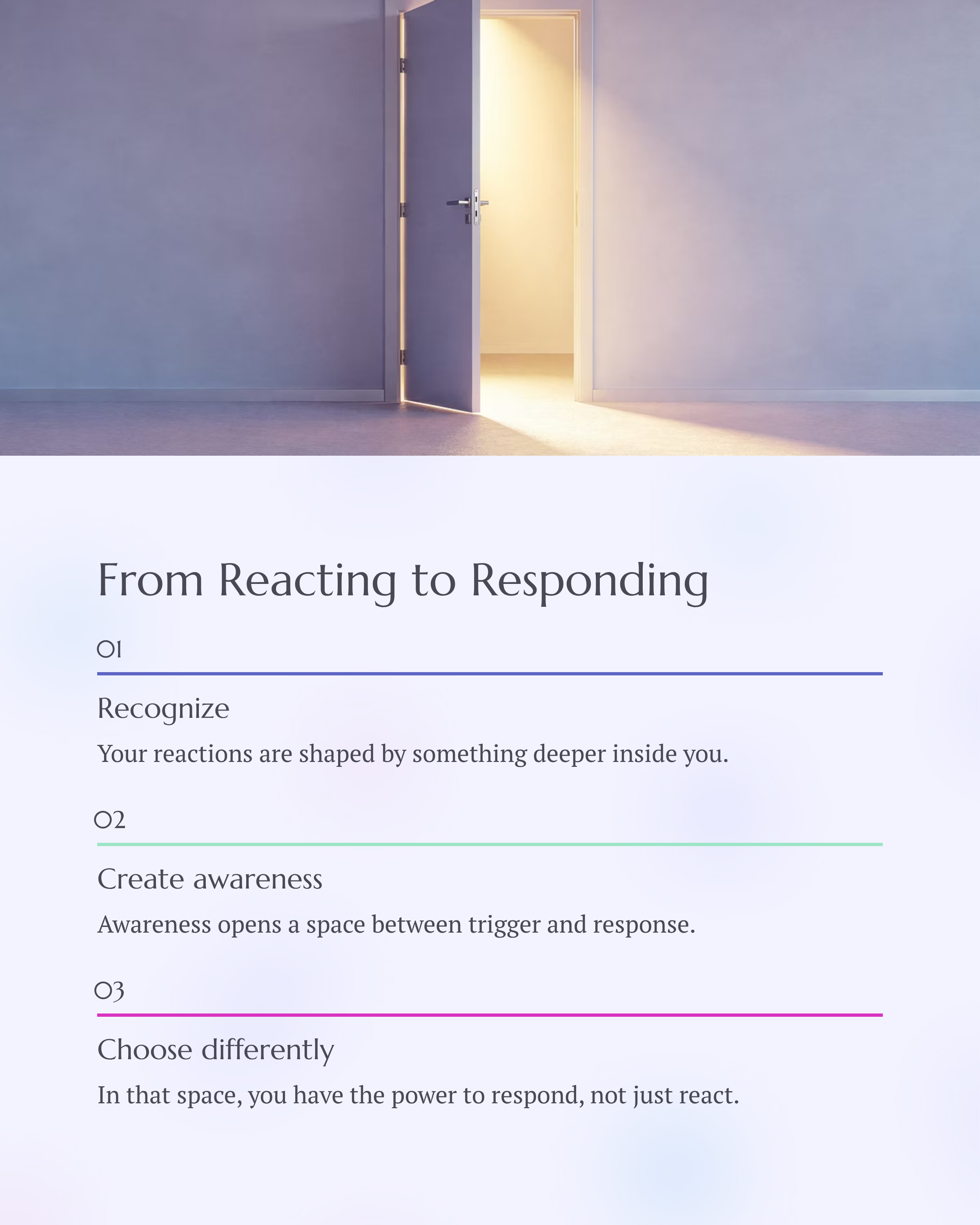
Real change begins when we realize that our reactions are shaped by something happening deeper inside us. Because once you understand that it's not just “the situation”, you stop trying to fix the wrong thing. You stop trying to control a world you can't control, and you start turning your attention inward, where the real leverage is.
The path forward isn't about perfection. It's about building the muscle of awareness, one small observation at a time. And with practice, that awareness creates space, space between the trigger and your response, space to choose differently, space to respond with intention instead of react from habit.
If this resonates…
If you recognized yourself in this, you're not failing. You're human, responding to an inner world that no one ever taught you how to read.
And if you'd like support learning how to understand those signals earlier and respond with more clarity and care, I'm here.
