
Why You React Before You Think
Have you ever tried to think your way out of a feeling… and it didn’t work?
Sometimes, even when we try to “control” our feelings, they move faster than our logic.
Imagine walking home one evening when someone approached you on the street. On most days, it’s a neutral moment, you exchange a brief nod and continue. But on this particular day, your heart started racing. Your body tensed. You crossed the street immediately, shaken, and spent the rest of the evening replaying the moment, asking yourself: Why did I react like that? What's wrong with me?
Nothing was wrong with you. You were caught in a loop you couldn’t yet see.
This is the Feeling-Thought-Behaviour Loop. Once you start noticing it, it changes how you relate to your reactions.
The Loop That Runs Beneath the Surface
Here's how it works, and why it can feel so confusing:
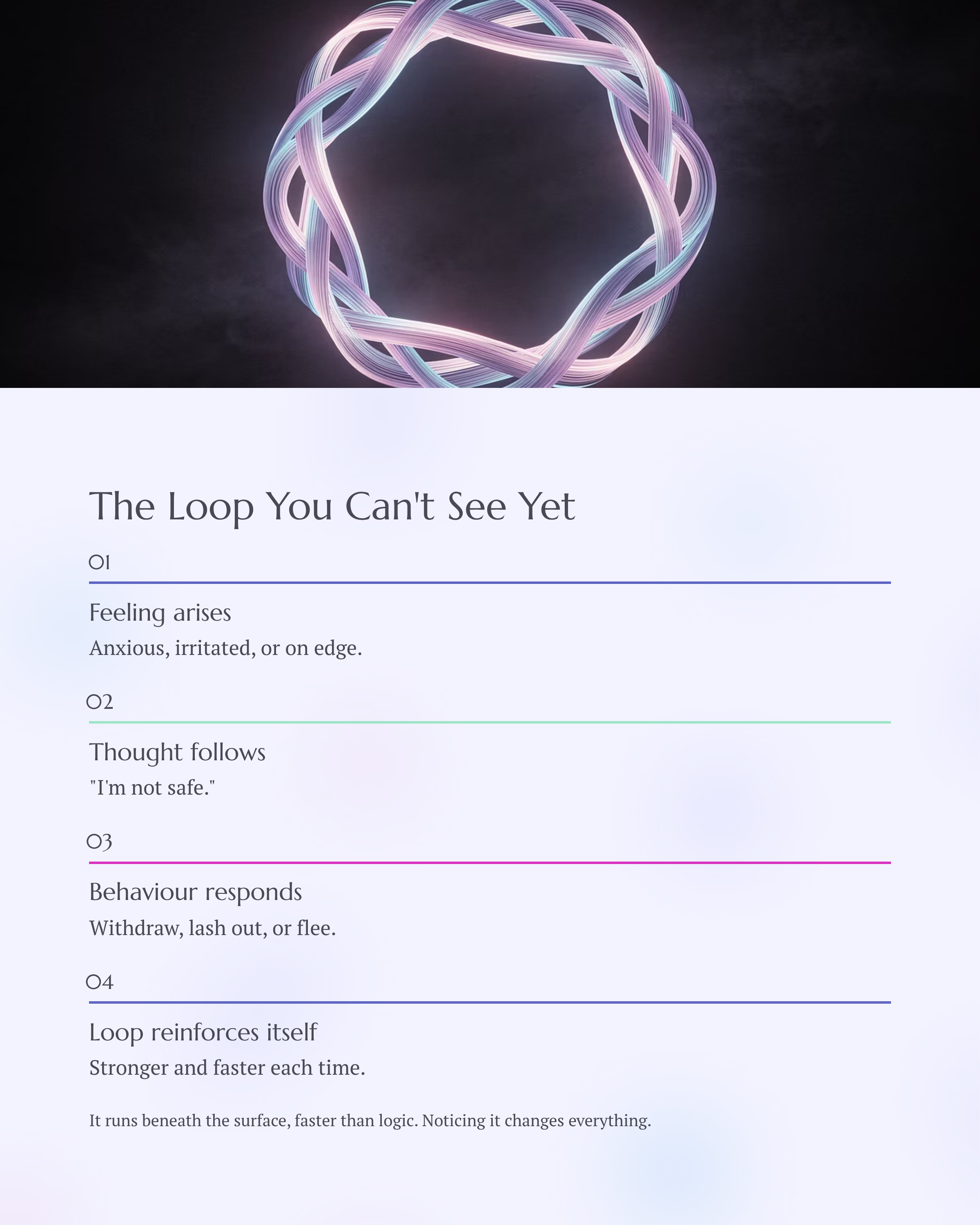
A feeling arises. You feel anxious, irritated, or suddenly on edge. It seems to come out of nowhere.
That feeling triggers a thought. The anxiety makes you think: Something bad is about to happen. I'm not safe. I need to get out of here.
That thought drives a behaviour. You cross the street. You avoid eye contact. You shut down or lash out.
The behaviour reinforces the original feeling. Crossing the street confirms to your brain that there was danger, which strengthens the anxiety for next time.
And around and around it goes. Each cycle deepens the pattern, making reactions faster, more automatic, and harder to question.
The reason this catches so many of us off guard is that the loop runs beneath our awareness. By the time we notice, the sequence has already completed. We're left standing on the other side of the street, wondering what just happened.
The Sunglasses We Don't Know We're Wearing
There's a metaphor I often share that captures this:
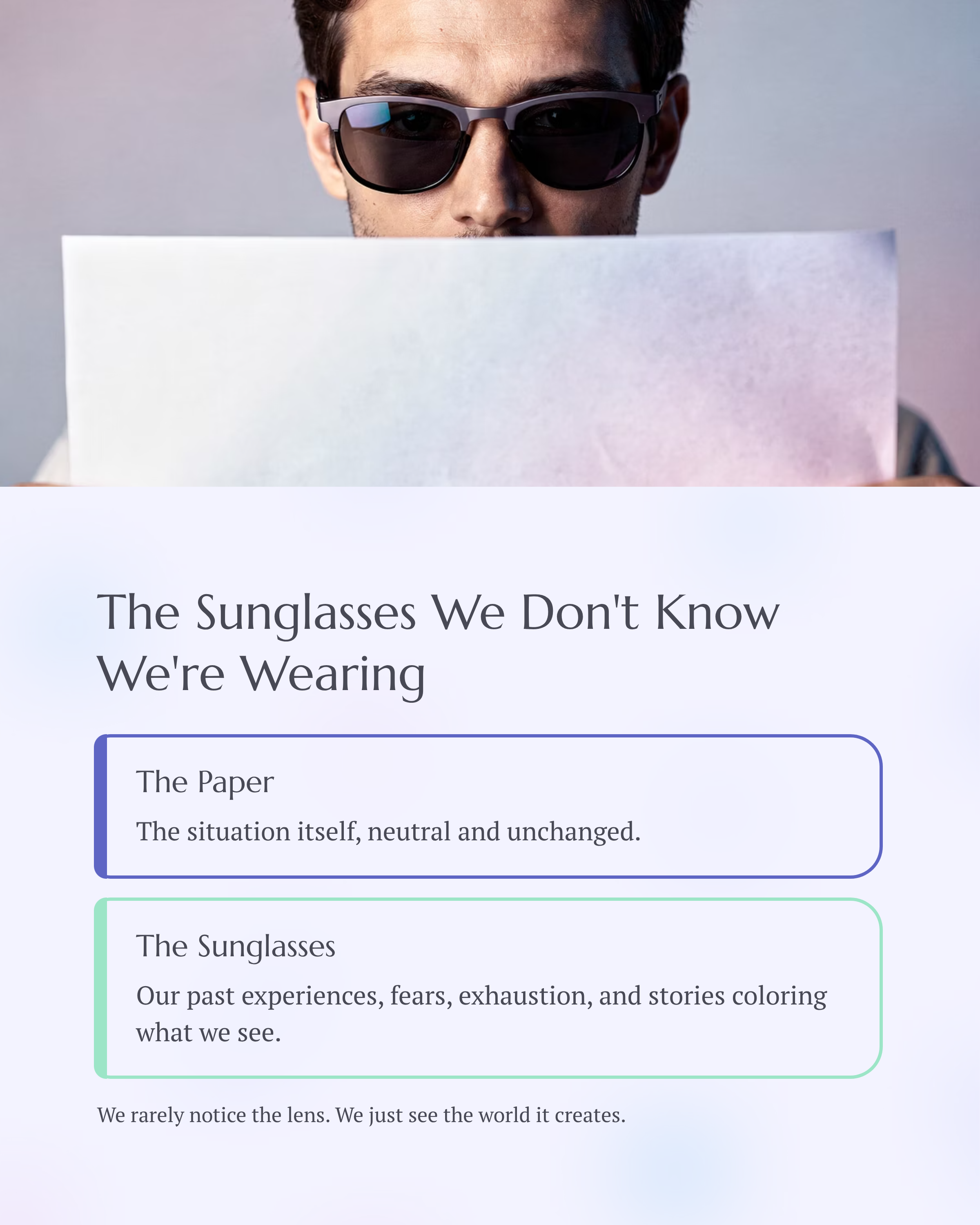
“It’s like wearing sunglasses and seeing a white paper as dark. When we transform from the inside, we will see the true color of the paper, even though it hasn't moved from its place.”
The paper is the situation. Neutral. Unchanged.
The sunglasses are everything we bring to it: our past experiences, our fears, our exhaustion, the stories we tell ourselves.
And what we see, the dark paper, is our felt experience of the moment. It feels real. It feels true. But it has been filtered through lenses we forgot we were wearing.
This doesn't mean our feelings are wrong. This metaphor also carries an important reminder: “This doesn't mean that our emotions of anger or sadness in some situations are not true or should not be there. They are very valid and needed.”
The goal isn't to stop feeling. It's to recognize when we're seeing through sunglasses, so we can at least know they're there.
A Crucial Distinction: Feeling vs. Thought vs. Behaviour
A powerful skill in emotional intelligence is learning to tell these three apart.
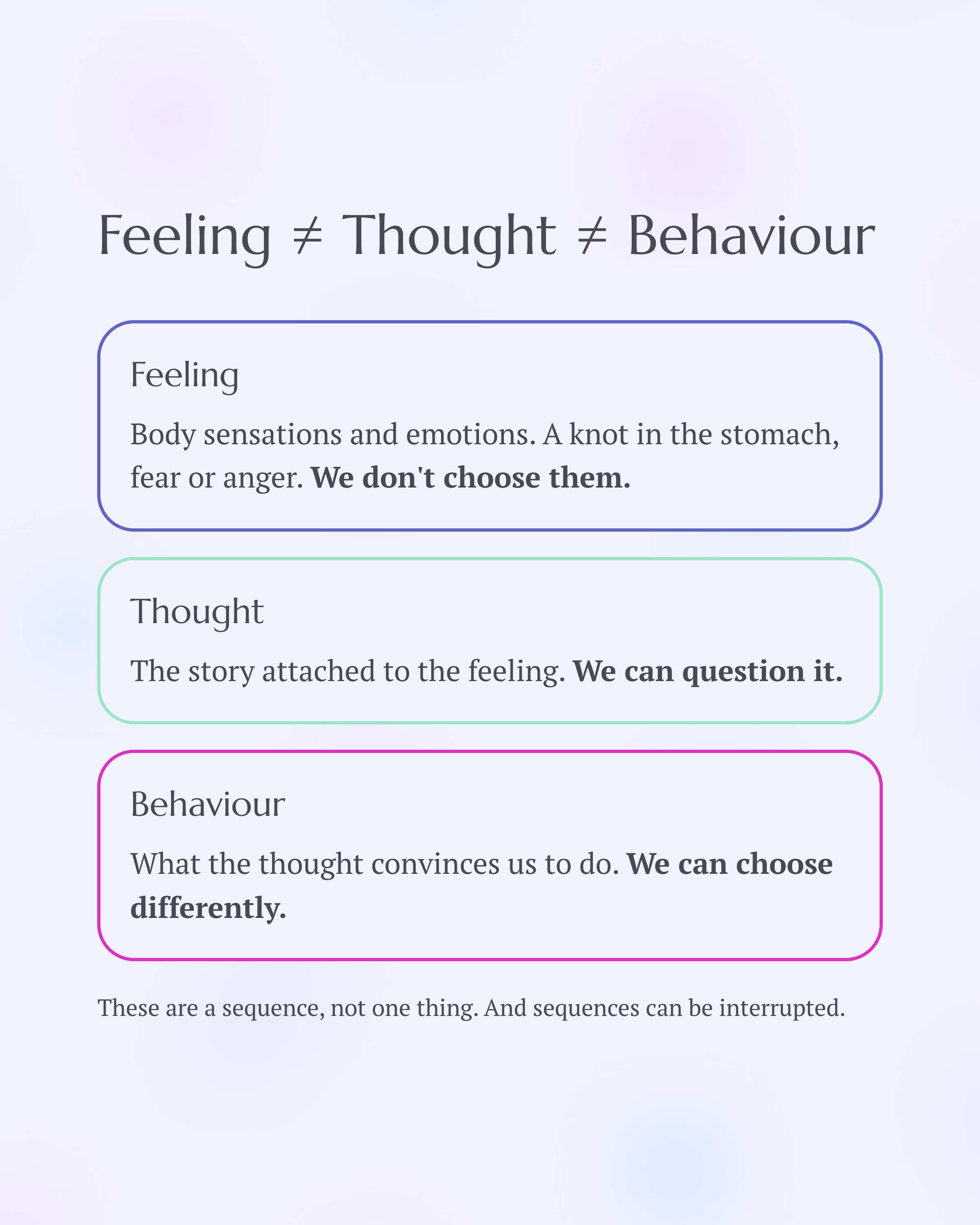
Feeling: A sensation in the body. Tightness in the chest. Heat in the face. A knot in the stomach. Often accompanied by an emotion like fear, anger, or sadness. Feelings arise on their own. We don't choose them.
Thought: The story we attach to the feeling. “I'm in danger.” “They're angry at me.” “I'm going to fail.” Thoughts are interpretations. And unlike feelings, we can learn to question them.
Behaviour: What we do next. Cross the street. Send the angry email. Withdraw. Lash out. Behaviour is the action the thought convinces us to take.
Most of us live as if these three are one thing: I feel anxious, so I must be in danger, so I need to escape. But they’re not one thing. They’re a sequence. And sequences can be interrupted.
Why This Matters for Those of Us Who Lead Life with Logic
In my IT days, I relied on logic to make sense of my emotions. If I understood why I felt a certain way, I thought I could reason myself out of it. But feelings don't respond to logic the way we want them to. You can't argue with a knot in your stomach.
What actually worked was learning to pause between the steps. Not to stop the feeling, but to stop identifying with the thought it triggered. To notice the loop without jumping into it.
When we overthink, we underfeel. And when we underfeel, we miss what our feelings are trying to tell us.
Feelings Are Trying to Tell You Something
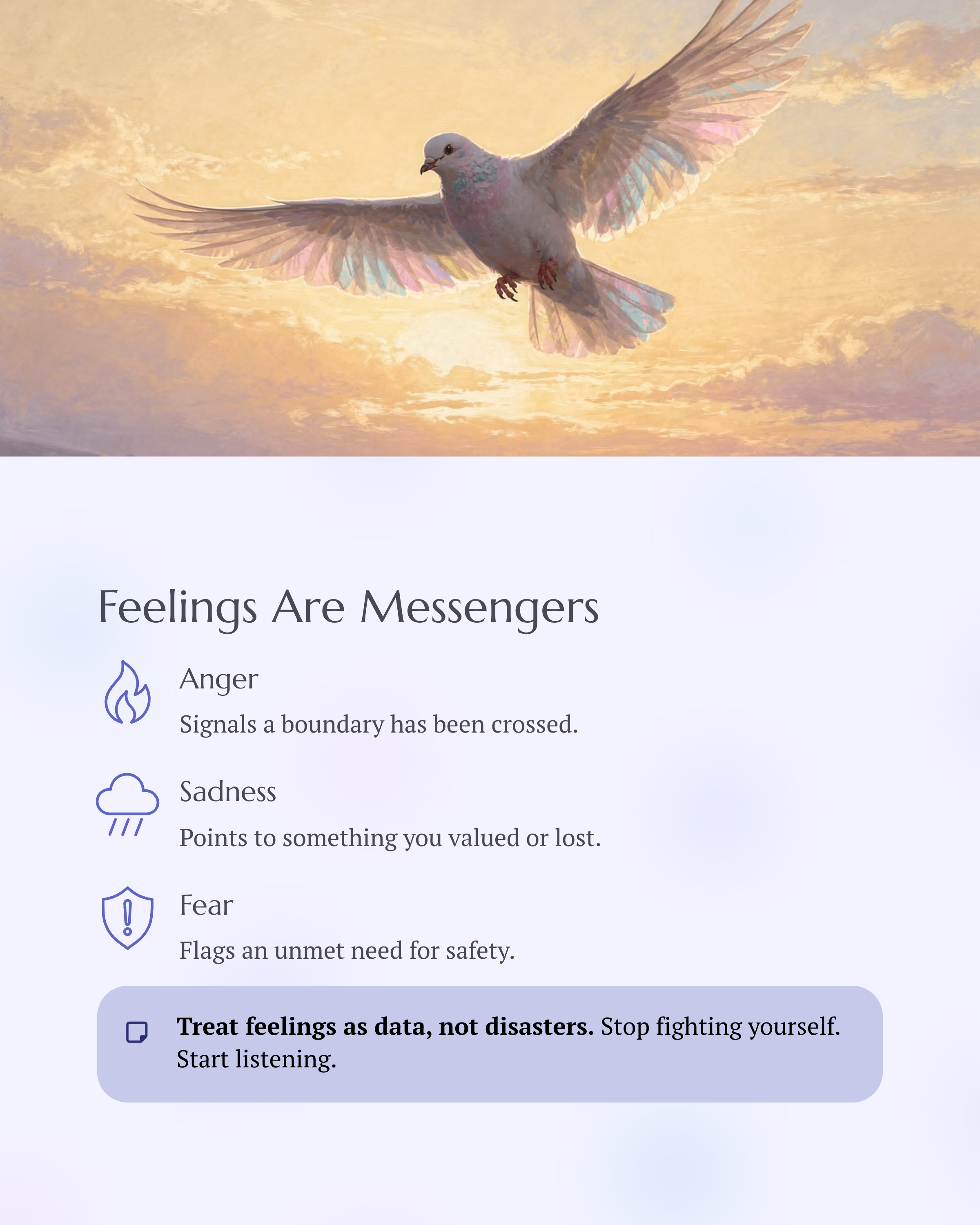
Which brings us to another essential insight: Feelings aren't the enemy. They're not flaws to eliminate or weaknesses to overcome.
Feelings try to tell you about something you need. So they are not “negative” in the way we usually think, anger, sadness, disappointment, terror, nervousness… they're all signals. They are there for a reason.
That knot in your stomach? It might be telling you a boundary has been crossed. That flash of anger? Perhaps pointing to an unmet need for respect or fairness. That heaviness? Maybe signaling grief that hasn't been fully held.
When we treat feelings as data rather than disasters, everything changes. We stop fighting ourselves and start listening.
Your Invitation to Catch the Loop
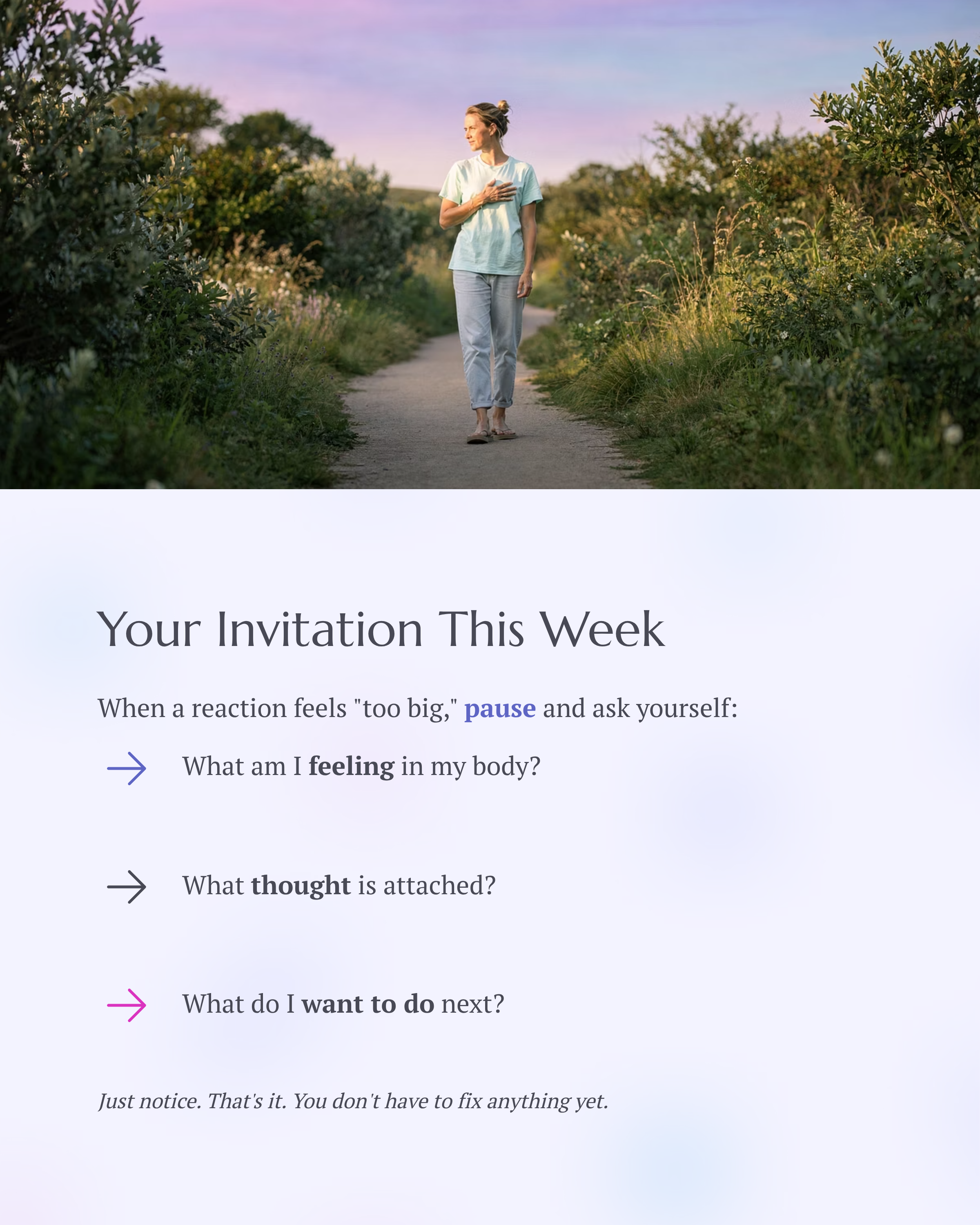
This week, I invite you to become a curious observer of your own inner loop. You don't need to change anything yet. Just notice.
When you feel a reaction that seems “bigger” than the moment warrants, pause for a few seconds and gently ask:
What am I feeling in my body right now?
What thought is attached to this feeling?
What do I feel compelled to do next?
That's it. Just notice. No judgment. No fixing. You're simply collecting data on your own internal pattern.
Your Way Forward: From Caught in the Loop to Seeing It Clearly
The loop doesn't disappear overnight. But something shifts the moment you see it. The feeling becomes information instead of command. The thought becomes interpretation instead of truth. The behaviour becomes choice instead of reflex.
You start to recognize when you're wearing sunglasses, and that recognition changes the quality of what you see.
The paper may not have moved. The situation may be the same. But you are no longer the same. And that can change how you experience it.
If this resonates…
If you recognized yourself in these words, if you've ever been confused by your own reactions, or frustrated by feelings that didn’t respond to logic, please know: there's nothing wrong with you. You're human, responding to an inner world you were never taught to read.
And if you'd like support in learning to see your own loops more clearly, to respond with intention instead of react from habit, I'm here. No pressure, just presence.
If this resonated, you may also like:
Disclaimer: This content is for informational purposes only. It is shared to promote awareness and understanding, not to replace professional medical or psychological advice. If you are experiencing significant distress or have concerns about your mental health, please consult a qualified healthcare provider.
