
“I Feel That…” Isn't a Feeling
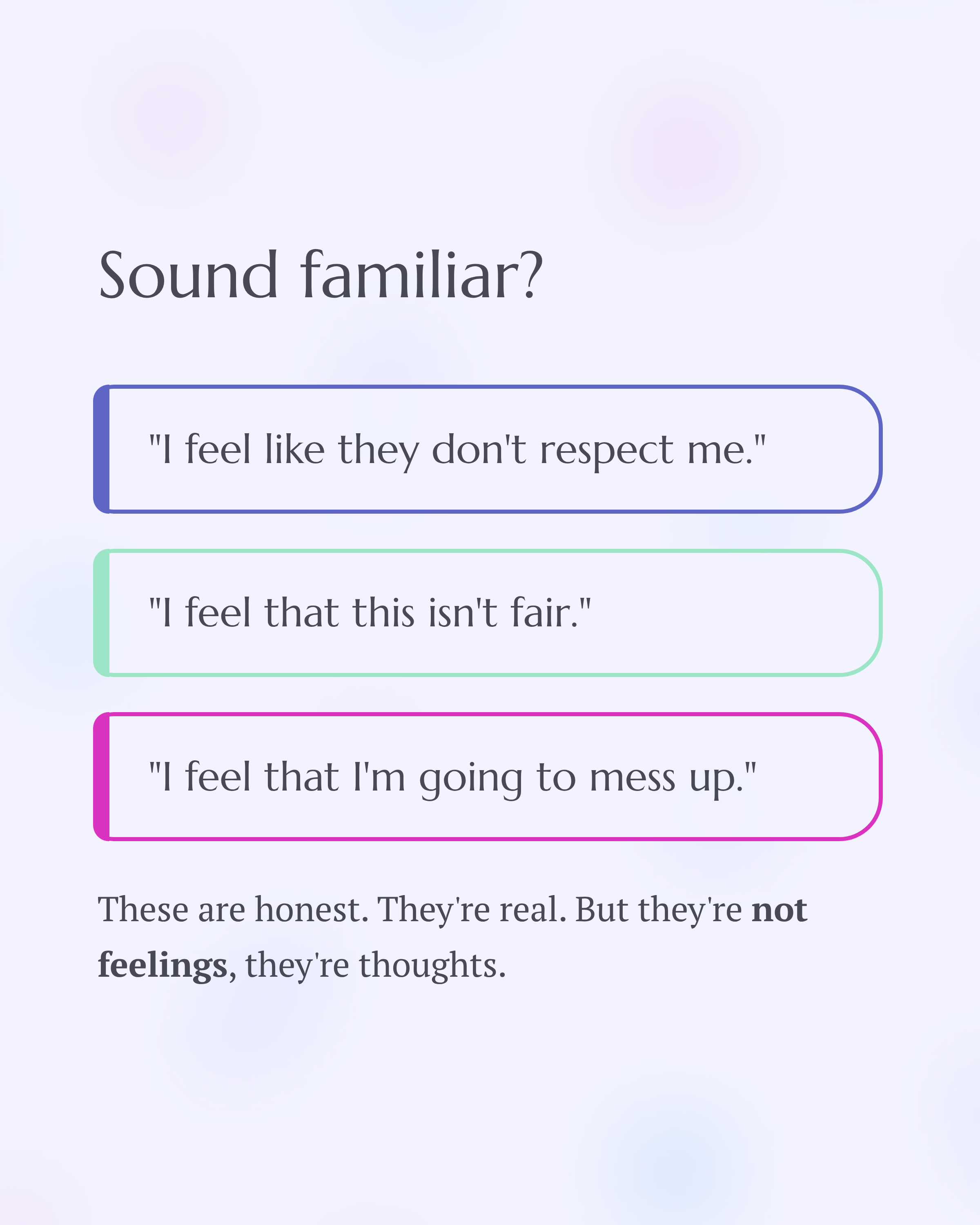
Have you ever been asked how you feel, and you answered with something like:
"I feel like they don't respect me."
"I feel that this isn't fair."
"I feel that I'm going to mess up."
Those answers make perfect sense. They're honest. They describe something real.
But here's the thing: they're not actually feelings.
They're thoughts. Interpretations. Judgments. Stories your mind is telling you about a situation.
And when we confuse thoughts with feelings, something important gets lost. We lose touch with what's actually happening inside us. And over time, that disconnection costs us our boundaries, our relationships, and our ability to know what we truly need.
Where This Confusion Comes From
Many of us were raised in ways that didn't make room for feelings.
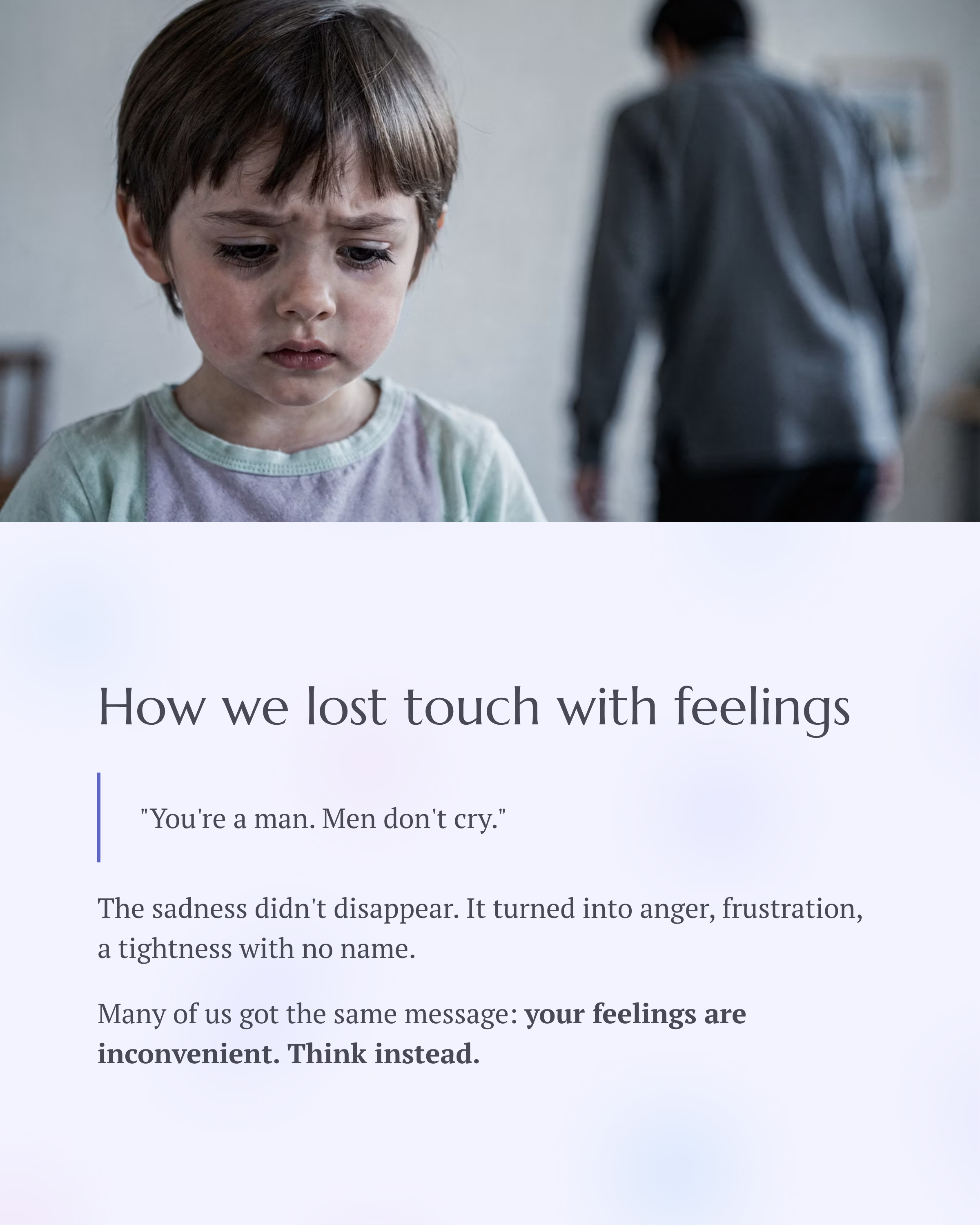
A four-year-old boy cries because his mother left for an hour. He feels sad. But he's told: “You're a man. Men don't cry.”
So the sadness doesn't go away. It turns into something else. Anger, maybe. Frustration. A tightness he can't name.
Years later, when something sad happens, he doesn't feel sad. He feels angry. He reacts. He pushes people away. And he doesn't understand why.
This isn't his fault. He was taught to dismiss his feelings before he even had words for them.
Many of us learned the same lesson. Not always with those exact words, but the message was clear: “Your feelings are inconvenient. Don't trust them. Think instead.”
So we became good at thinking. And we forgot how to feel.
What Happens When We Confuse Thoughts with Feelings
When someone asks how you feel and you answer with a thought, you're skipping a step.
You're telling them what you think about the situation, not what you're experiencing in your body or your heart.
Here's the difference:
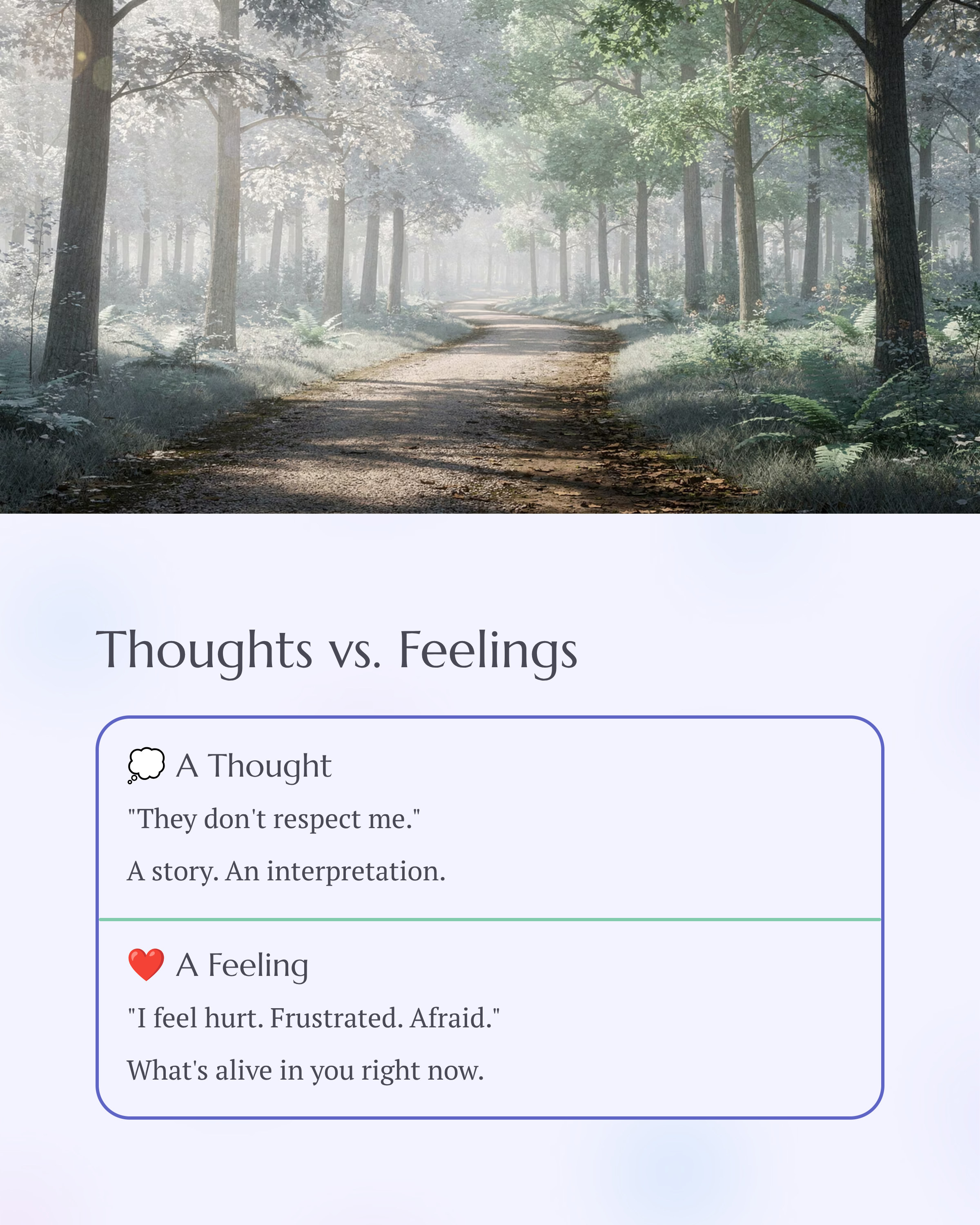
A thought sounds like: “They don't respect me.” (An interpretation, a story.)
A feeling sounds like: “I feel hurt. I feel frustrated. I feel afraid.” (An emotion, a body sensation.)
The thought is a story, an interpretation. The feeling is what's alive in you right now, your direct experience.
When you stay in thoughts, you stay focused on the story, on what happened, on who did what, on what needs to be different out there.
When you get in touch with your feelings, you reconnect with yourself. You know what's actually happening inside you. And from that place, you can make clearer choices.
The Cost of This Disconnection
This isn't just semantics. It has real consequences.
When we don't know what we're actually feeling:
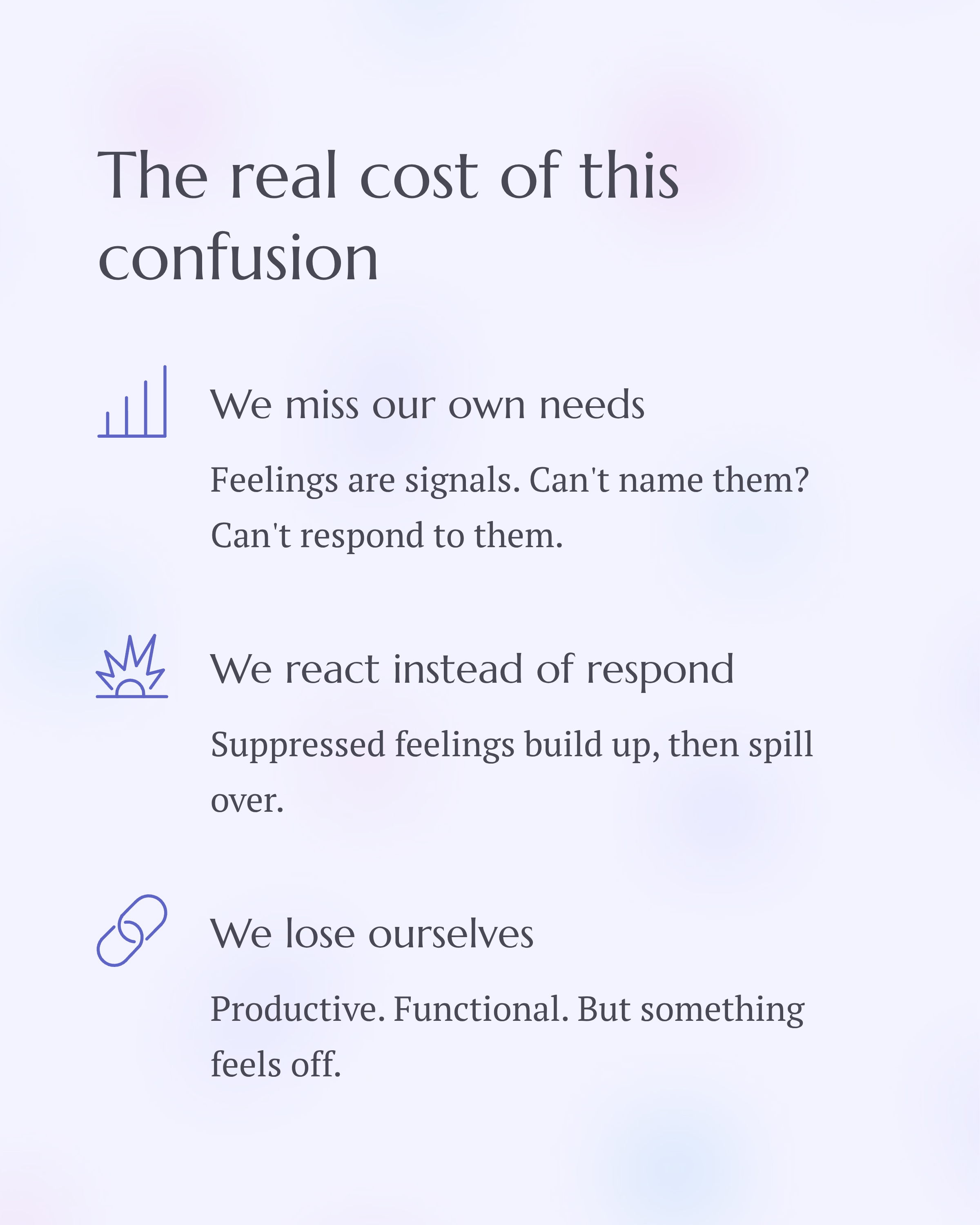
We miss our own needs. Feelings are signals. They tell us when something is off, when a boundary has been crossed, when we need rest or support. If we can't name them, we can't respond to them.
We react instead of respond. Suppressed feelings don't disappear. They build up. And eventually, they pill over, as an outburst, a shutdown, or a decision we regret.
We struggle to set boundaries. Boundaries come from knowing what you feel and what you need. If you can't name the feeling, how can you protect it?
We lose connection to ourselves. Over time, this becomes a habit. You live in your head. You're efficient, productive, functional. But something feels off. You're not quite yourself.
What This Looks Like
I once worked with someone who was feeling overwhelmed at work. He was staying late, working weekends, and constantly stressed.
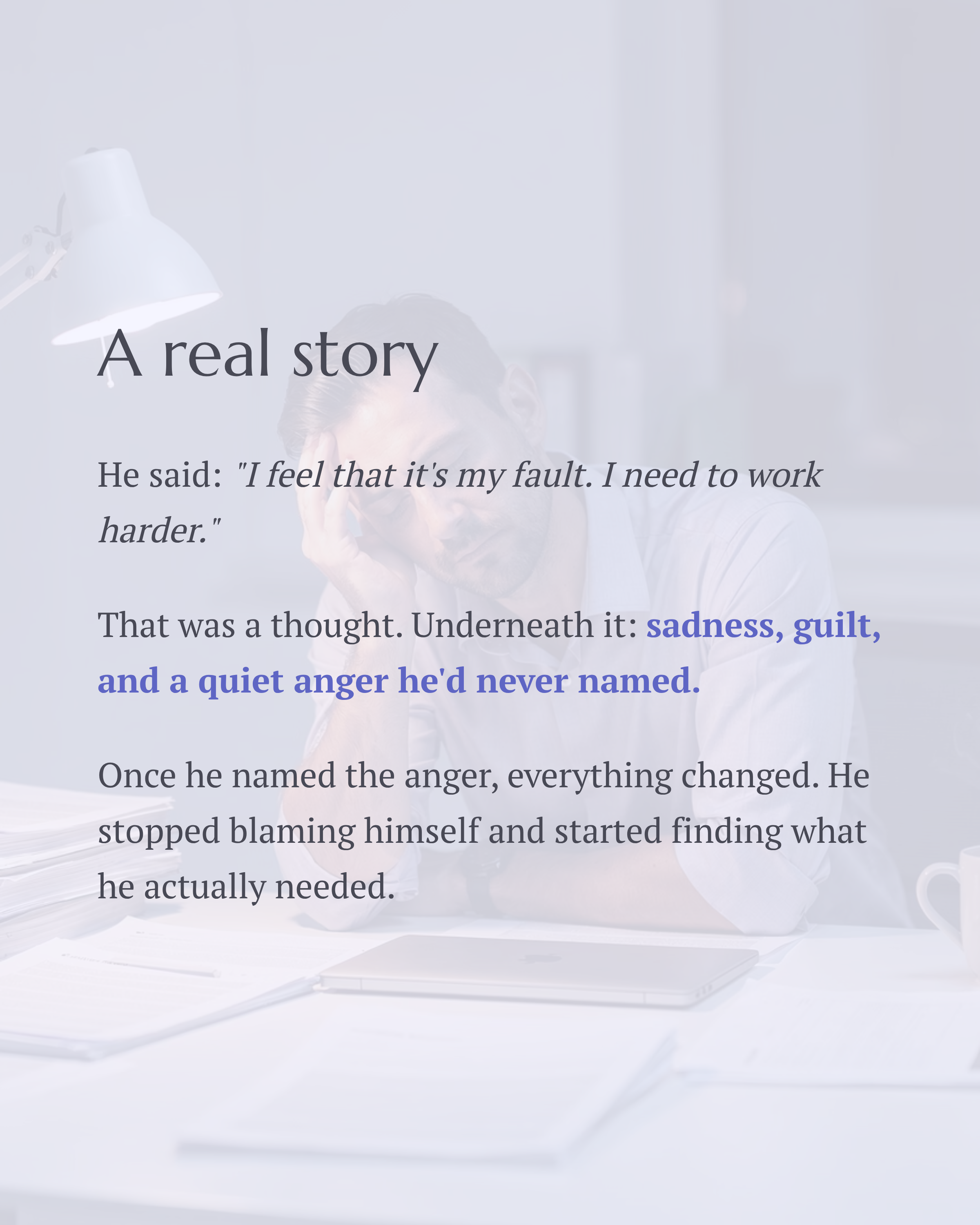
When I asked how he felt about the situation, he said: “I feel that it's my fault. I need to work harder.”
That's a thought. And it was keeping him stuck.
Underneath that thought, he was carrying a lot. He felt sad about how things were going. He felt guilty, as if he wasn't doing enough. He blamed himself for the tension with his manager and the chaotic workplace dynamics.
So he worked harder. And harder. Trying to fix something he thought he had broken.
But as we talked, something began to shift. He started to notice another feeling underneath the sadness and guilt: anger. Not a loud, explosive anger. A quiet, clear one. He was angry at his manager. Angry at the workplace dynamics. Angry that he had been carrying blame that wasn't his to carry.
Once he named the anger, the picture became clearer. He stopped blaming himself and started looking at the situation differently. The attrition rate was high. Other colleagues were struggling too. It wasn't just him.
His guilt began to soften. In its place came something new: self-appreciation for how hard he had tried, and self-compassion for how much he had been carrying.
He stopped working harder and started looking for a healthier workplace, not because he was failing, but because he finally knew what he needed. His quality of life improved. Not because the situation changed overnight, but because his relationship to it did.
That shift started with one question: “What am I actually feeling?” Not thinking. Feeling.
A Small Tool to Start Untangling
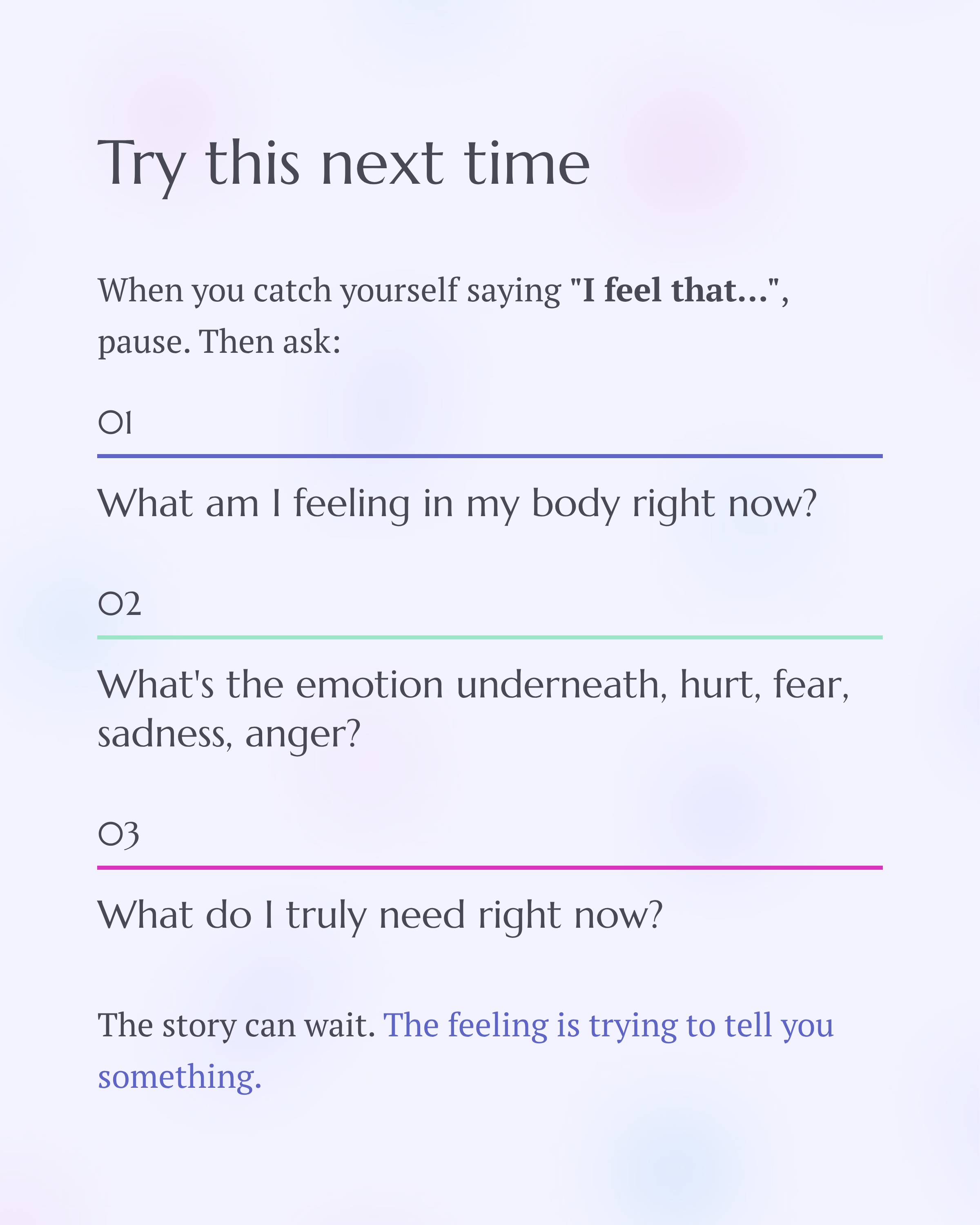
Next time you notice yourself saying “I feel that…”, followed by a story, a judgment, or an interpretation, pause and gently shift your attention inward.
Instead of continuing the story, try asking yourself:
What am I actually feeling in my body right now?
What is the emotion underneath the thought? Hurt? Fear? Sadness? Anger?
What do I truly need right now?
The story can wait. The feeling is trying to tell you something.
You don't need to have perfect answers. Just practice noticing the difference between a thought and a feeling. That awareness alone is a powerful first step.
Your Invitation to Look Inside
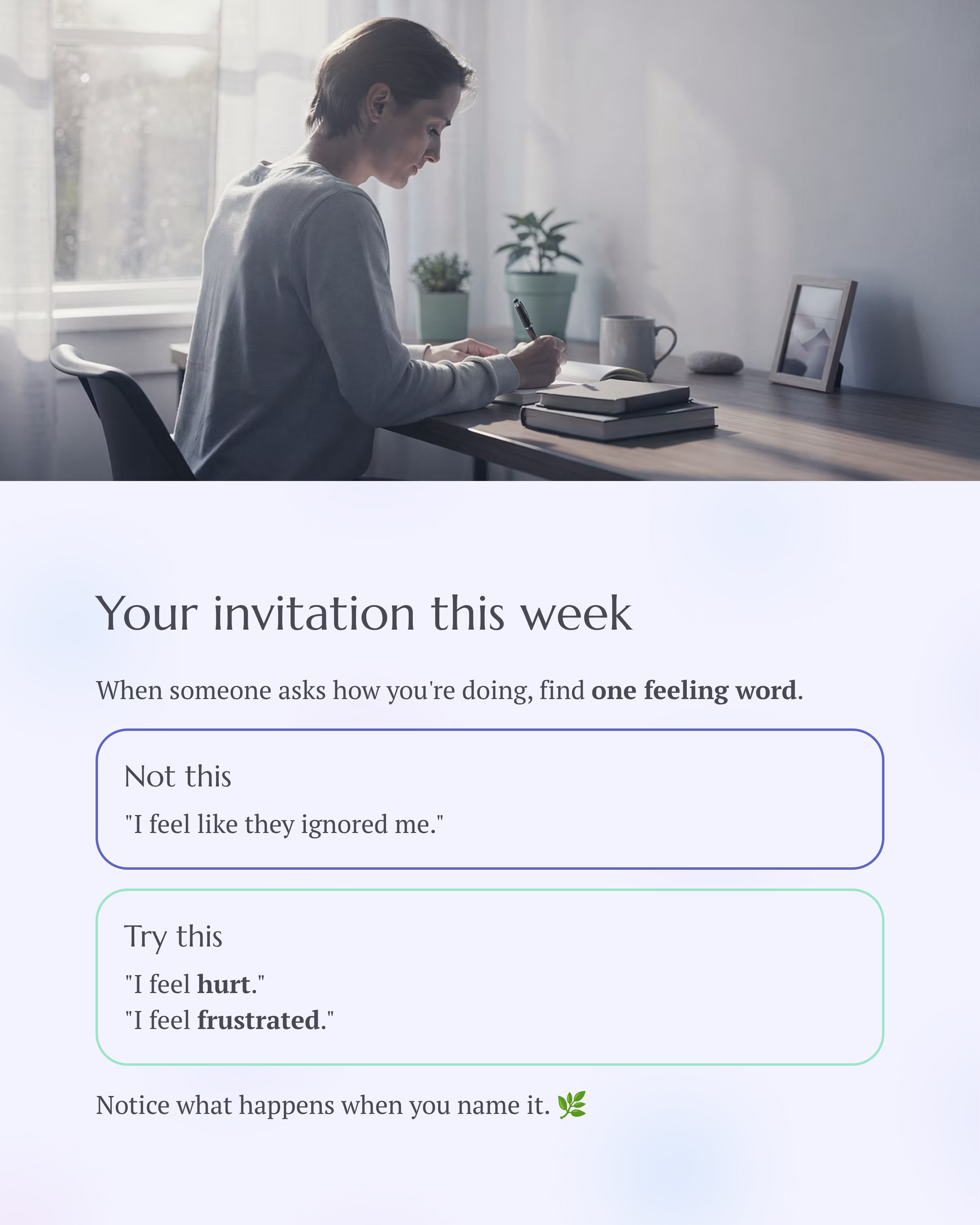
This week, when someone asks how you're doing, or when you check in with yourself, try this:
Instead of answering with a story or a judgment, see if you can find one feeling word.
Not “I feel like they ignored me.”But “I feel hurt.” or “I feel frustrated.”
Notice what happens when you name it. Does something in your body relax? Does the feeling become less overwhelming?
You're not trying to fix anything. You're just practicing the language of your inner world.
Your Way Forward: From Thinking to Feeling
Learning to tell thoughts from feelings isn't about being “too emotional” or abandoning logic. It's about becoming more whole.
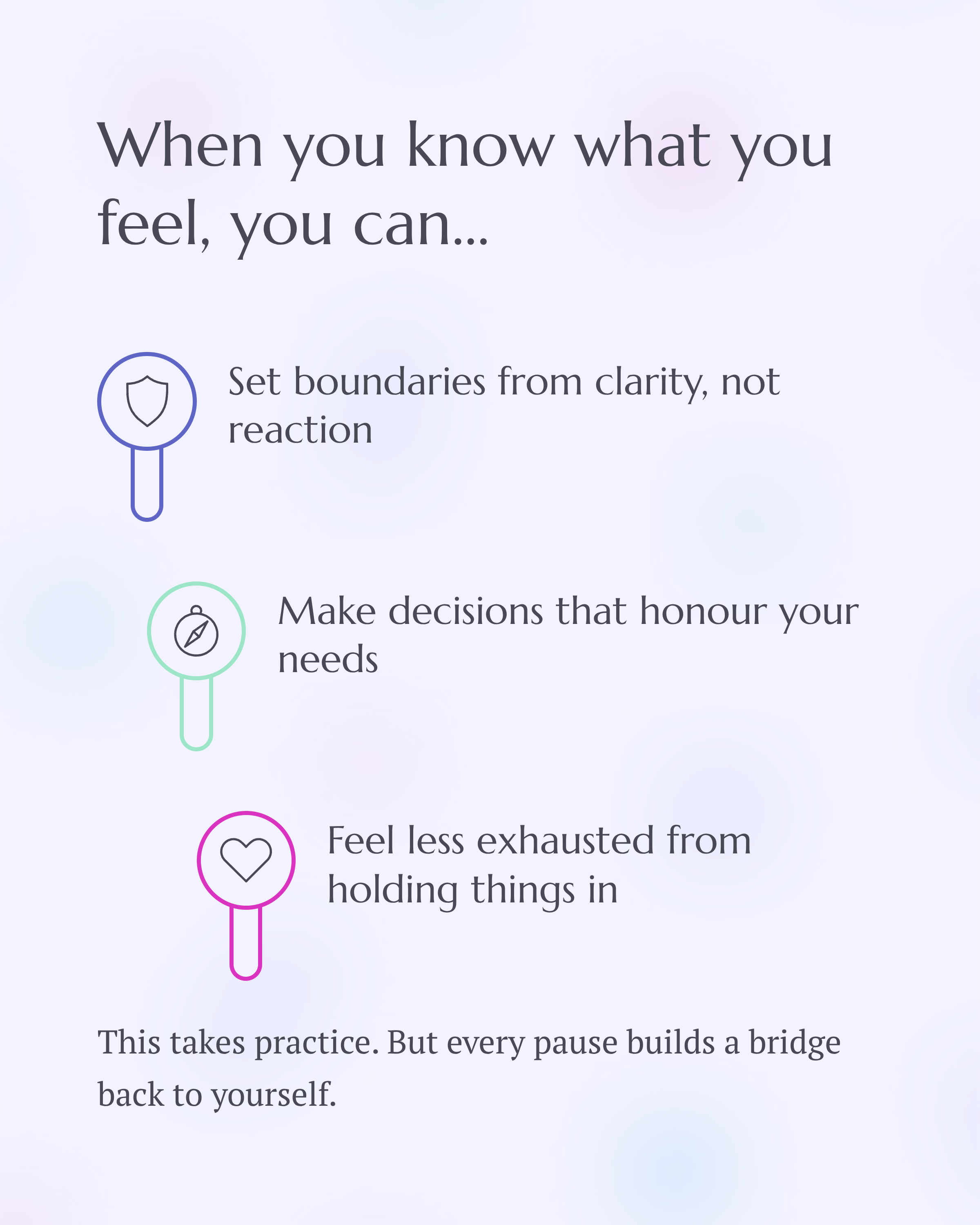
When you know what you actually feel, you can:
Set boundaries that come from clarity, not reaction.
Make decisions that honour your needs, not just your thoughts.
Feel less exhausted from holding things in.
This takes practice. You won't get it right every time. But each time you pause and ask “What am I actually feeling?” you're building a bridge back to yourself.
If this resonates…
If you've spent years in your head, and you're noticing that something feels off, you're not alone. Many of us were never taught this.
If you'd like support in learning to reconnect with your feelings, to move from thinking to feeling, I'm here. No pressure, just presence.
You might also find these helpful:
Disclaimer: This content is for informational purposes only. It is shared to promote awareness and understanding, not to replace professional medical or psychological advice. If you are experiencing significant distress or have concerns about your mental health, please consult a qualified healthcare provider.
