
The 5 Gs: A Simple Tool for Navigating Difficult Feelings
Sometimes a feeling arrives, and you don’t know what to do with it. Your heart is racing, your thoughts are spinning, and you're not even sure why.
In those moments, having a simple framework can help. Something you can turn to when you need to pause, understand what’s happening, and find a clearer way forward.
One tool I've found useful, both in my own life and with many people I support, is called the 5 Gs. It's a practical model that helps break down a situation into parts, so you can see where things get stuck and where you might have more choice than you think.
What Are the 5 Gs?
The model comes from a Cognitive Behavioral Therapy (CBT) background, and it's used for self-reflection and understanding our patterns. I find it especially helpful because it's structured but not rigid. It gives you a map without telling you exactly where to go.
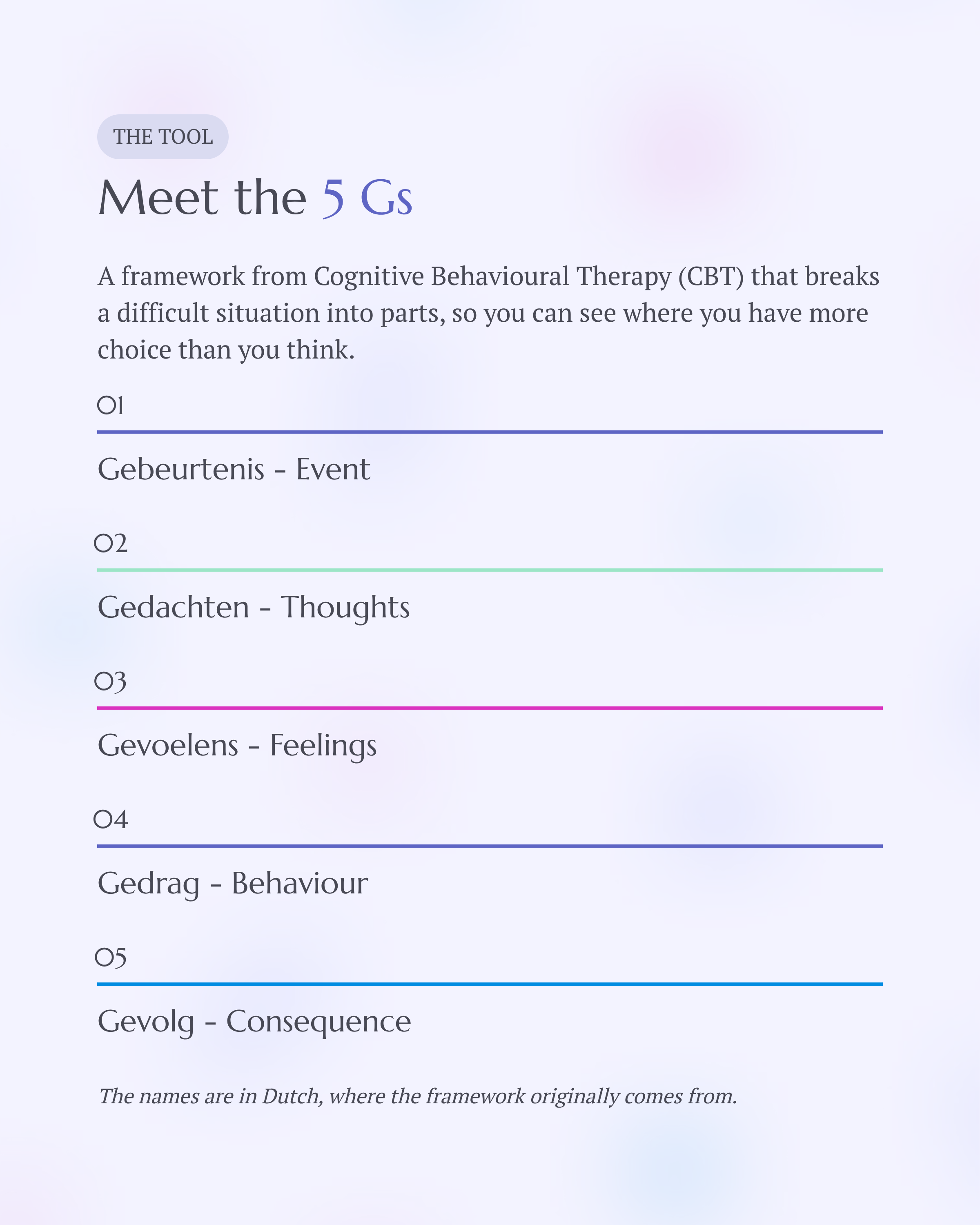
The 5 Gs are five interconnected steps:
Gebeurtenis (Event)
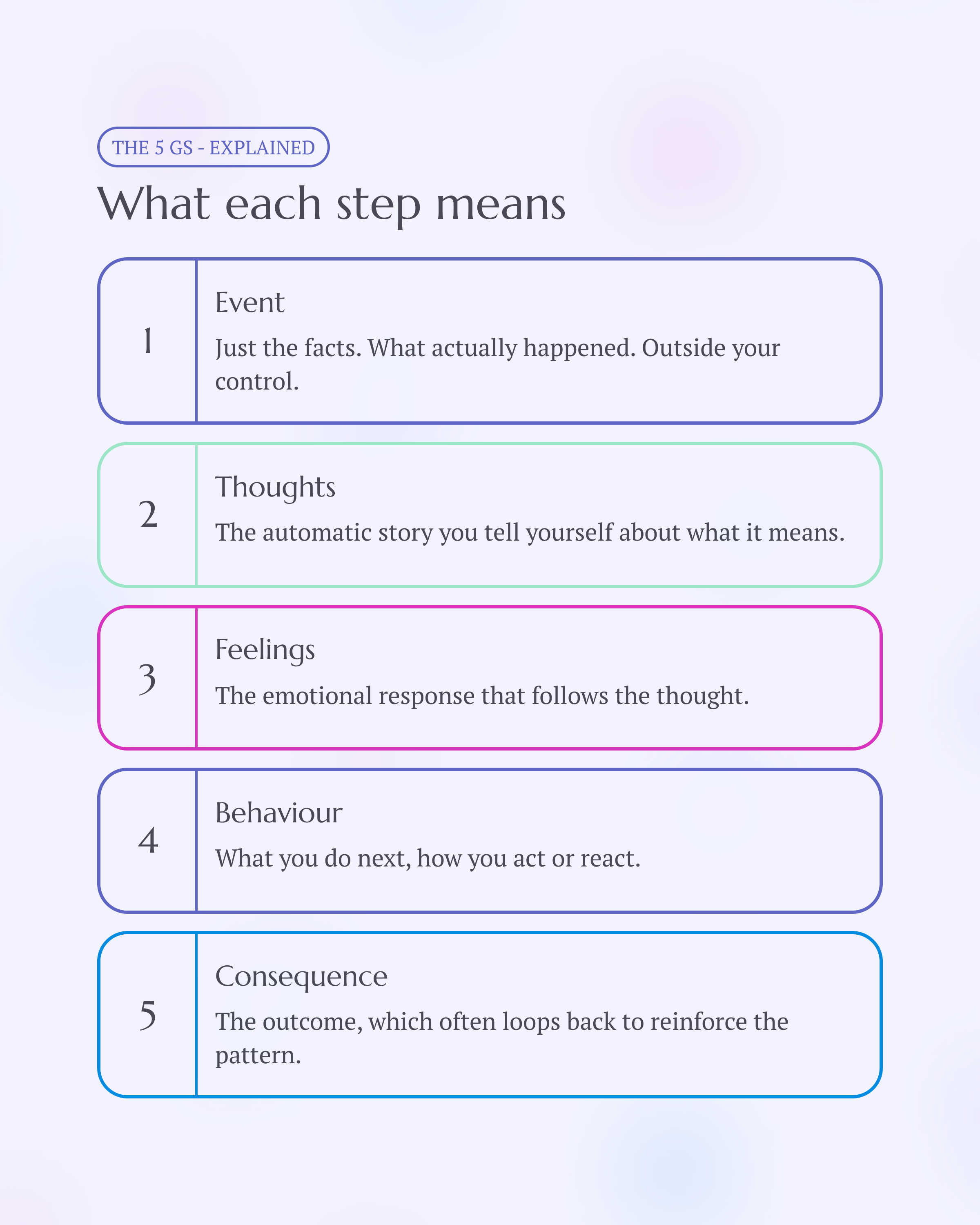
This is what actually happened. Just the facts. The situation that triggered something in you. It's important to note: the event itself is outside your control. It's simply what occurred.
Gedachten (Thoughts)
These are the automatic interpretations you attach to the event. The story you tell yourself about what it means. Often these thoughts happen so quickly we don't even notice them.
Gevoelens (Feelings)
This is the emotional response that follows the thought. The feeling in your body, the emotion that arises.
Gedrag (Behaviour)
What you do next. How you act or react in response to the thought and feeling.
Gevolg (Consequence/Result)
The outcome of your behaviour. This can be positive or negative, and it often loops back to reinforce or change the pattern.
The names are in Dutch, where the framework originally comes from.
How It Looks in Practice
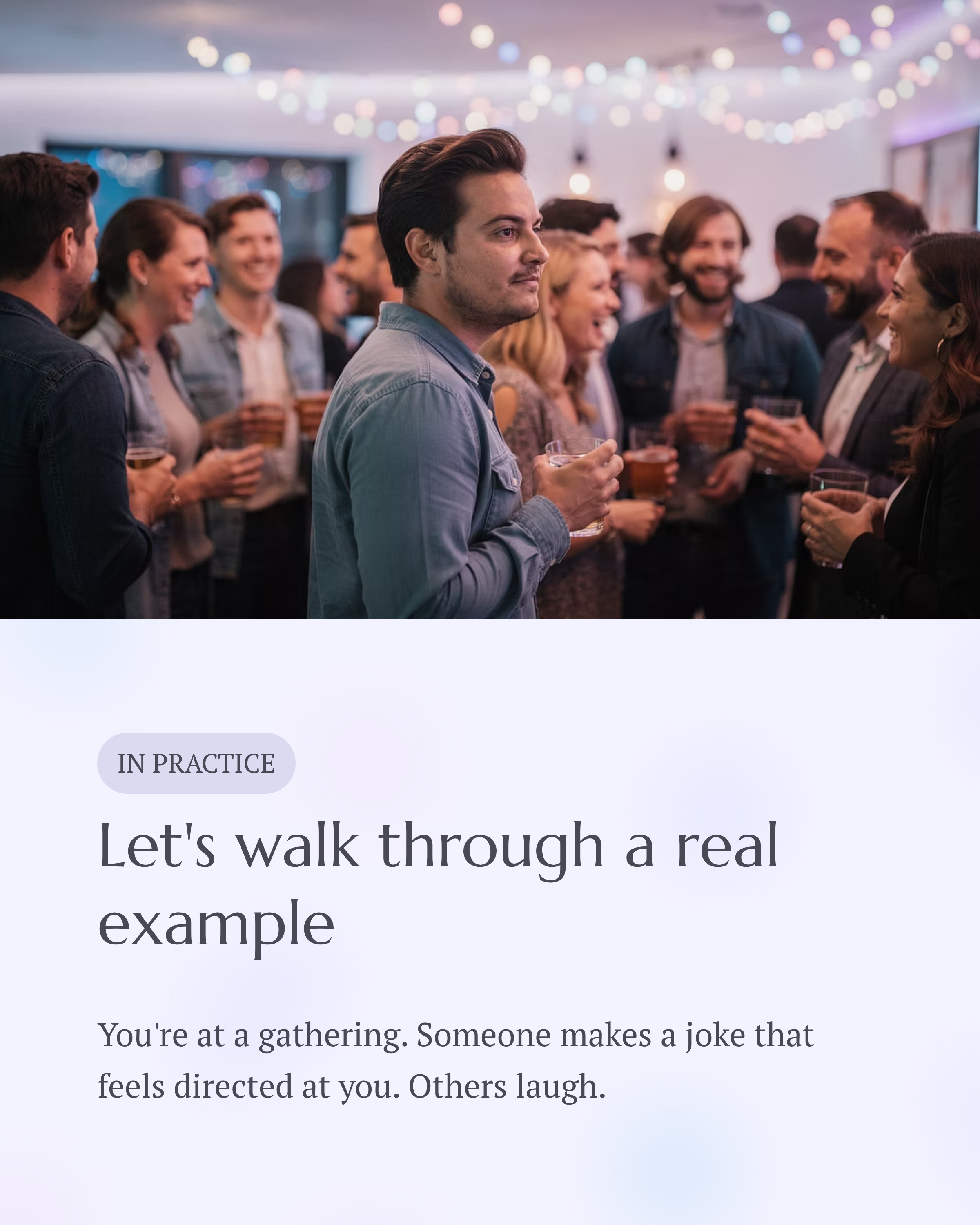
Let's take a common example:
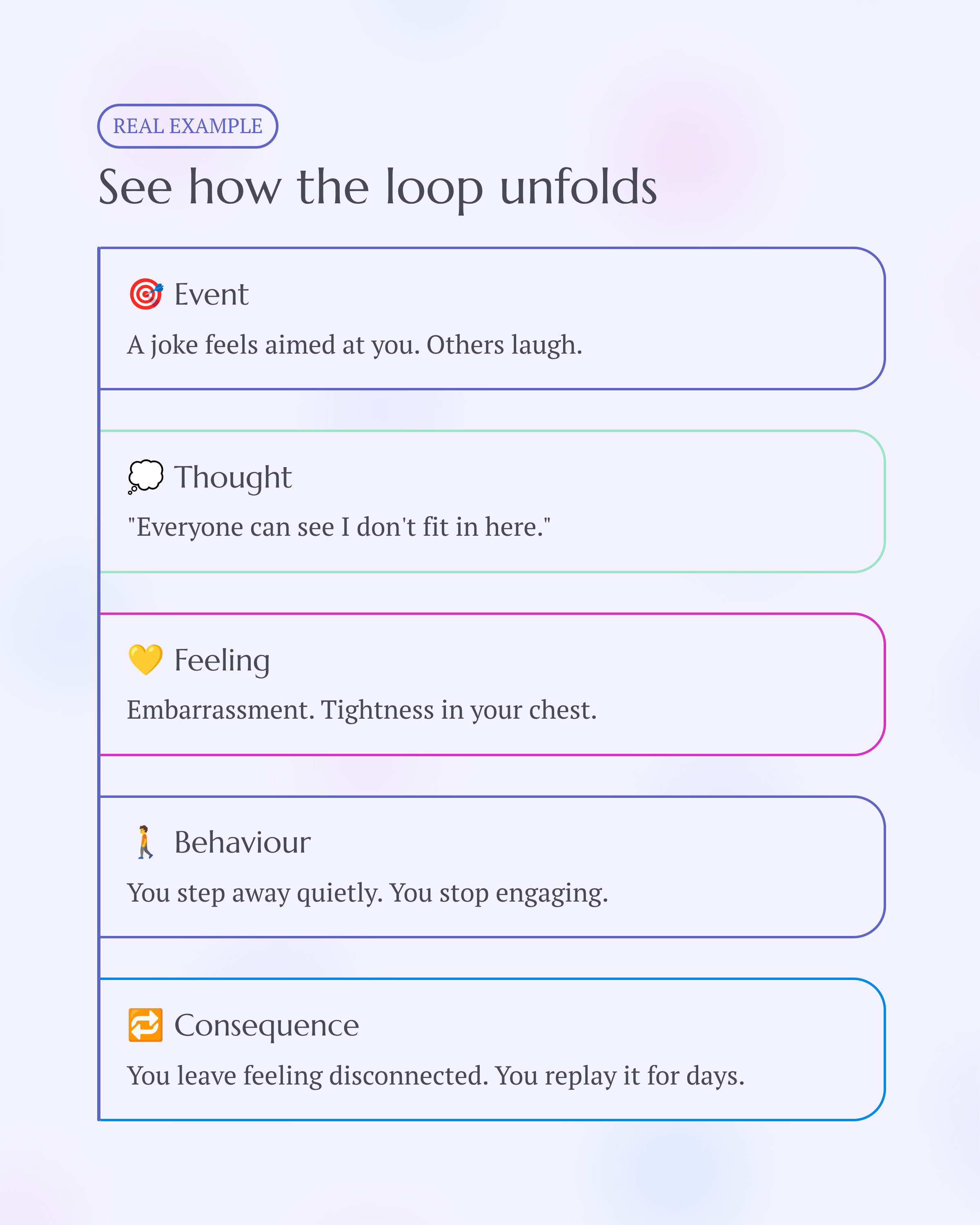
Event: You're at a social gathering and someone you don't know well makes a joke that feels directed at you. Others laugh.
Thought: “They're making fun of me. Everyone can see I don't fit in here.”
Feeling: Embarrassment, tightness in your chest, a flush of heat.
Behaviour: You laugh along but then step away quietly. You spend the rest of the evening on the edge of the group, not really engaging.
Consequence: You leave feeling disconnected and exhausted. You replay the moment for days, telling yourself you don't belong in that circle.
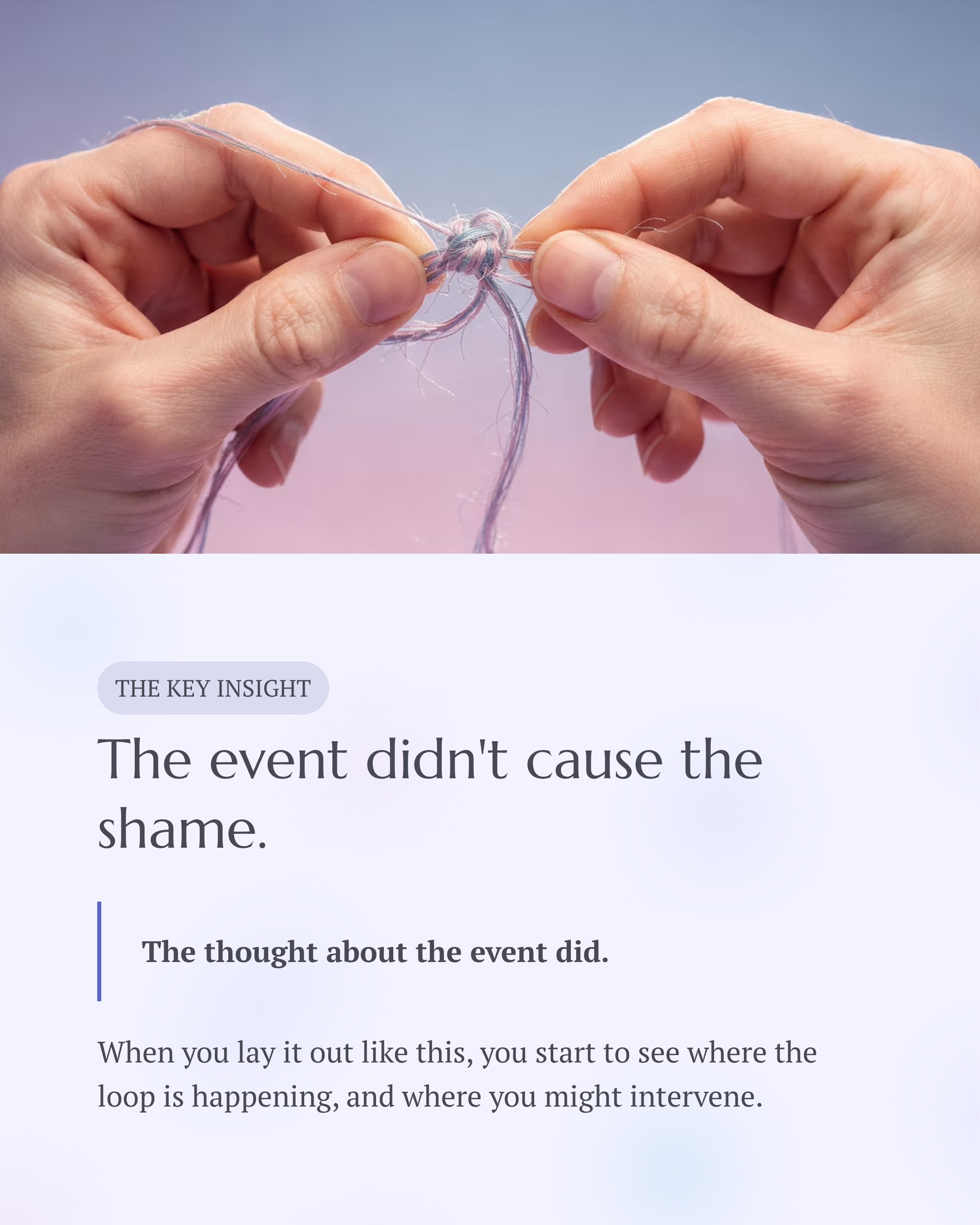
When you lay it out like this, you start to see where the loop is happening. The event didn't cause the shame, the thought about the event did. And the behaviour reinforced the outcome.
That's not to say your feelings aren't valid. They are. But seeing the steps helps you notice where you might have more room to intervene.
Why I Use This Framework
I use the 5 Gs because it's simple enough to remember in a difficult moment, and it works well alongside other tools, like understanding what needs might be underneath the feelings.
When I walk through this with people, something often changes. They start to see that their reaction isn't random. It follows a pattern. And patterns can be understood. Patterns can change.
You're not trying to control your feelings here. You're just getting curious about what's happening beneath them.
Your Invitation to Try the 5 Gs
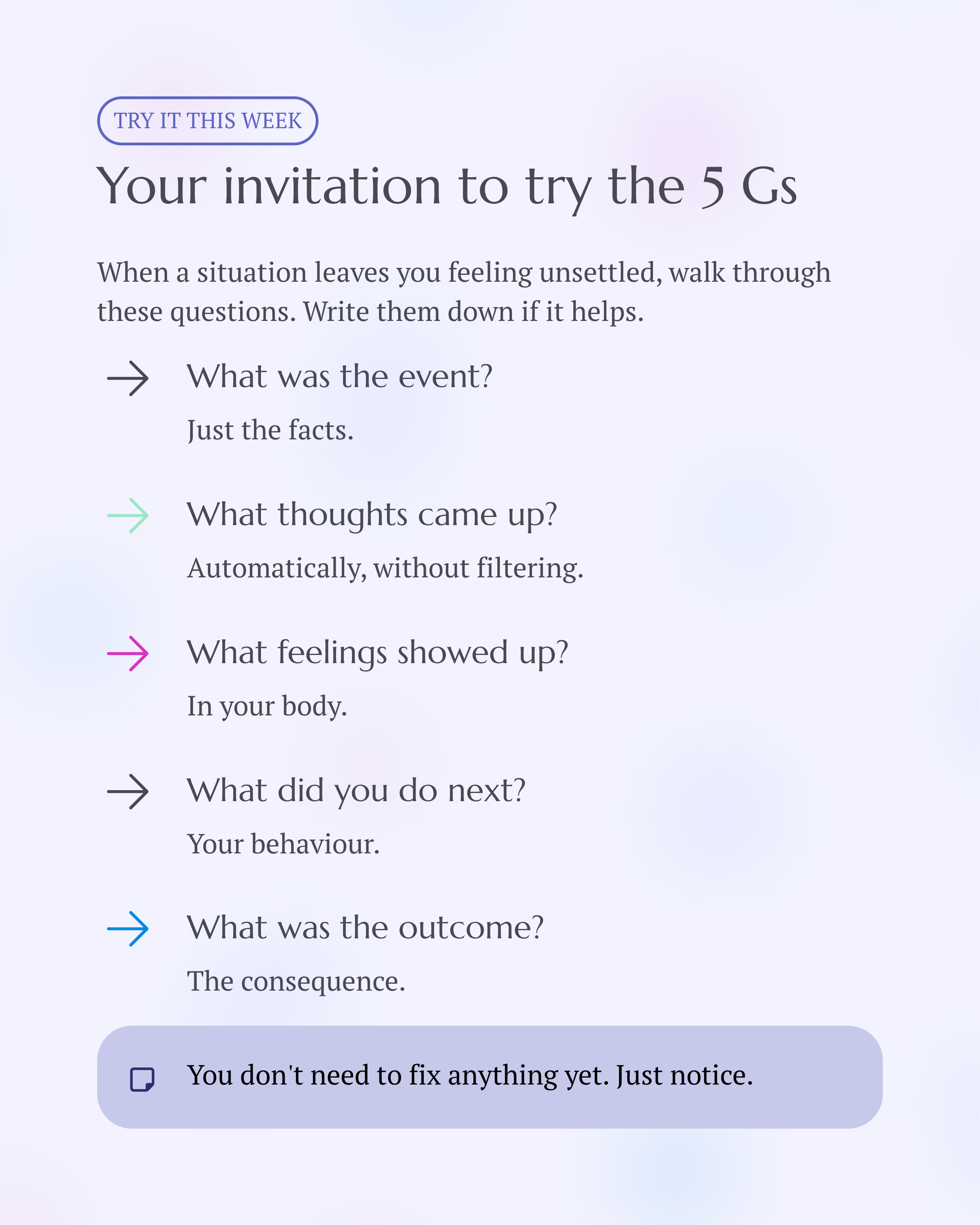
This week, when a situation leaves you feeling unsettled, take a few minutes to walk through the steps. Write them down if that helps.
What was the event? Just the facts.
What thoughts came up automatically?
What feelings showed up in your body?
What did you do next?
What was the outcome?
You don't need to fix anything yet. Just notice. You're collecting information about your own patterns.
Your Way Forward: From Reacting to Understanding
The more familiar you become with your own 5 Gs, the more space you create between the event and your response. You start to see that the thought isn't the truth, it's just a thought. And thoughts can be questioned, softened, or set aside.
This doesn't mean you'll never feel anxious or reactive again. But you'll have a way to meet those moments with more clarity and less judgment.
If this resonates…
If you've ever felt caught in a loop of reacting without understanding why, you're not alone. Most of us were never given a map for this.
If you'd like support in using frameworks like this to navigate difficult feelings with more ease, I'm here. No pressure, just presence.
You might also find these helpful:
Why You Can't Control Your Feelings (And What to Do Instead)
Thinking vs Feeling: Losing Balance by Ignoring Your Feelings
Reference: This model is based on the 5 Gs framework used in Cognitive Behavioural Therapy. You can read more about it here: Toolshero – 5G Model
Disclaimer: This content is for informational purposes only. It is shared to promote awareness and understanding, not to replace professional medical or psychological advice. If you are experiencing significant distress or have concerns about your mental health, please consult a qualified healthcare provider.
