
The 5 Gs: Your GPS for Difficult Feelings
We often try to think our way out of a feeling. That's like using a map when you need a compass.
You know that moment when a feeling hits and suddenly you're lost? There's a knot in your stomach. Your thoughts are running in circles. You're not even sure how you got from point A to point B, only that something happened and now you're somewhere you didn't want to be.
The question isn't “Why am I feeling this?” It's “Where is this feeling trying to take me?” Your feelings aren't trying to break you. They're trying to redirect you.
In those moments, what you need isn't more analysis. You need a way to reorient. Something simple you can use while you're still in the middle of it.
That's how I think of the 5 Gs. Not just as a framework for understanding after the fact, but as a GPS for difficult feelings. A tool you can use in real time to pause, notice where you are, and choose a different route.
If you're new to the 5 Gs, you might find it helpful to read the introductory post first: The 5 Gs: A Simple Tool for Navigating Difficult Feelings
Why a GPS?
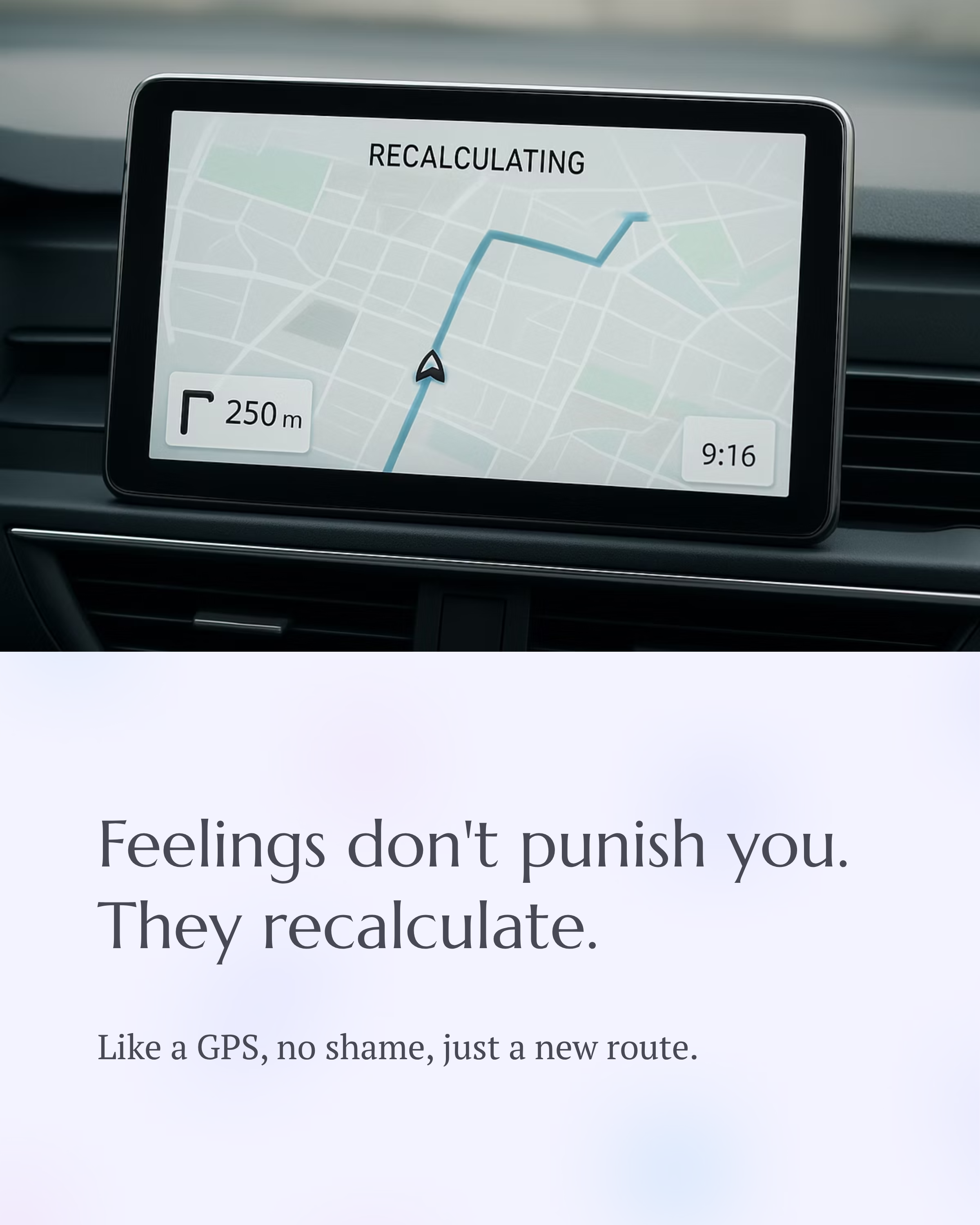
When you're driving and you miss a turn, your GPS doesn't shame you. It doesn't say, “Why did you do that? What's wrong with you?”
It simply says: Recalculating.
Then it offers a new route.
Feelings work the same way. You don't need to be punished for having a reaction. You just need to recalculate.
The 5 Gs help you do that by showing you where you're getting stuck.
Where Do You Get Stuck?
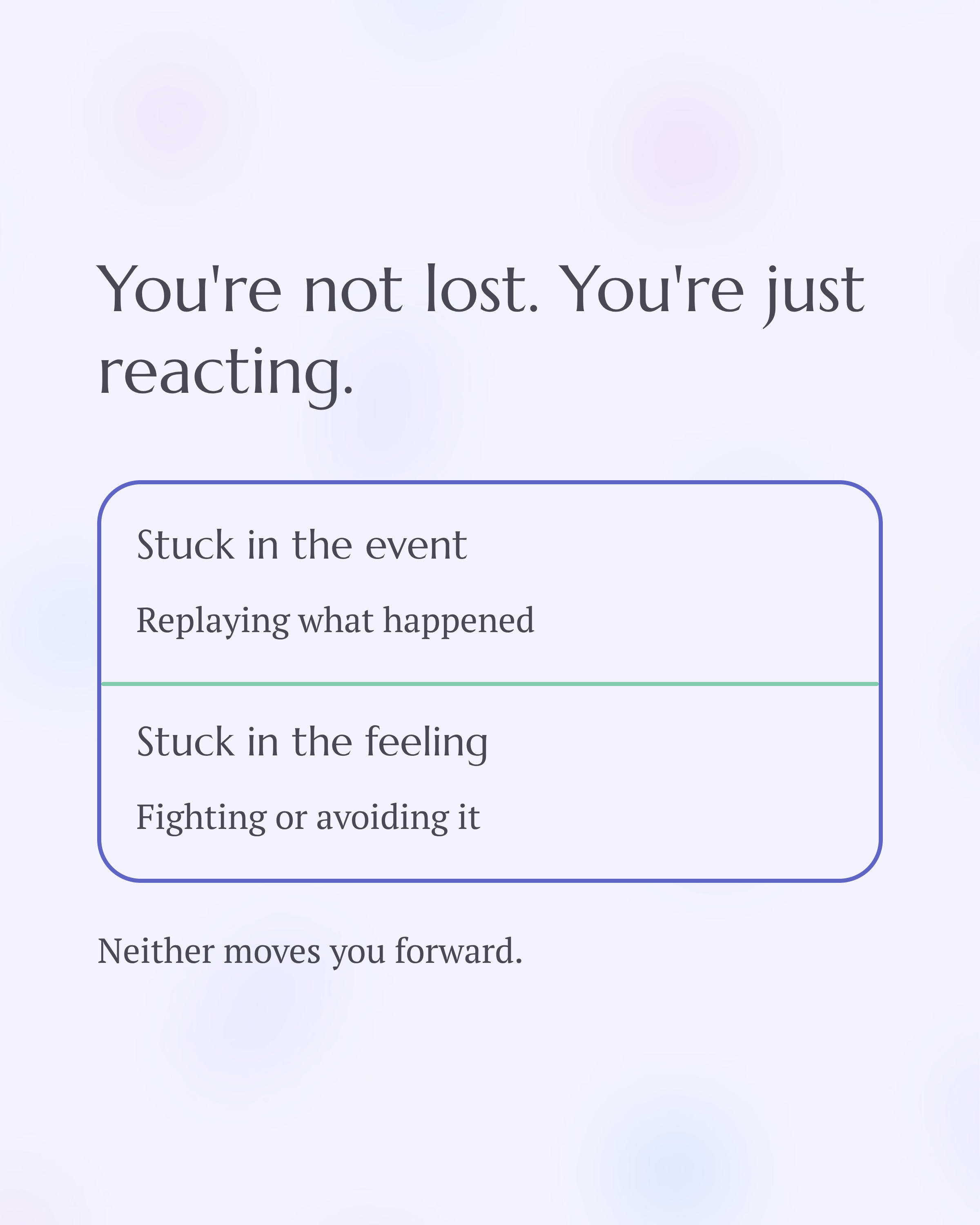
In my experience, there are two common places where people get stuck:
Stuck in the event. You keep replaying what happened, as if understanding the situation better will somehow undo the feeling. But the event already happened. You can't control it. Replaying it only keeps you spinning.
Stuck in the feeling. You believe the feeling is the problem. So you try to push it away, distract yourself, or argue with it. But feelings don't respond to arguments. They just want to be acknowledged.
The GPS approach offers a different question: What if the feeling isn't the problem, it's just telling you where to look?
Using the 5 Gs as a GPS
Next time you feel yourself reacting, try this instead of pushing through:
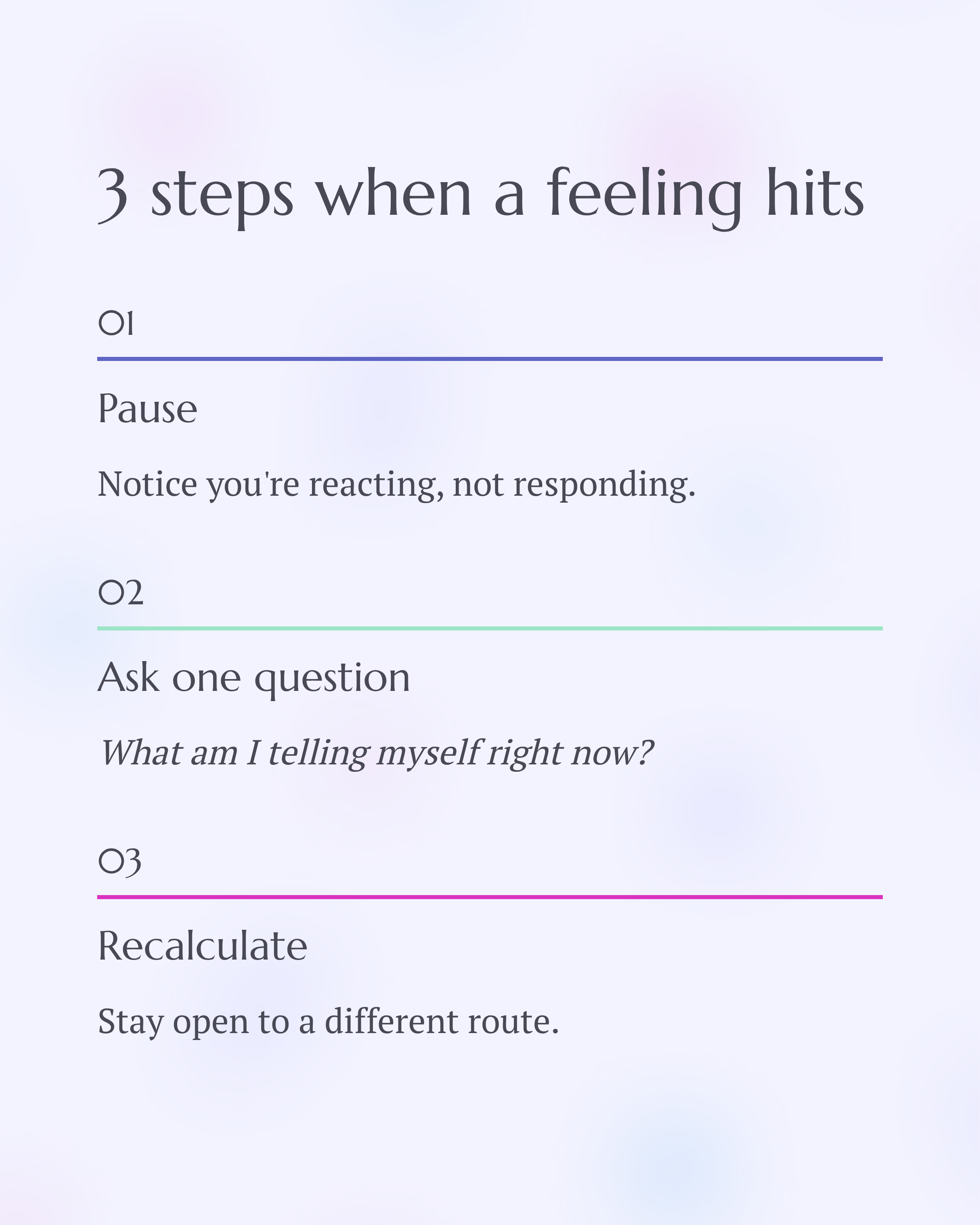
Step 1: Pause. Just long enough to notice you're reacting instead of responding. That's it. No need to fix anything yet.
Step 2: Ask one question. Not five questions. Just one. For example:
What am I telling myself right now? (checking the thought)
Where am I feeling this in my body? (checking the feeling)
What do I feel like doing next? (checking the behavior)
Step 3: Let the GPS recalculate. You don't need to have the perfect response. You just need to be open to a different route. Sometimes that means taking a deep breath. Sometimes it means waiting five minutes before replying. Sometimes it means saying nothing at all.
The goal isn't to never feel lost again. The goal is to spend less time being lost.
A Real-Life Example
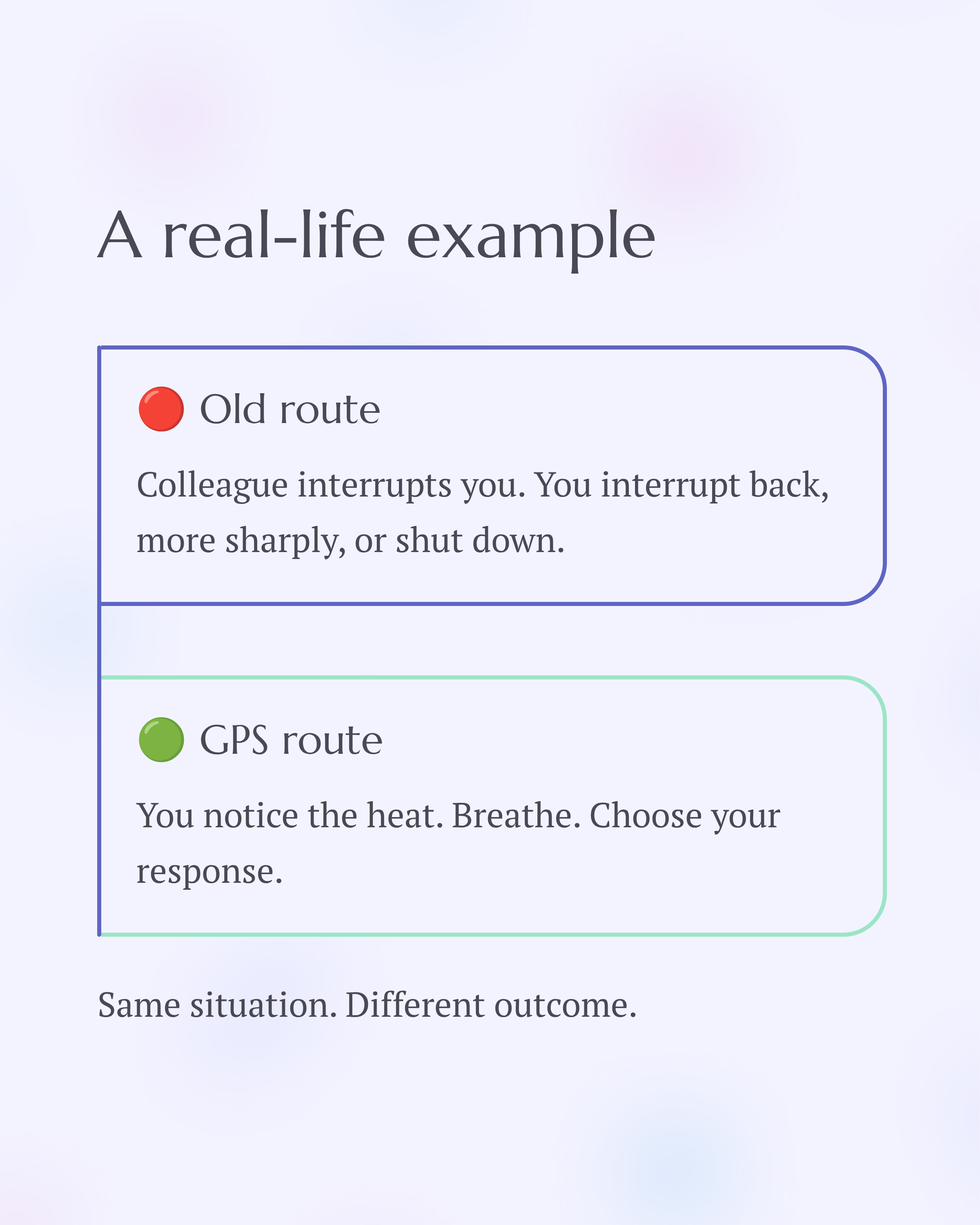
Let's say you're in a meeting and a colleague interrupts you. You feel heat rise in your chest. Your mind jumps to: “They always do this. They don't respect me.”
Old route: You interrupt back, more sharply. Or you shut down and say nothing for the rest of the meeting. Either way, you leave feeling frustrated and disconnected.
GPS route: You notice the heat. You notice the thought. You don't act on it immediately. You take a breath. You recalculate.
Maybe you still say something, but more calmly. Maybe you let it go this time and decide to address it later. Maybe you realize the feeling is telling you something about a boundary that needs attention, not about this specific moment.
The situation hasn't changed. But your relationship to it has. And that changes what happens next.
Your Invitation to Recalculate
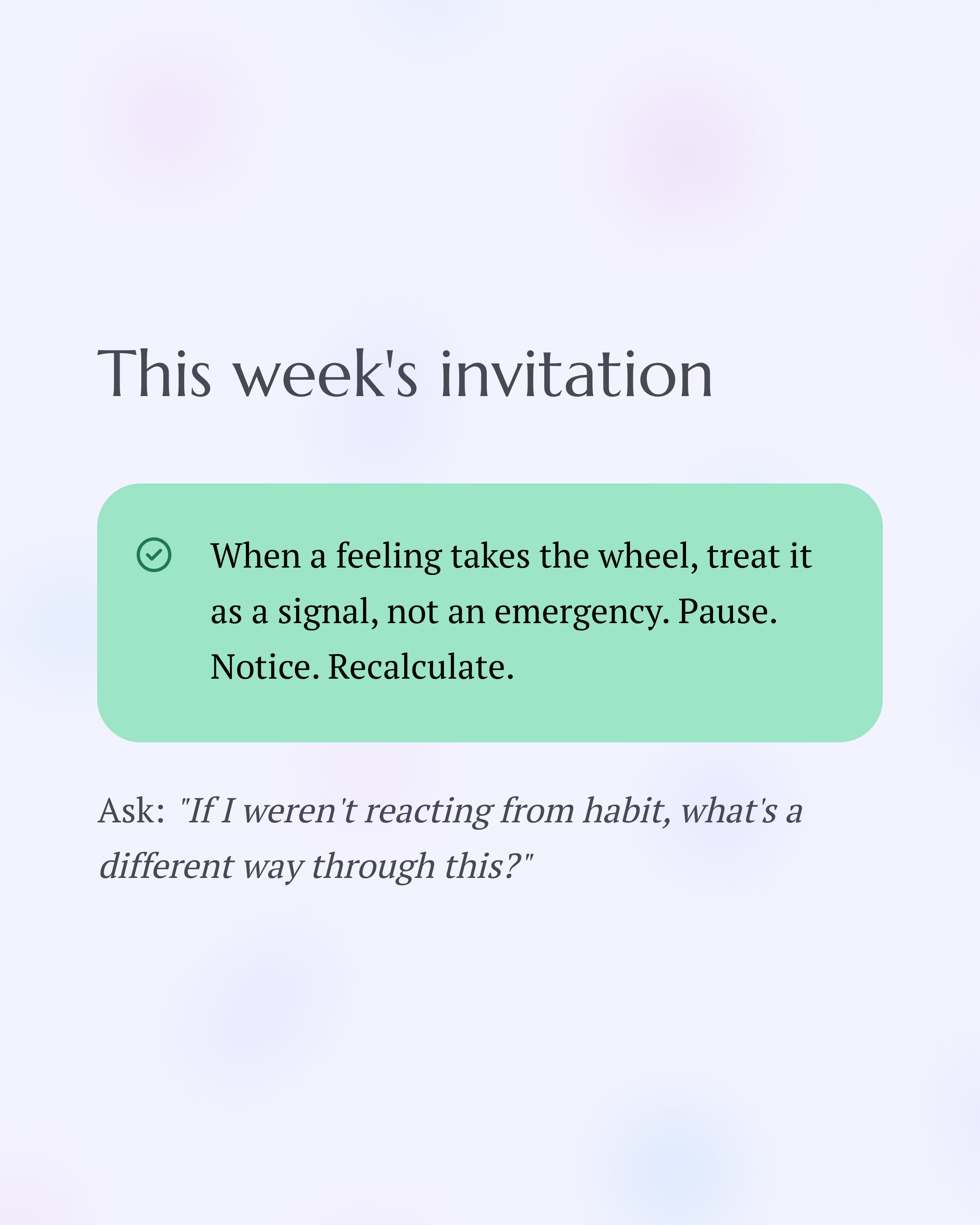
This week, when a feeling takes the wheel, try treating it as a GPS signal instead of an emergency.
You don't need to have it all figured out. You just need to be willing to pause, notice where you are, and see what recalibration looks like.
Ask yourself: “If I weren't reacting from habit right now, what might be a different way through this?”
You might be surprised by what opens up.
Your Way Forward: From Reacting to Recalculating
The more you practice this, the more natural it becomes. Not because you stop having feelings, but because you stop believing that every feeling requires immediate action.
You learn to let the GPS do its job. To pause. To notice. To choose a different route when the old one isn't serving you.
That's not about control. It's about navigation. And that's something anyone can learn.
If this resonates…
If you've ever felt caught in a loop of reacting without understanding why, you're not alone. Most of us were never given a map for this.
If you'd like support in learning to use tools like the 5 Gs to navigate difficult feelings with more ease, I'm here. No pressure, just presence.
You might also find these helpful:
Disclaimer: This content is for informational purposes only. It is shared to promote awareness and understanding, not to replace professional medical or psychological advice. If you are experiencing significant distress or have concerns about your mental health, please consult a qualified healthcare provider.
