
Thinking vs Feeling: Losing Balance by Ignoring Your Feelings
I still remember my first and only yoga class, over a decade ago. I ended up crying on the floor, with a sharp pain in my chest. It was so intense that I never went back. At the time, I told myself it just wasn't for me.
Looking back now, I see it differently. I was carrying something I hadn't allowed myself to feel. And when my body finally had space to let it move, it was overwhelming.
That moment stayed with me. For someone who had spent years relying on logic and thinking my way through everything, this was something I couldn't explain away. Something physical and emotional surfaced without warning, and I didn’t know what to do with it.
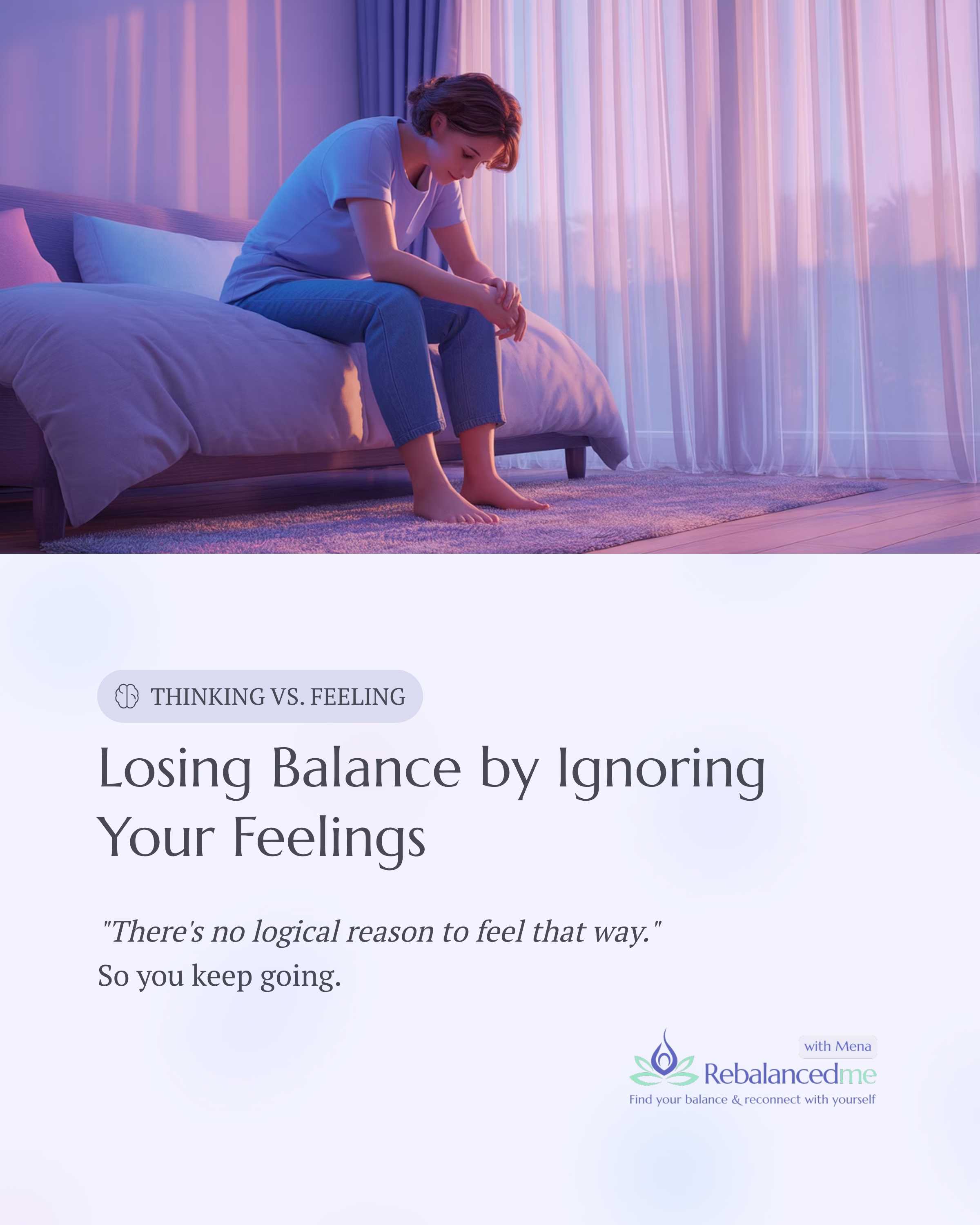
You've probably had moments like this too. Something feels off, maybe tension in your shoulders, a knot in your stomach, or a sense that something isn't right, but you push it aside. You tell yourself there is no logical reason to feel that way. So you keep going.
But the feeling doesn't go away. It stays, and sometimes it grows. And eventually, it might show up as exhaustion, irritability, or a sense of being stuck. Especially if you work in environments where rational thinking is prized above all else.
When Thinking Takes Over
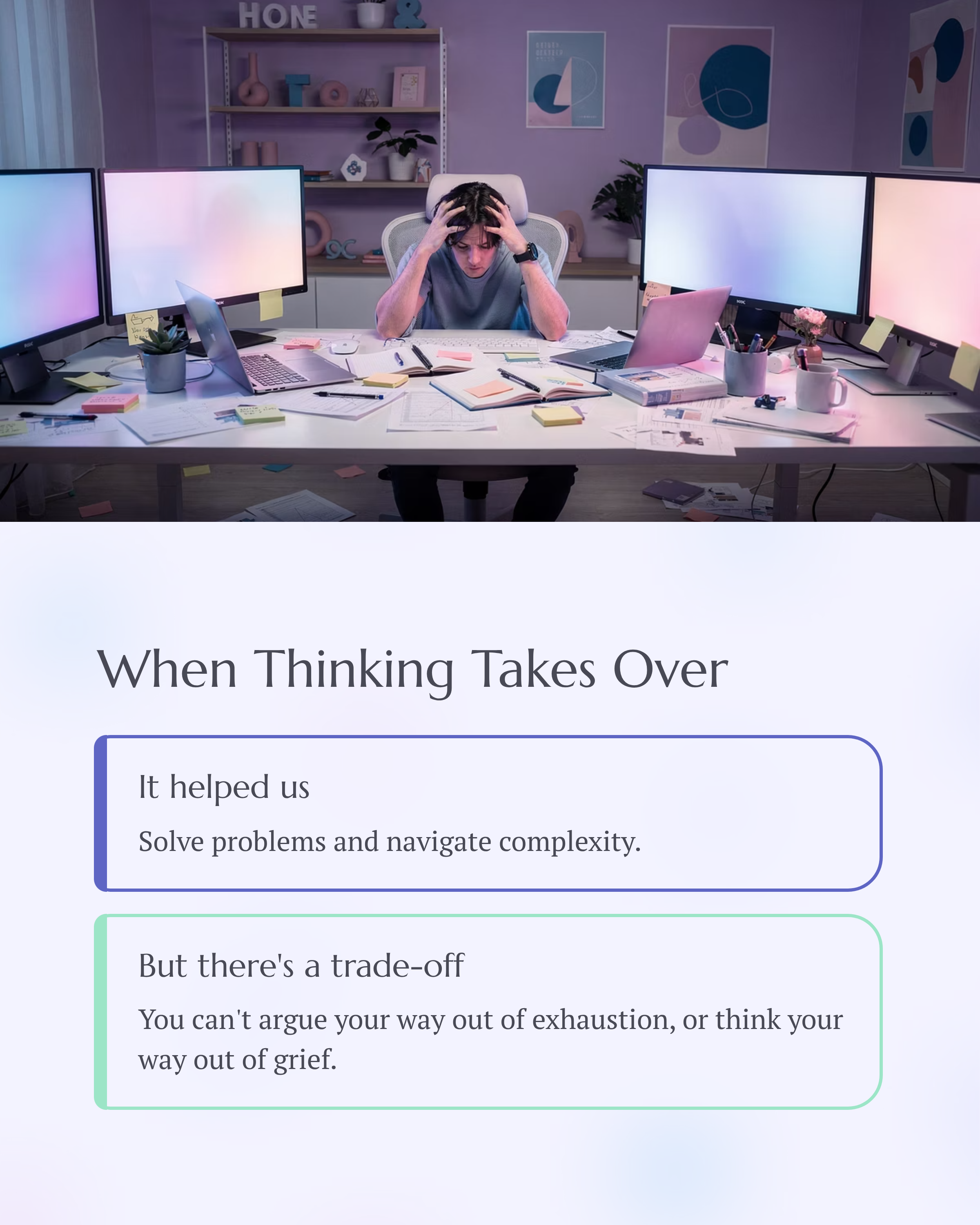
Many of us, especially in analytical environments, have learned to live mostly in our heads. It's what got us here. It helped us solve problems, deliver results, and navigate complexity.
But there's a trade-off that often goes unnoticed.
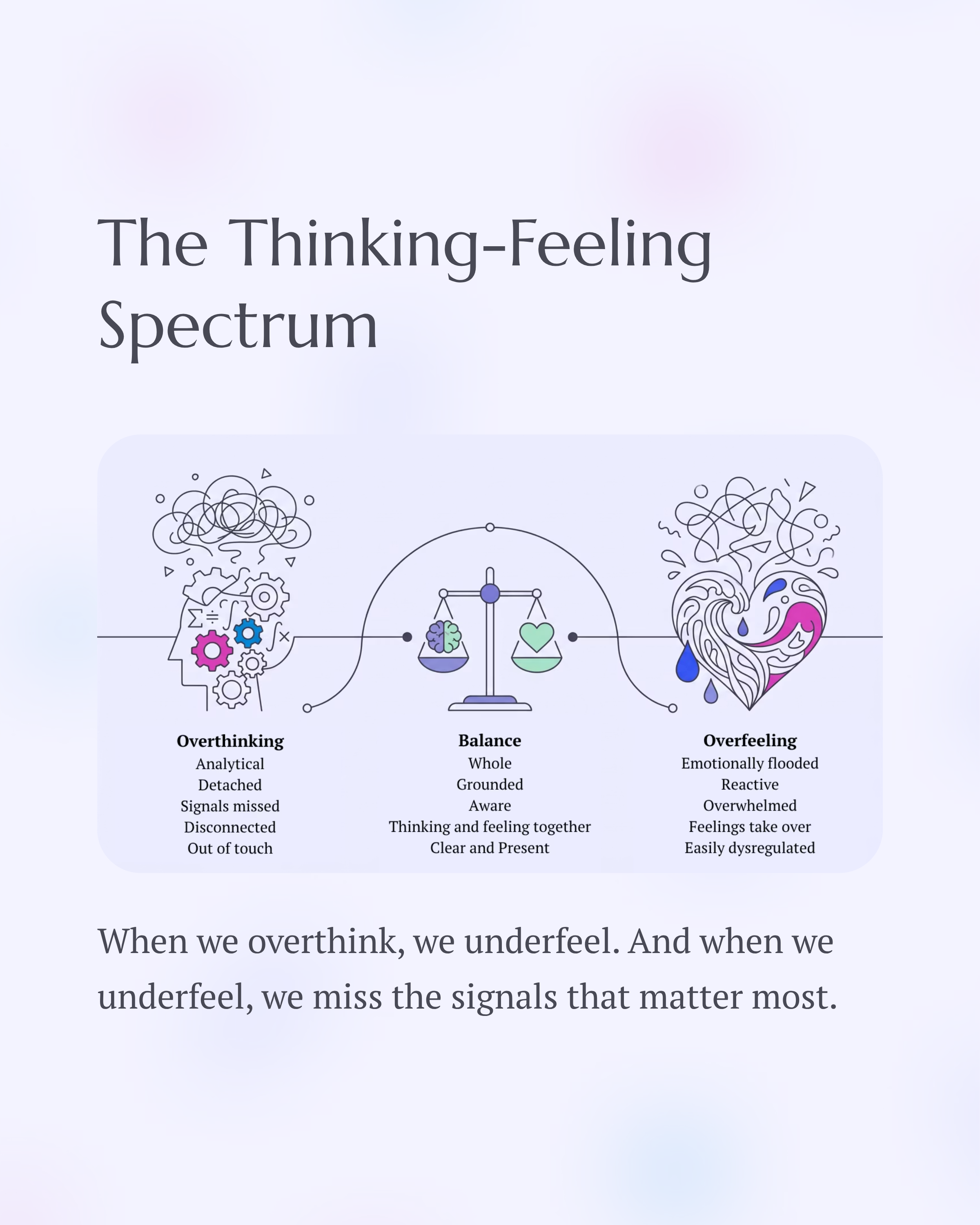
A colleague in counselling once described it this way: Feeling and thinking are two ends of a spectrum. When we overthink, we underfeel. And when we underfeel, we miss important signals.
This isn't just about work. It shows up at home too, in conversations where you stay in your head instead of connecting, in moments when someone asks how you feel and you struggle to find words, in the quiet distance that grows when you're always analyzing instead of being present.
When we're used to leading with logic, we can end up feeling disconnected not only from ourselves, but from the people around us.
This isn't about being “too emotional” or abandoning logic. It's about noticing that the part of us that thinks has become so active that the part of us that feels has been pushed to the background.
And when that happens, we lose access to valuable information.
The Body Knows Before the Mind Does
Our bodies are often wiser than we give them credit for.
Have you ever walked into a room and immediately felt tension, even though nothing had been said? Or met someone and sensed something was off, without being able to explain why?
That’s your body picking up on something before your mind has words for it. It’s not irrational, it’s just faster.
When we ignore those signals, or dismiss them because they don't “make sense”, we're cutting ourselves off from information that could help us make better decisions, set healthier boundaries, or simply understand what we need.
What Happens When We Push Feelings Aside
Sometimes we numb our feelings without even realizing it. It can become a habit, a way to keep going when things feel overwhelming.
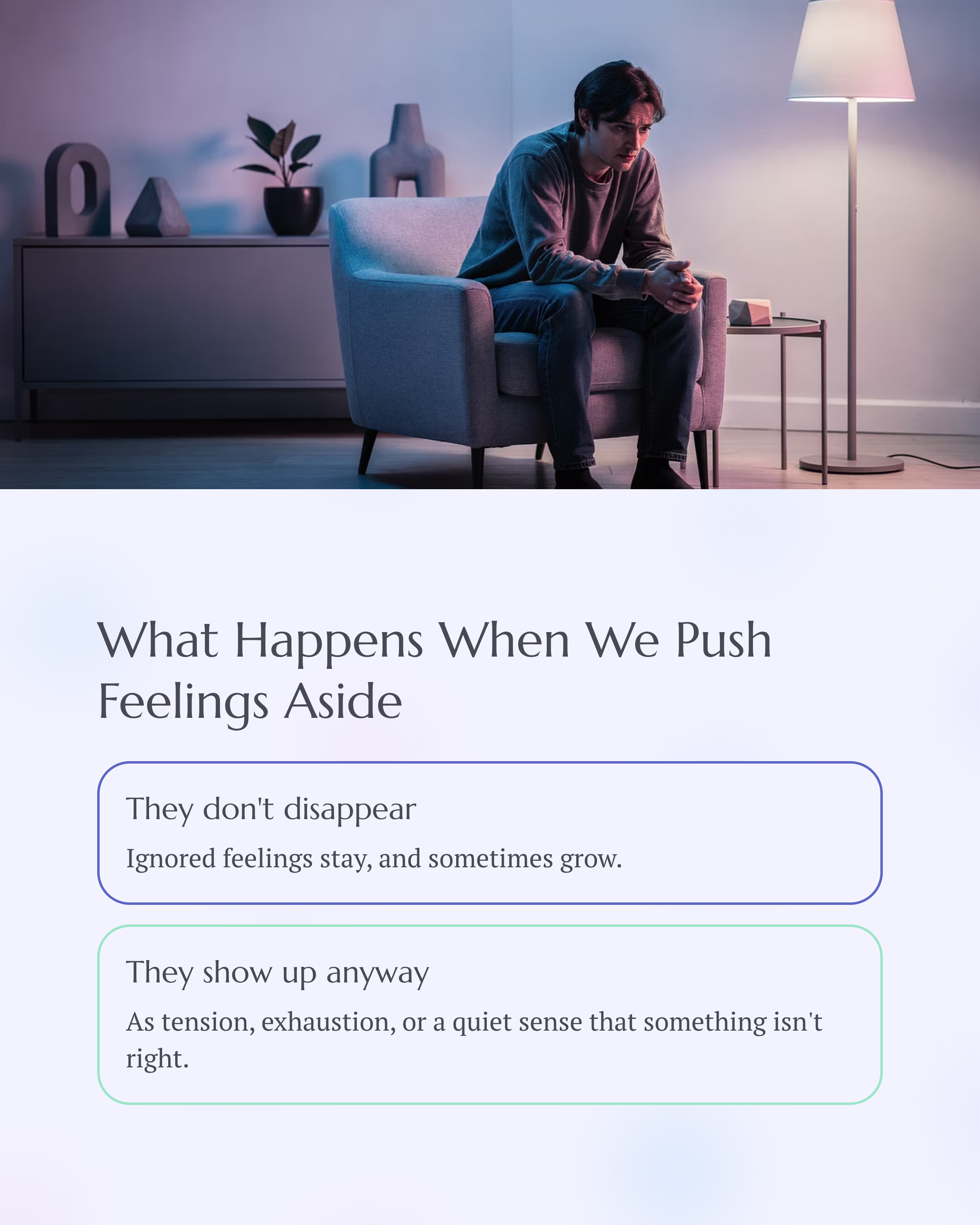
But feelings don't disappear when we ignore them. They wait, and often show up elsewhere, as tension that won’t release, or exhaustion that doesn’t ease, as a vague sense that something is wrong even when nothing obvious has happened.
Looking back at that yoga class, I can see now that I wasn't failing. I was simply in a place where my body was ready to release something my mind wasn't ready to hold. That moment wasn't something I needed to fix. It was something I wasn’t ready to understand yet.
I share this not to suggest everyone run toward their deepest pain, but to offer this: when you're ready, and only when you're ready, there can be something worth finding beneath the surface.
The Myth of “Just Work Harder”
When we're used to thinking our way through life, the natural response to difficulty is often: “I just need to work harder.” “I need to figure this out.” “I need to push through.”
But logic has its limits. Feelings don’t respond to logic like problems do. You can't argue your way out of exhaustion or think your way out of grief.
What actually helps is learning to pause. To notice what's happening in your body. To ask, not “How do I fix this?”, but “What is this telling me?”

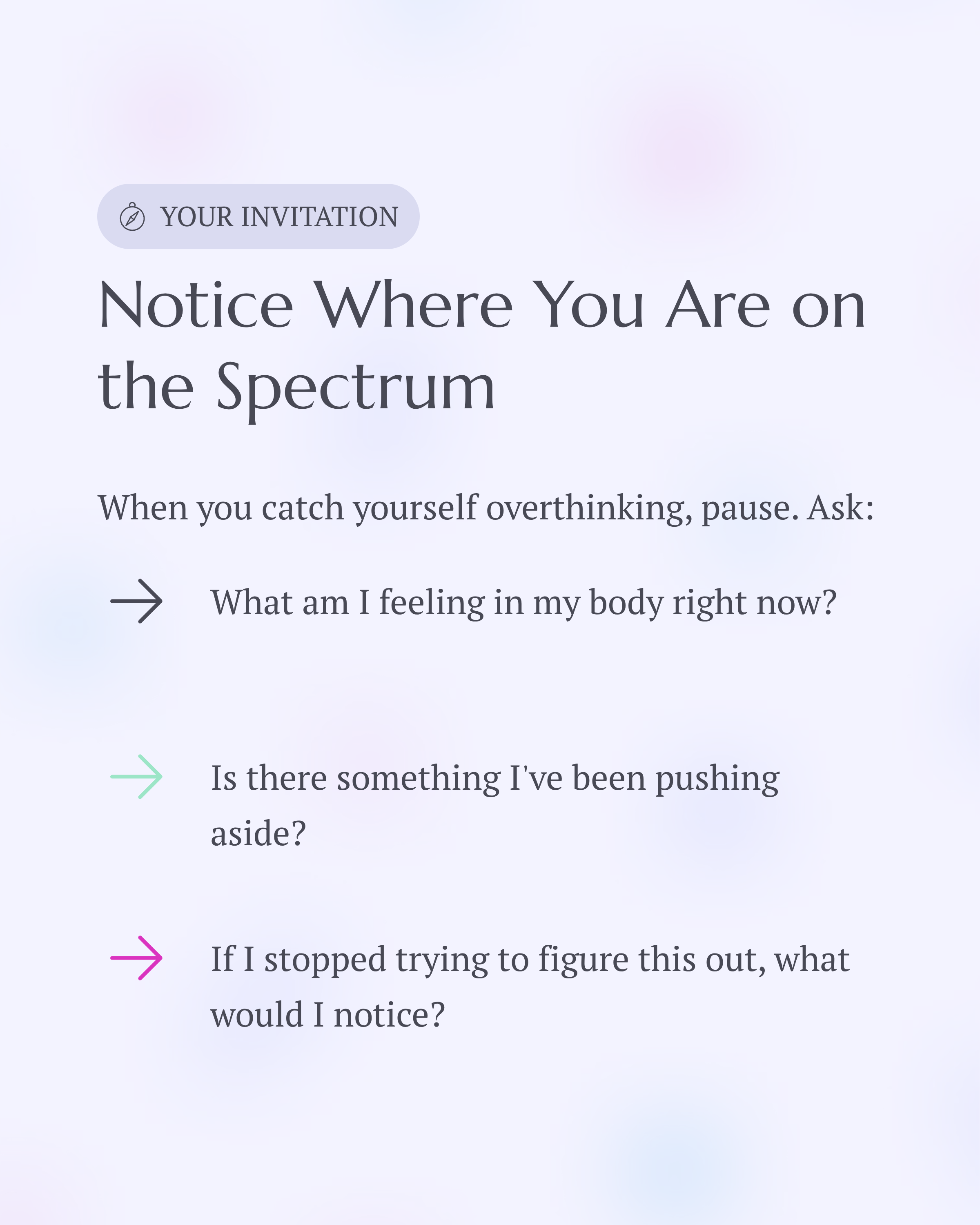
Your Invitation to Notice the Spectrum
This week, try a simple experiment.
When you notice yourself overthinking, replaying a conversation, analyzing a decision from every angle, pause for a moment. Take a breath. And ask yourself:
What am I feeling in my body right now?
Is there something I've been pushing aside?
If I paused trying to figure this out, what would I notice?
You don't need to have answers. Just practice noticing where you are on the spectrum between thinking and feeling. Overthinking has its place. So does feeling. Both are useful. But they work best when they work together.
Your Way Forward: From Overthinking to Whole-Being
When we learn to include both thinking and feeling, something shifts. We stop skipping over the information our bodies are giving us. We start making decisions that feel aligned, not just logical. We carry less tension, less exhaustion, and less of the weight that comes from constantly pushing feelings aside.
This isn't about becoming less rational. It's about becoming more whole.
If this resonates…
If you've spent years trusting your mind more than your body, and you're noticing that something isn't quite working anymore, you're not alone. That’s natural. It’s how many of us were taught to cope. You just weren't taught this part.
If you'd like support in learning to listen to both thinking and feeling, to move from overthinking to whole-being, I'm here. No pressure, just presence.
You might also find these helpful:
Disclaimer: This content is for informational purposes only. It is shared to promote awareness and understanding, not to replace professional medical or psychological advice. If you are experiencing significant distress or have concerns about your mental health, please consult a qualified healthcare provider.
