
Why You Can’t Control Your Feelings (And What to Do Instead)
Have you ever tried to stop yourself from feeling something?
Maybe you told yourself: Stop being anxious. Don't be sad. There's no reason to be angry.
And it didn't work. The feeling stayed. Or it went away for a moment, then came back.
If you've been there, you're not alone. Most of us grow up believing we should be able to control how we feel. That if we just try hard enough, we can choose our emotions like we choose what to wear.
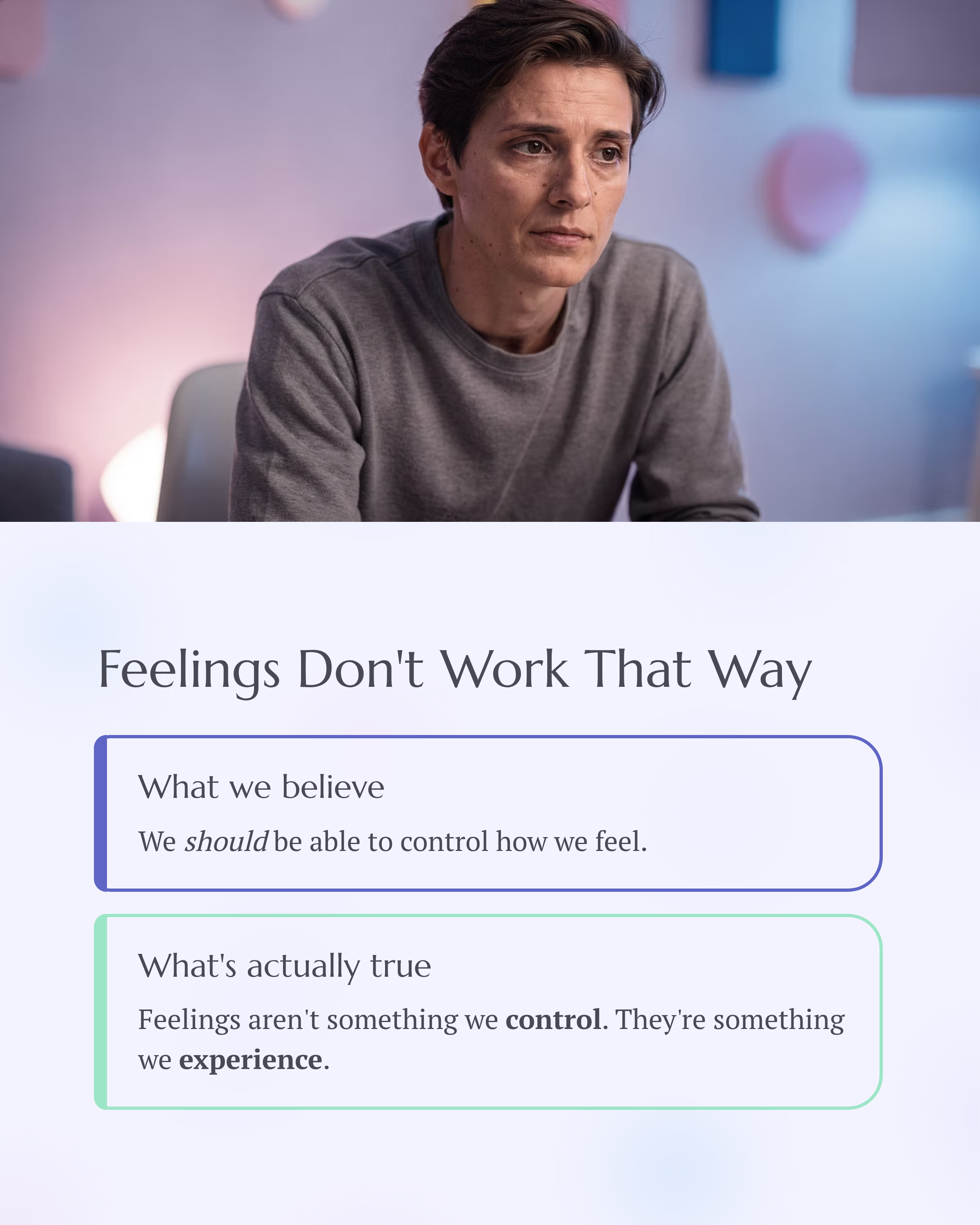
But feelings don't work that way.
What Feelings Actually Are
Feelings aren't something we control. They're something we experience.
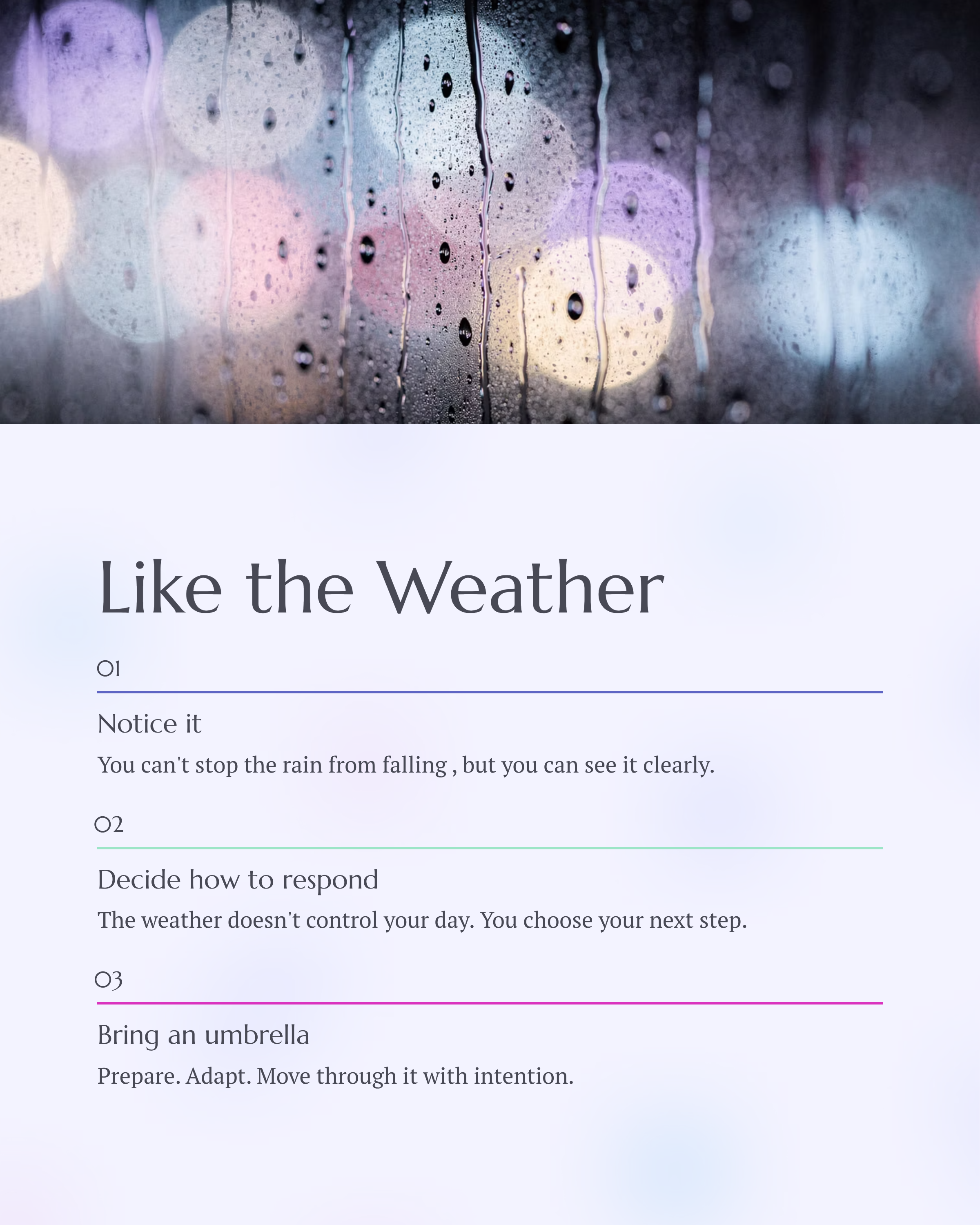
Think of them like the weather. You can't stop the rain from falling. But you can notice it. You can decide how to respond to it. You can bring an umbrella.
Feelings are similar. They arise on their own, often before we've even had time to think. They move through the body, as tightness, heat, or a knot in the stomach, often carrying emotions like fear, anger, or sadness.
We don't choose them. We notice them arriving.
The Problem with Trying to Control Feelings
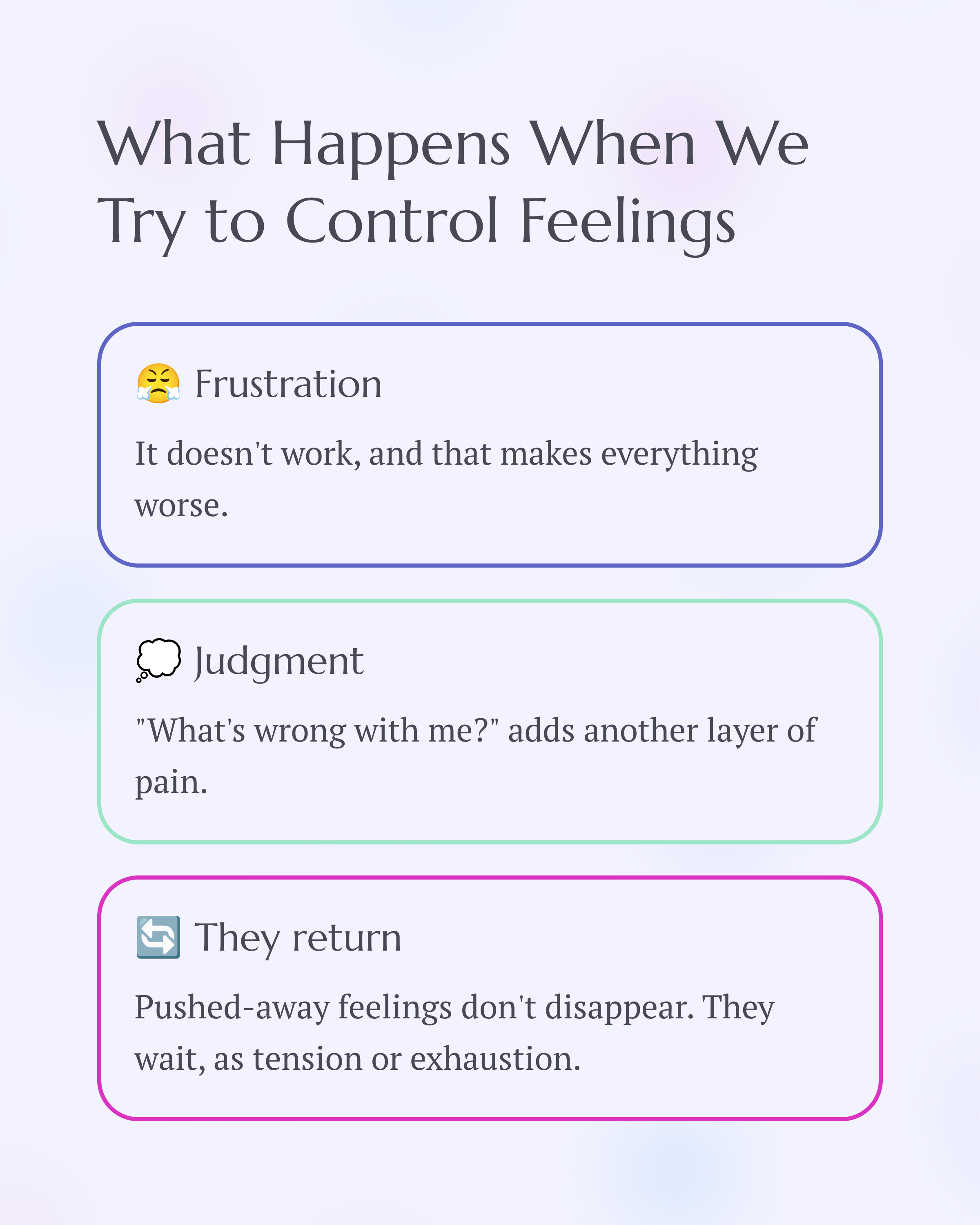
When we believe we should be able to control our feelings, two things tend to happen.
First, we feel frustrated when it doesn't work. We add judgment on top of what we're already feeling: Why can't I just calm down? What's wrong with me?
Second, we start trying to push feelings away. We distract, numb, or override them. IIt might offer temporary relief, but the feeling doesn’t disappear. It waits. Sometimes it shows up later as tension, exhaustion, or a reaction that feels bigger than the moment.
The struggle to control feelings often ends up making things harder, not easier.
A Different Way to See Feelings
We're often taught that feelings like anger, fear, or sadness are “negative”, something to get rid of or overcome.
But what if they're not the problem?
What if they're simply here to let you know something?
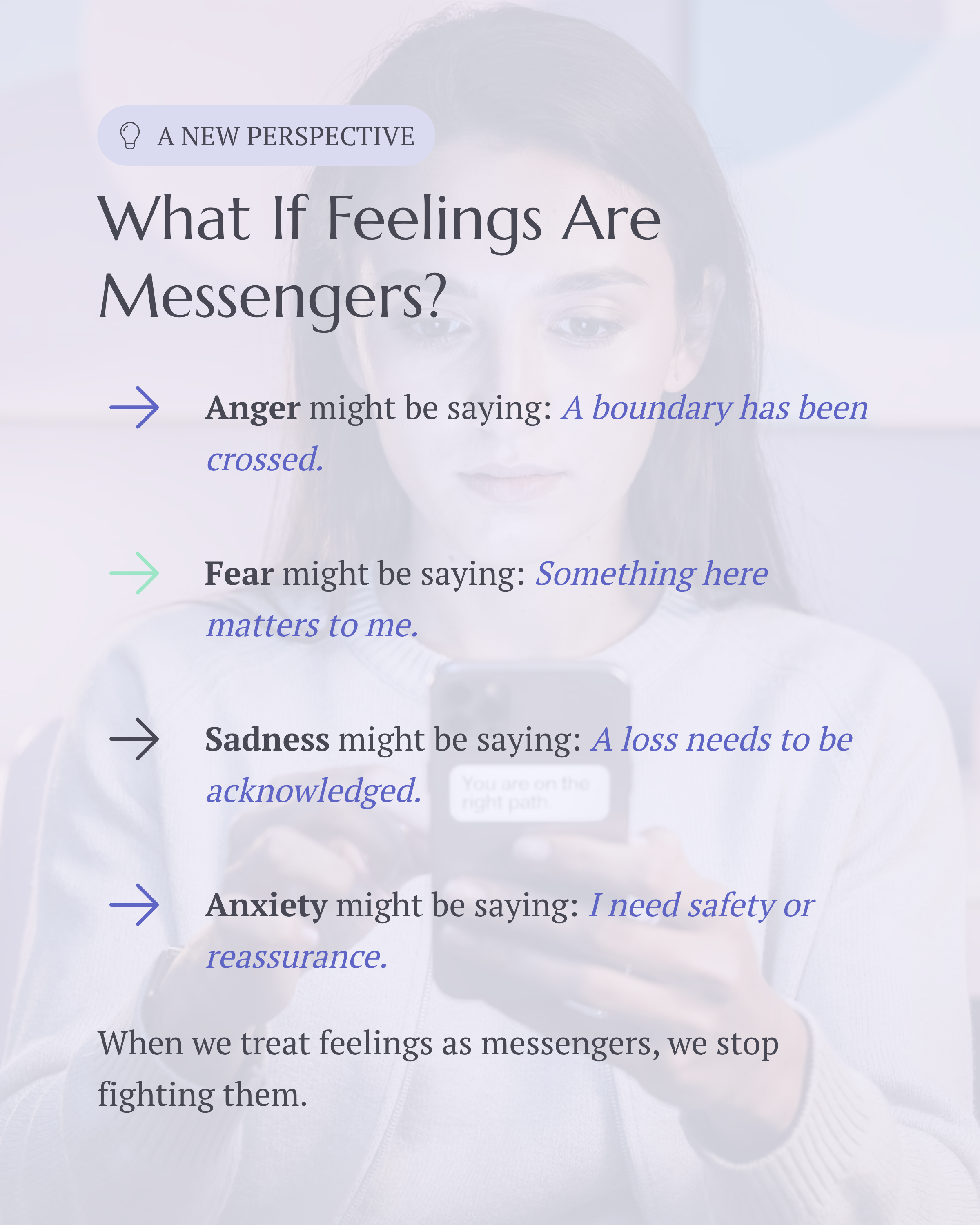
Anger might be saying: A boundary has been crossed.
Fear might be saying: Something here matters to me.
Sadness might be saying: A loss needs to be acknowledged.
Anxiety might be saying: I need safety or reassurance.
Instead of asking “How do I make this go away?”, what if you pause and listen?
When we treat feelings as messengers, we stop fighting them. We start paying attention to what they're pointing toward.
That doesn't mean you should act on every feeling. It means you can pause long enough to wonder: “What's underneath this?”, “What is it here to show me?”
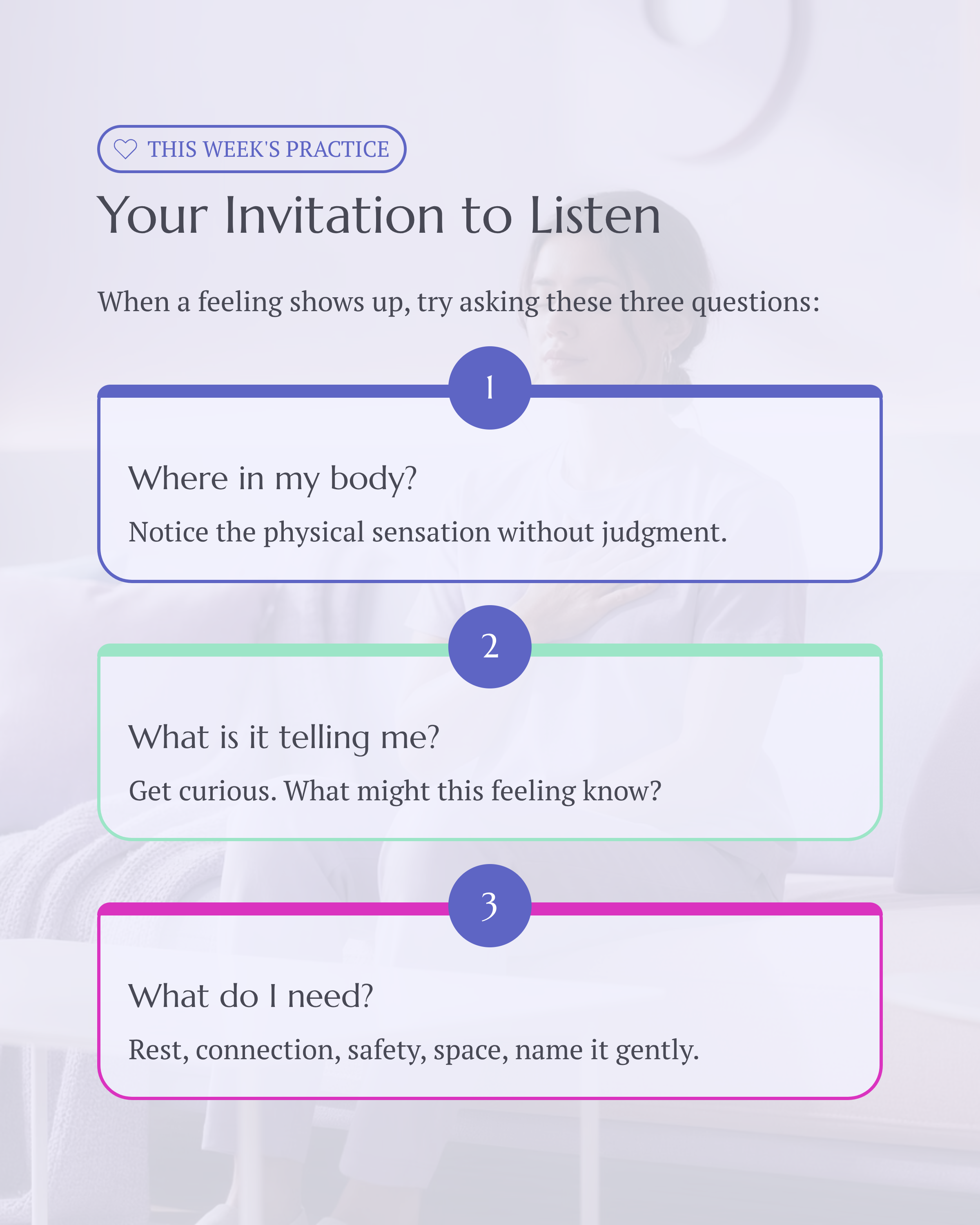
Your Invitation to Listen
This week, when a feeling shows up, especially one you usually push away, try something different.
Instead of asking “How do I stop this?”, try asking:
Where am I feeling this in my body?
What might this feeling be telling me?
What do I need right now?
You don't have to answer right away. Just practice turning toward the feeling with curiosity instead of resistance.
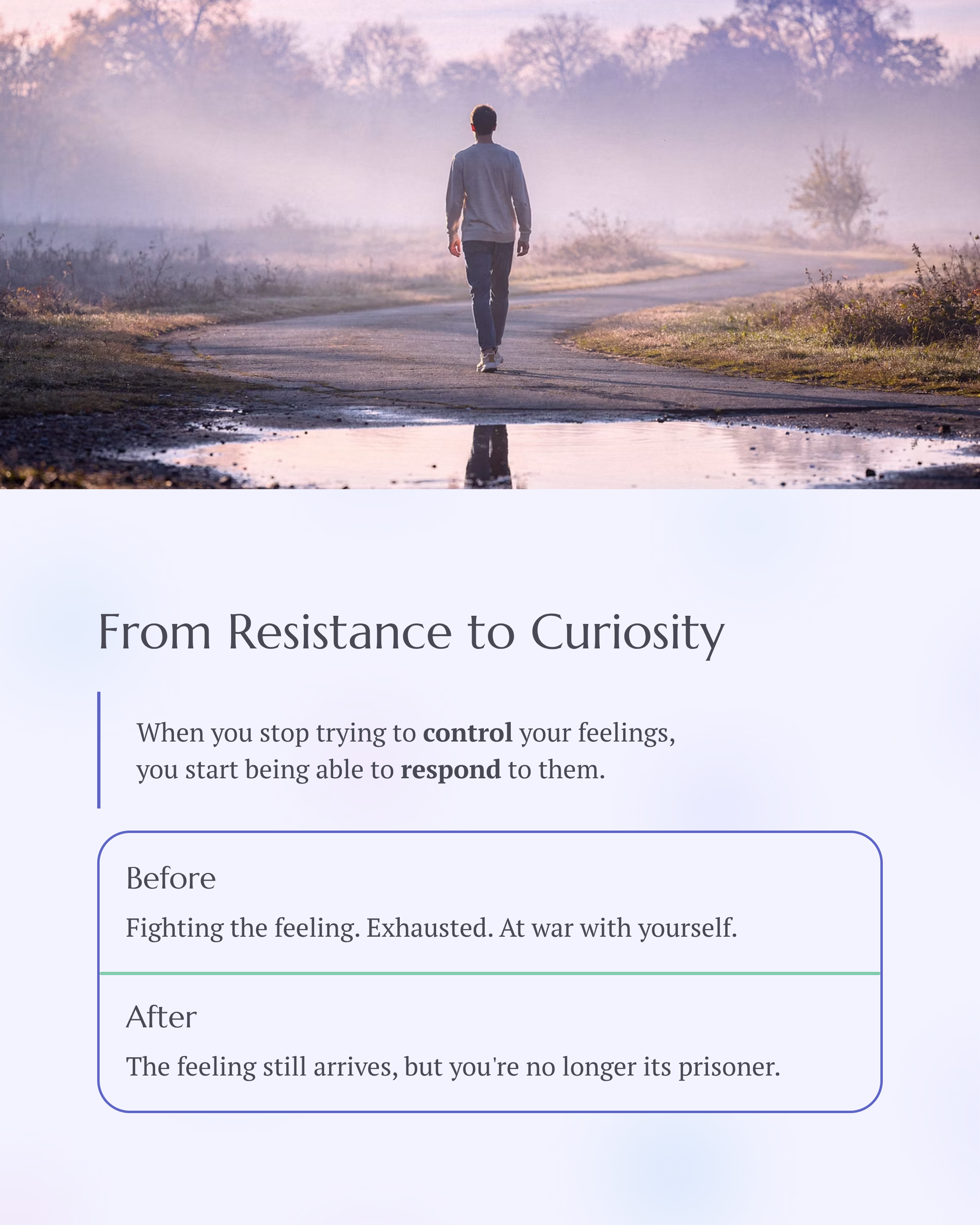
Your Way Forward: From Resistance to Curiosity
Letting go of the need to control feelings isn't about giving up. It's about freeing up the energy you spent fighting yourself.
When you stop trying to control your feelings, you start being able to respond to them. You begin to notice what they're pointing to. And from there, you can make clearer choices about what to do next.
The feeling still arrives. But you're no longer at war with it.
If this resonates…
If you've ever been frustrated by feelings you couldn't control, please know: there's nothing wrong with you. You're human. And you weren't taught this.
If you'd like support in learning to listen to your own feelings, to respond instead of react, I'm here. No pressure, just presence.
You might also find these helpful:
Disclaimer: This content is for informational purposes only. It is shared to promote awareness and understanding, not to replace professional medical or psychological advice. If you are experiencing significant distress or have concerns about your mental health, please consult a qualified healthcare provider.
