
Your Feelings Are Real (Even When Others Don't Get It)
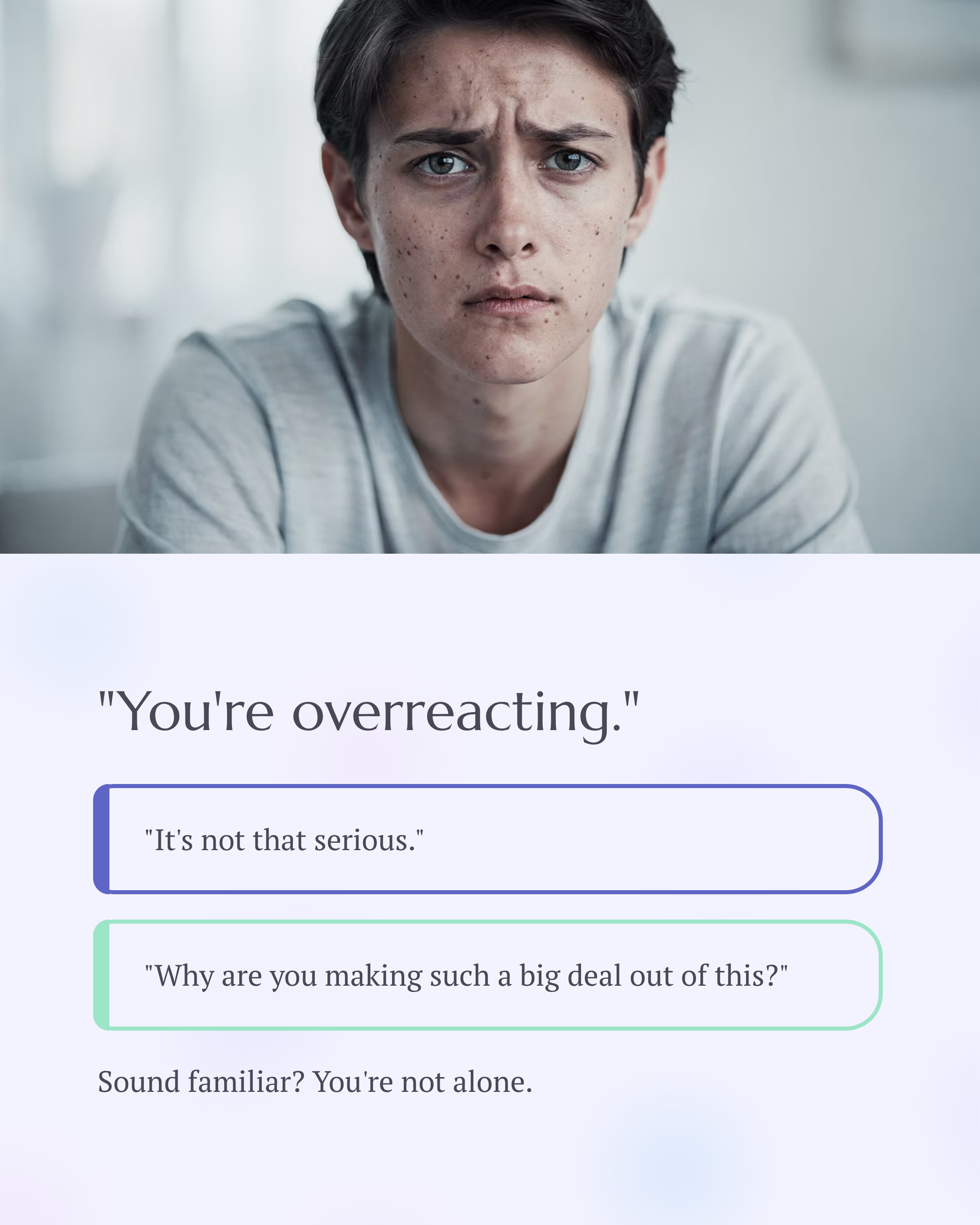
Have you ever felt something deeply, only to be told:
"You're overreacting."
"It's not that serious."
"Why are you making such a big deal out of this?"
Maybe you started doubting yourself. Maybe you thought: “Maybe they're right. Maybe there is something wrong with me.”
Here's something worth remembering: Your feelings are real. Even when others don't understand them. Even when you can't explain why you feel this way. Even when the feeling doesn't seem to “make sense.”
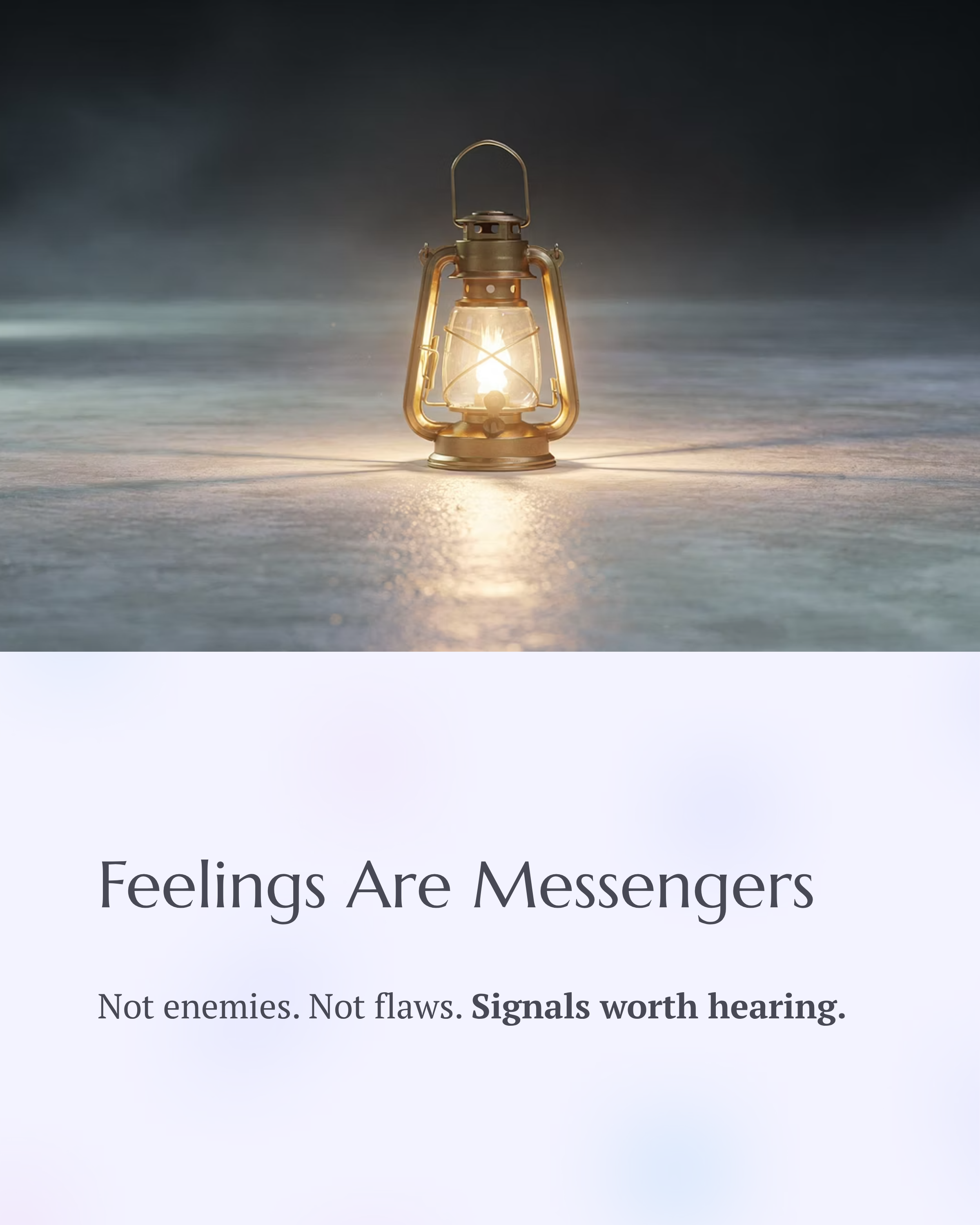
Feelings aren't exaggerations. They're not flaws. They're signals. And they're trying to tell you something worth hearing.
Feelings Are Based on Your Experience, Not Someone Else's
No one else has lived your life. No one else has walked through your exact experiences, carried your particular weight, or learned to navigate the world from your own unique perspective.
So when a feeling shows up, it's not random. It's rooted in something real, something you've been through, something you're sensitive to, something that matters to you.
Even if someone else wouldn't react the same way, that doesn't make your reaction wrong. It just means you're human. And humans feel based on their own history, not someone else's rules.
Your feelings don't need anyone's permission to be valid.
Feelings Are Messengers, Not Enemies
We often label certain feelings as “negative”: anger, sadness, fear, disappointment. As if they're something to get rid of or overcome.
But what if those feelings are actually trying to help you?
Think about it:
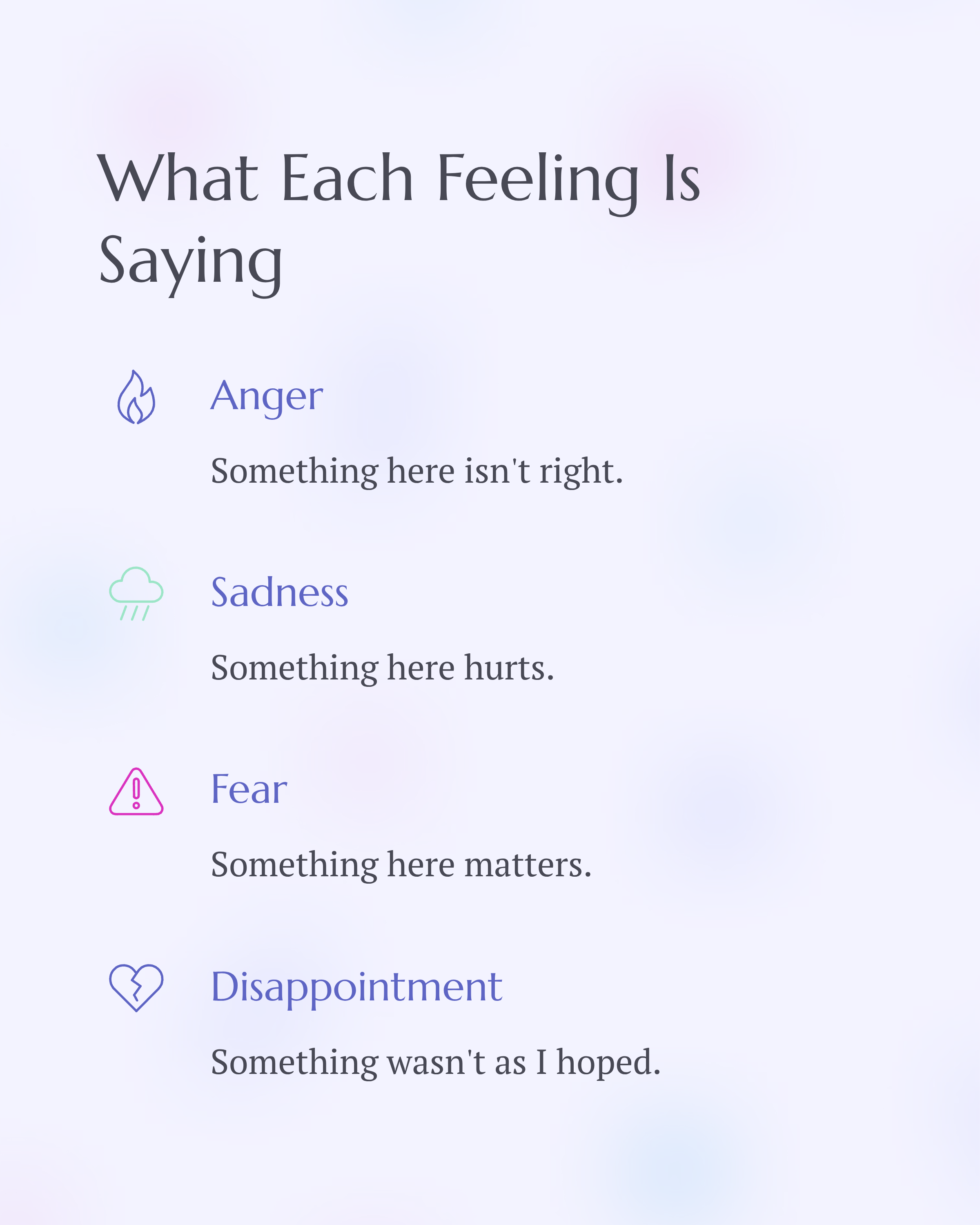
Anger says: Something here isn't right.
Sadness says: Something here hurts.
Fear says: Something here matters.
Disappointment says: Something here wasn't as I hoped.
Feelings aren't the problem. They're messengers. They show up to deliver information about what you need, what you value, and what's out of alignment in your life.
The trouble isn't the feeling itself. It's when the feeling stays longer than it's needed, when it gets stuck, suppressed, or ignored. That's when it can lead to burnout, exhaustion, or feeling disconnected.
But the feeling itself? It's just trying to get your attention.
What If You Couldn't Feel Pain?
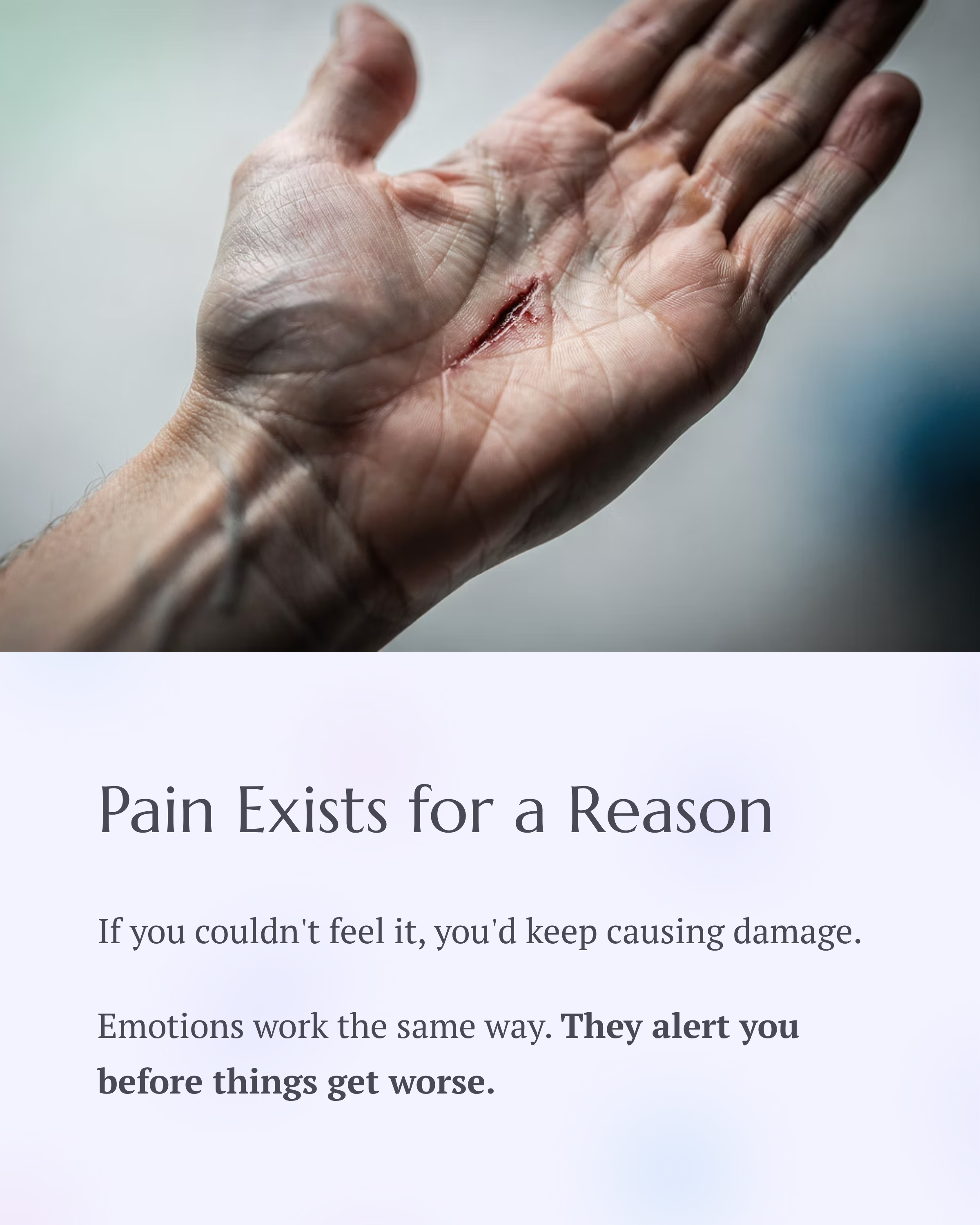
Here's another way to look at it. Imagine if you couldn't feel physical pain. You're cutting a tomato, and accidentally cut your finger instead. But because you don't feel it, you keep going. The knife keeps cutting into your finger, making the damage worse with every slice.
Pain isn't pleasant. But it's necessary. It's your body's way of saying: “Something here needs attention.”
Feelings work the same way. Your body sensations: that knot in your stomach? That heaviness in your chest? That sense of unease you can't shake? And your emotions: the wave of sadness, the flash of anger, the tightening of fear.
Both are signals. Both are worth listening to.
They're not there to punish you. They're there to alert you. To say: “Something is off. Pay attention. You might need something right now.”
We were given feelings for a reason. They protect us. They guide us. They help us survive, grow and live well.
The goal isn't to stop feeling. The goal is to learn to listen to what your feelings are telling you, before they have to shout.
Your Invitation to Listen Differently
This week, when a “negative” feeling shows up, especially one you usually push away, try something different.
Instead of telling yourself:
“I shouldn't feel this way.”
“I'm being too sensitive.”
“Just get over it.”
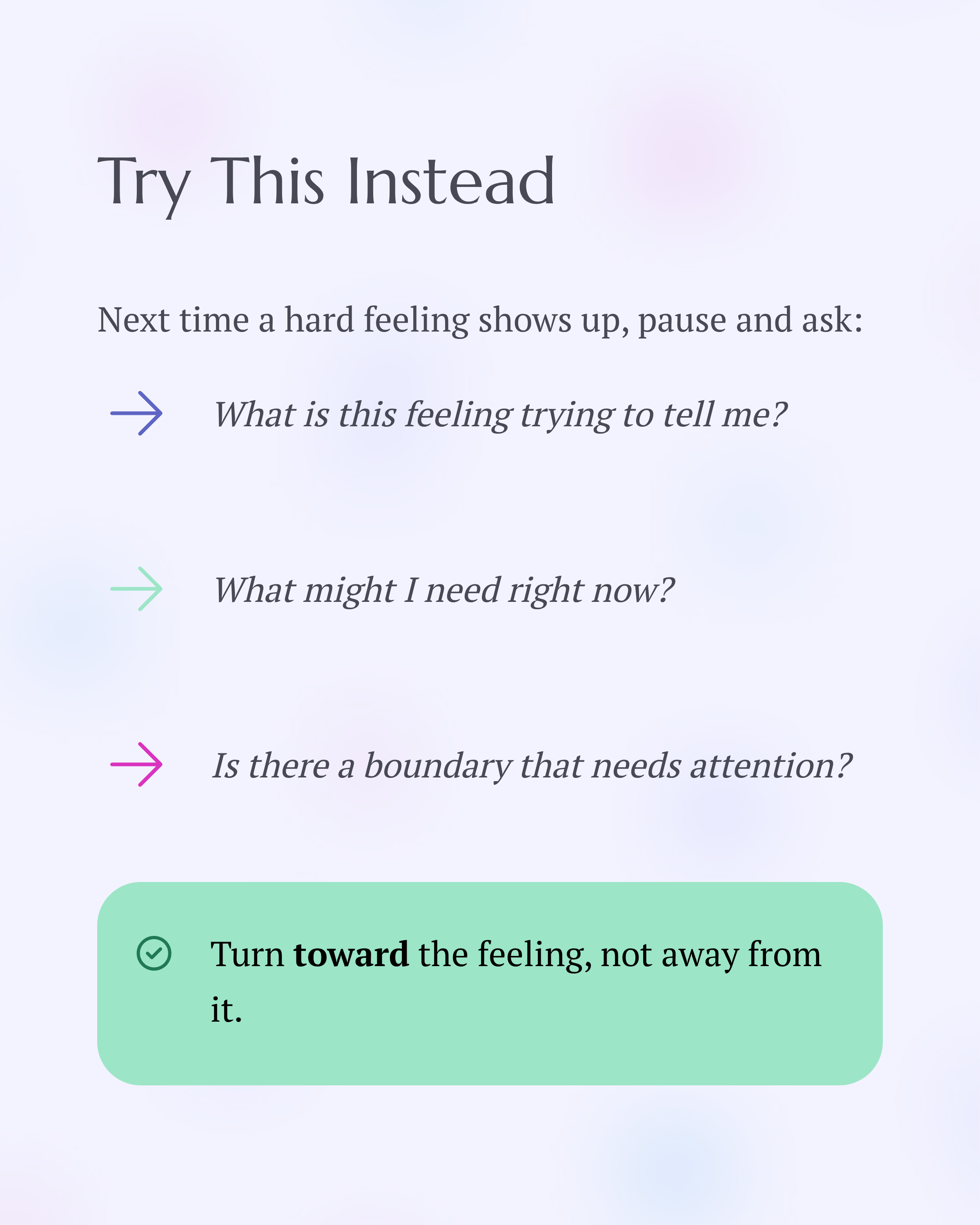
Pause and ask with curiosity:
What is this feeling trying to tell me?
What might I need right now?
Is there a boundary that needs attention? A loss that needs acknowledgment? Something I care about that feels threatened?
You don't need to have the answer right away. Just practice turning toward the feeling instead of away from it. Treat it as a messenger, not a threat.
Your Way Forward: From Fighting Feelings to Listening to Them
When you stop fighting your feelings, something changes. You stop spending energy pushing them down, questioning them, or apologizing for them.
Instead, you start using that energy to understand what they're telling you. To meet your own needs. To set boundaries that protect what matters. To respond to life from a place of clarity, not just reaction.
Your feelings aren't here to break you. They're here to guide you. And the more you learn to listen, the more you'll trust yourself, and the less you'll need anyone else to validate what you already know to be true.
If this resonates…
If you've ever been told you're “too sensitive” or that your feelings are an overreaction, please know: You're not wrong for feeling this way. You're human, responding to a life that only you have lived.
If you'd like support in learning to listen to your own feelings, to trust them, and to respond with care instead of criticism, I'm here. No pressure, just presence.
You might also find these helpful:
Disclaimer: This content is for informational purposes only. It is shared to promote awareness and understanding, not to replace professional medical or psychological advice. If you are experiencing significant distress or have concerns about your mental health, please consult a qualified healthcare provider.
