
Some Tech Expats Are Tired in a Way Sleep Doesn't Fix
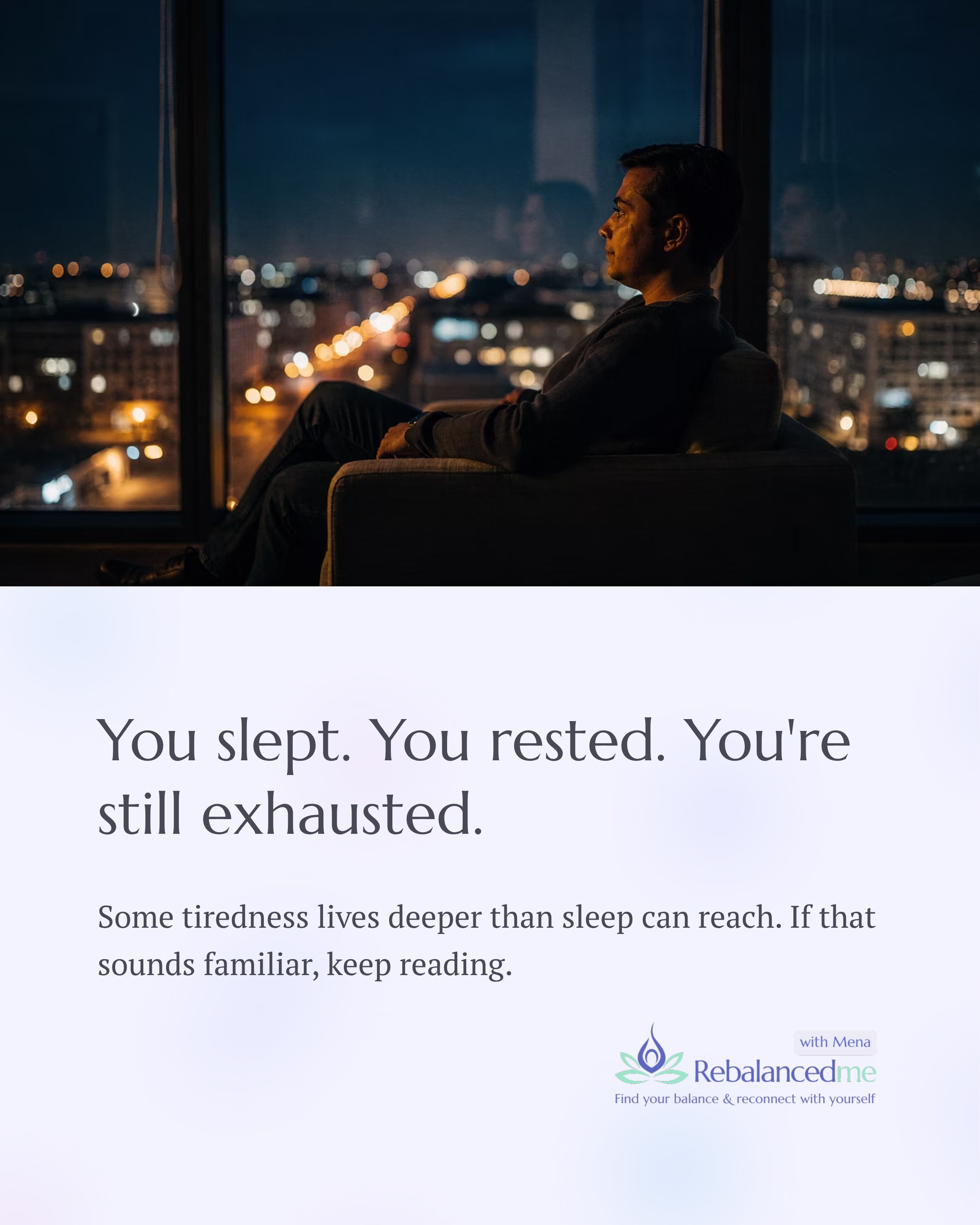
You close your laptop.
You rest.
You sleep.
And yet you still wake up tired.
Not the kind of tired that rest solves.
A deeper kind.
Harder to explain.
Harder to justify.
If this feels familiar, pause here for a moment.
You are not imagining it. You are not simply “burned out from work.” Something more subtle is happening underneath.
This exhaustion often shows up as:
feeling constantly “on” even when nothing is happening
needing more recovery time than weekends can give
feeling mentally full, even after doing nothing
finding simple things unexpectedly draining
not fully relaxing, even during rest
If you recognize yourself here, keep reading.
If this feels familiar, you are not alone in experiencing it this way.
Some people I work with describe this same experience, especially when life looks fine on the outside but feels heavy internally.
If you want, you can continue reading or explore what support could look like here: Learn more about working together.
No pressure, just a space to talk it through if you need it. It is completely fine to just keep reading.
If you keep reading, it may help to put words to what has been building quietly in the background.
Not because something is wrong with you. But because something has been happening for a long time without being named.
This is not about working harder. It is about understanding what your system has been carrying for a long time.
The Kind of Tired That Sleep Doesn't Fix
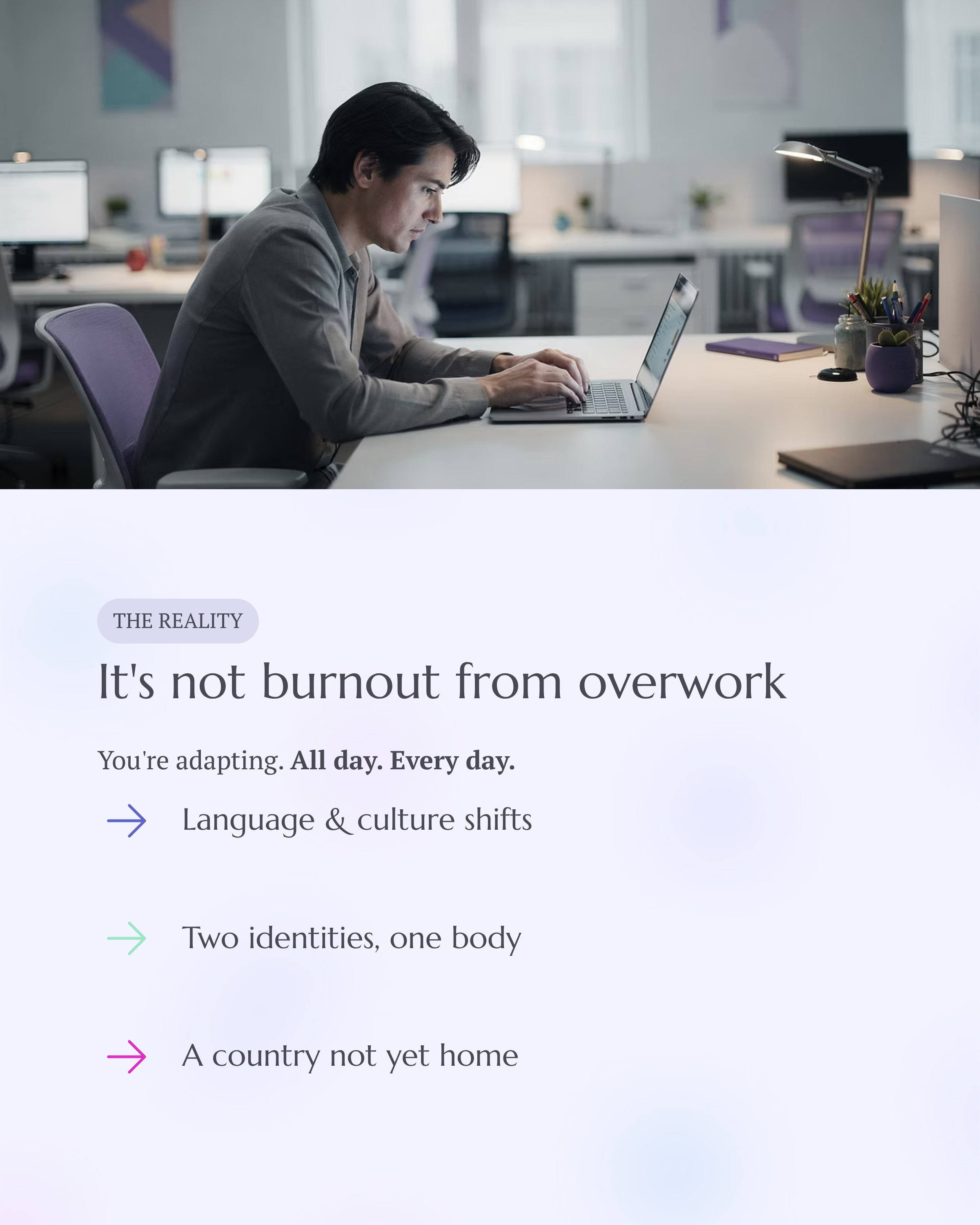
This exhaustion doesn't show up on a timesheet. You're not necessarily working longer hours than anyone else.
You're just… adapting. All day.
Language. Culture. Communication styles. Expectations. The version of yourself you need to be at work versus the one at home. The identity you're still figuring out in a country that isn't quite home yet.
Your mind is working in the background, constantly. Translating. Adjusting. Processing.
And that work doesn't stop just because you've closed your laptop.
What's Actually Happening
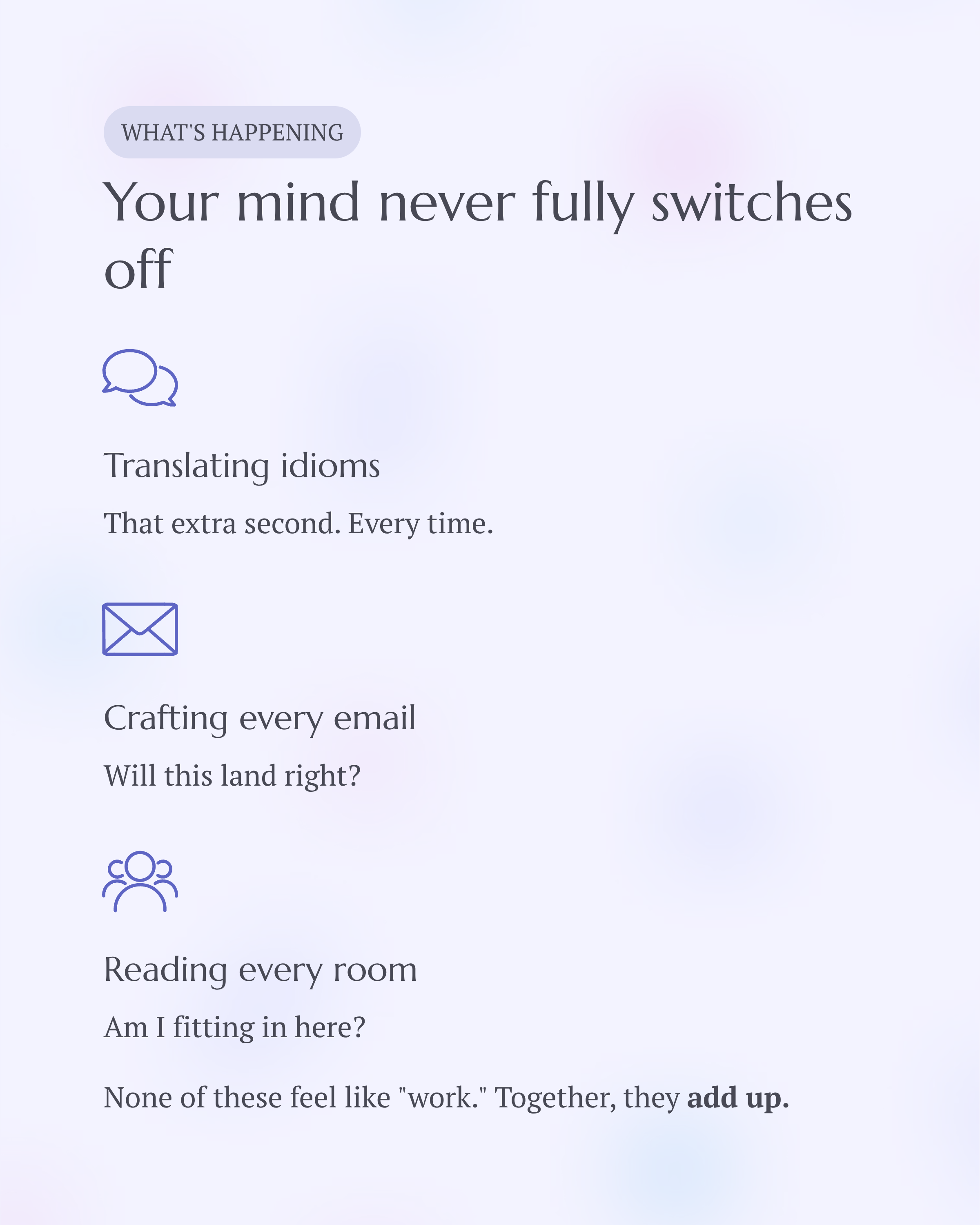
Your nervous system may never fully switch off. Not because something is wrong with you. But because you're living in an environment that requires constant small adjustments. One after another.
It's not one big thing. It's a thousand tiny ones.
The extra second it takes to understand an idiom. The mental energy to phrase an email in a way that lands right. The quiet scan of a room to see if you're fitting in. The effort of holding two cultures inside you at once.
None of these feel like "work." But together, they add up. And over time, they can leave you feeling drained in a way no amount of weekend rest can touch.
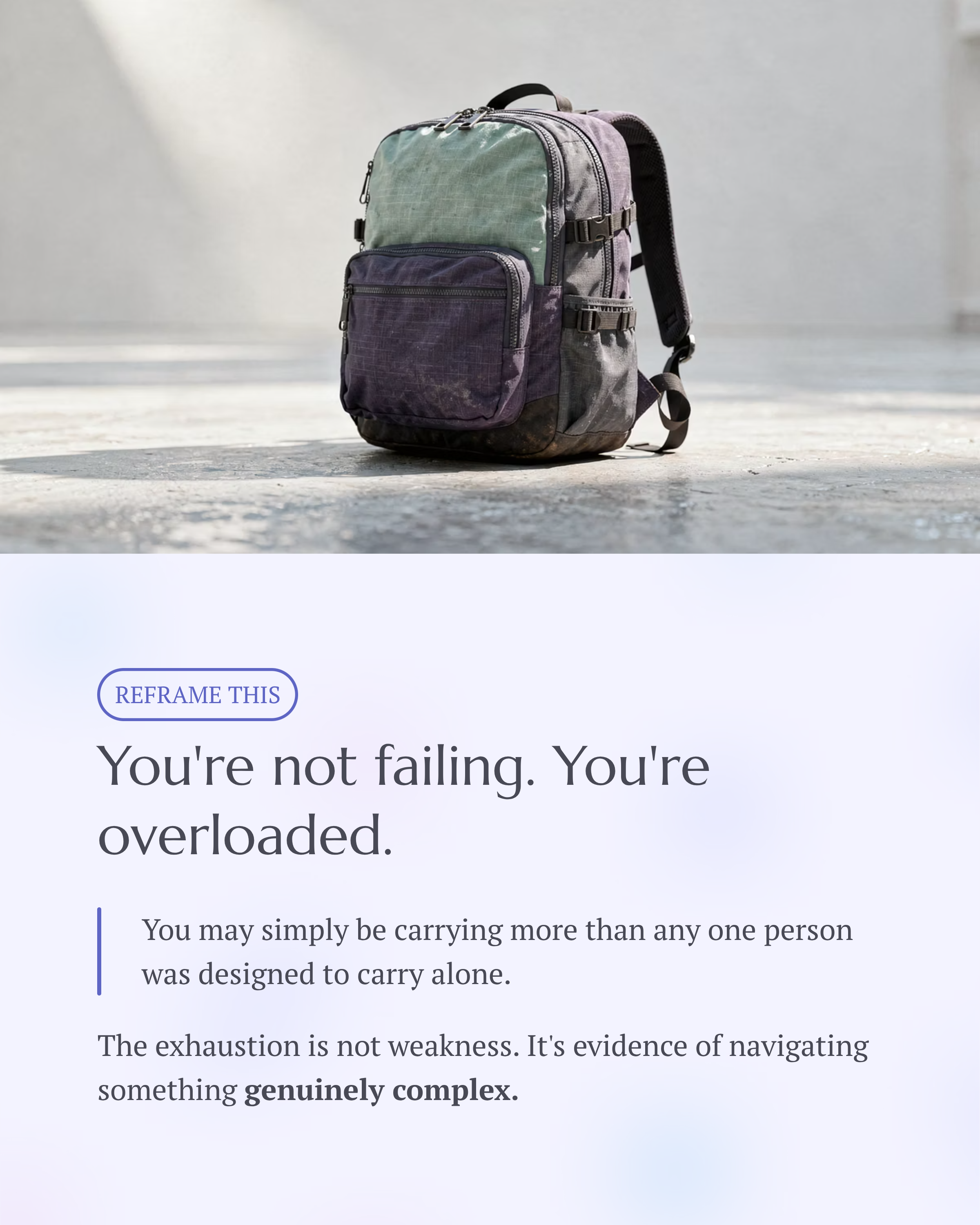
You May Not Be Failing. You May Be Overloaded.
If you take away one thing, let it be this:
You may not be doing anything wrong. You may simply be carrying more than any one person was designed to carry alone.
The exhaustion you feel isn't proof that you're weak. It's proof that you've been trying to navigate something genuinely complex, without a break, without a map, and often without anyone noticing.
What Helps (And It's Not More Discipline)
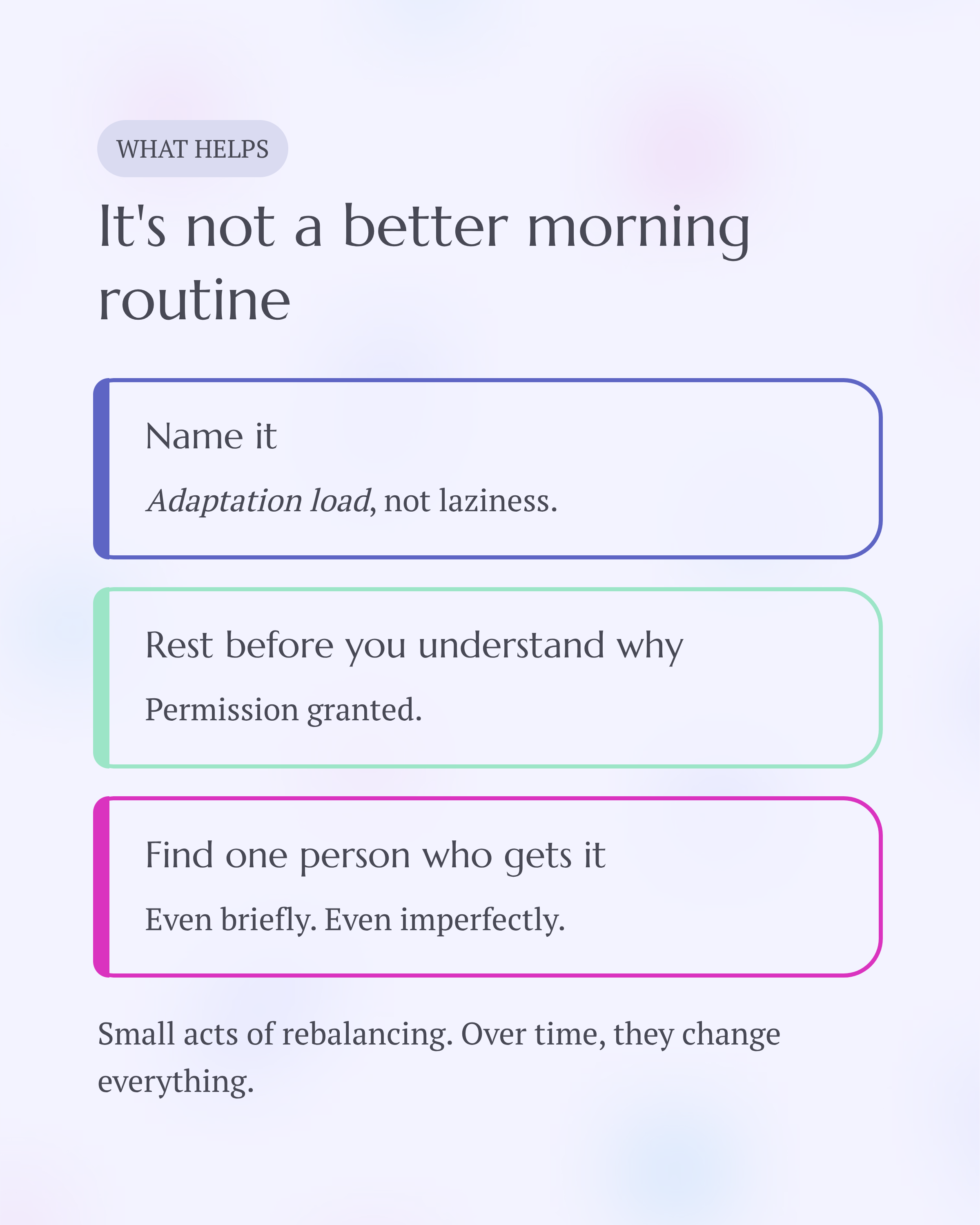
If you've been looking for a better to-do list, a morning routine, or a productivity hack, this isn't that.
What actually helps often starts much smaller:
Naming the tiredness for what it is: adaptation load, not laziness.
Noticing when your body is still holding tension, even in quiet moments.
Giving yourself permission to rest before you understand why you're tired.
Finding one person, a friend, a peer, someone who gets it, who you can be honest with about how heavy it feels. Even briefly. Even imperfectly.
These aren't quick fixes. They're small acts of rebalancing. And over time, they change how you move through your life.
When Support Can Help
Sometimes recognising what is happening is only the beginning. You may understand that you're depleted, but still find it difficult to slow down, set boundaries, or make changes on your own.
This is where coaching or counselling can help. It can give you space to understand what is underneath the exhaustion, notice patterns that keep you stuck, and explore what you need to change.
For expats, that support can also make room for the parts of life that don't always show up in a conversation about work: adapting to a different culture, feeling caught between worlds, questions about belonging, relationships, identity, or the pressure of building a life away from home.
You don't need to wait until you're completely burned out to seek support. Sometimes having someone alongside you while you make sense of what you're experiencing can be enough to start moving differently.
When You're Ready
If this resonated with you, it may be because something in you already recognizes this experience.
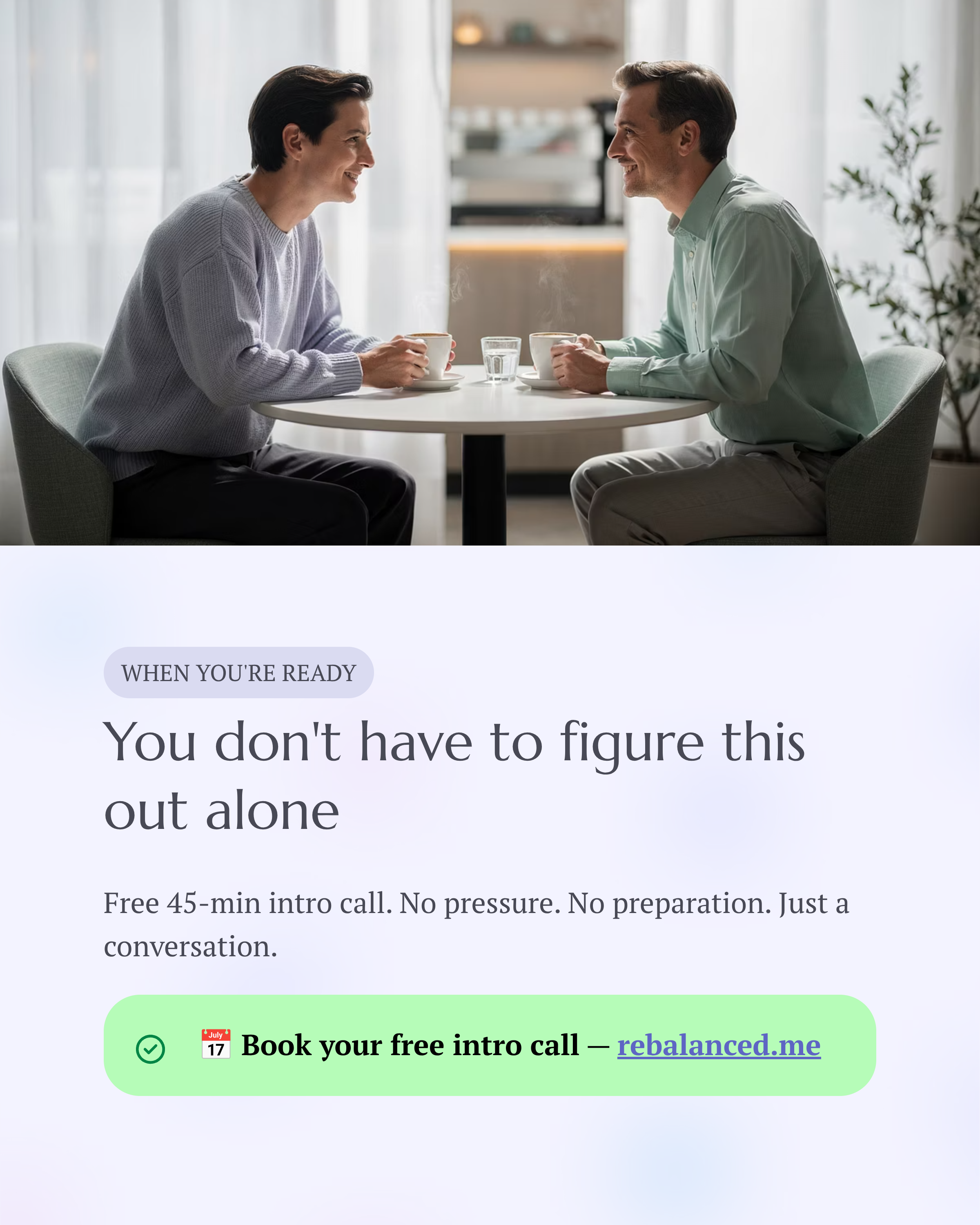
You do not need to figure it all out alone.
If and when you feel ready, you can explore working with me or simply reach out and talk things through.
No expectations. Just a conversation.
Free 45-minute conversation. No preparation. No pressure.
Disclaimer: This is for awareness, not diagnosis. If you're experiencing persistent physical symptoms, deep low mood, or major changes in sleep or appetite, please speak with a healthcare professional. This work is meant to support awareness and reflection, not replace medical care.
